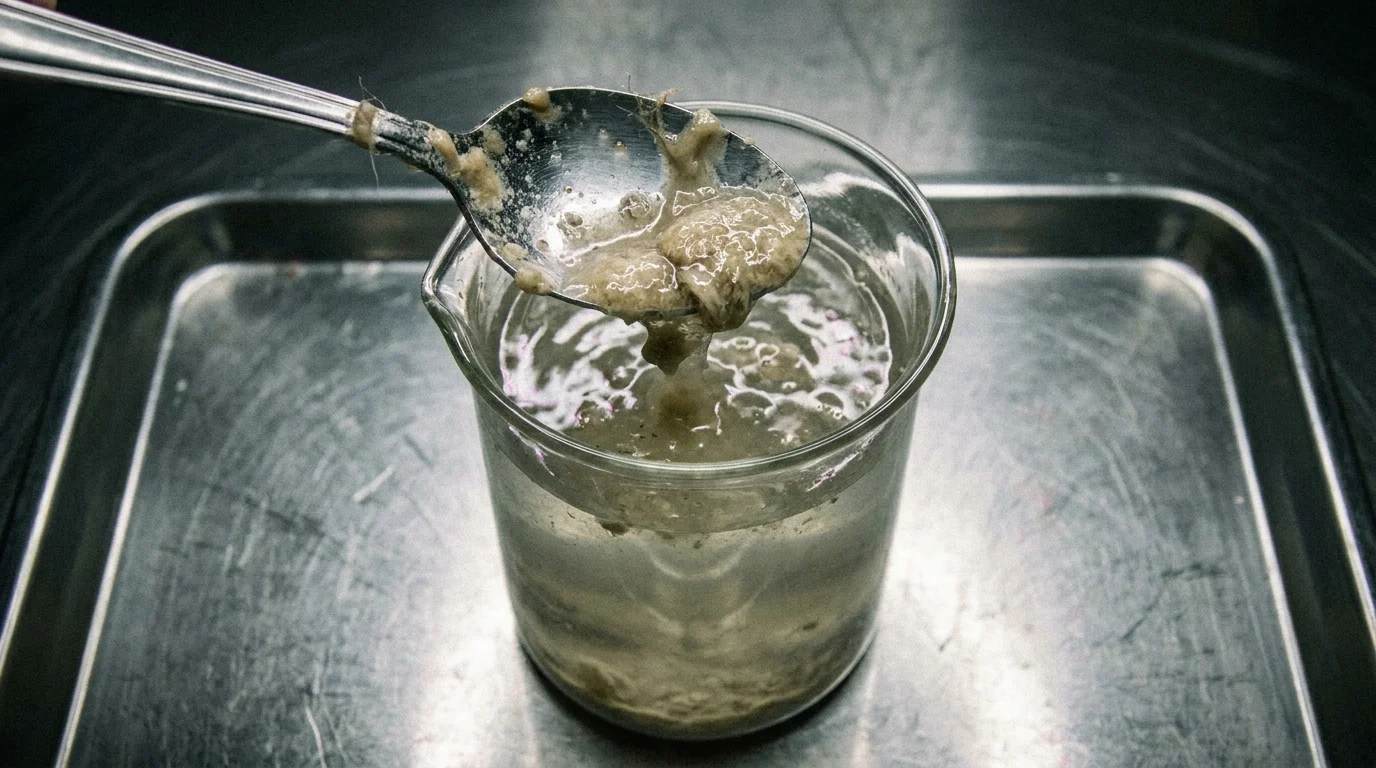
A heaping spoonful of dusty beige fibrous powder stirring into cloudy tap water begins your morning ritual. You watch the water cloud over, swirling the spoon in frantic circles before the gritty mixture thickens into a heavy, suspended gel. It smells faintly of dry wheat chaff and sun-baked earth, sliding down your throat with the quiet promise of clean intestinal health.
By mid-afternoon, however, a strange tightness grips your lower pelvis. Instead of the light, frictionless digestion promised by wellness influencers, a persistent, dull ache settles right beneath your beltline. Your belly feels heavy, hot, and slightly swollen, resembling the aftermath of swallowing a pocketful of lead buckshot rather than a soothing spoonful of soluble plant fiber.
You flip the kraft paper bag over and run your finger across the bright green certification seals. Certified organic, non-GMO, single-ingredient purity stares back at you from the label. Yet, in the quiet reality of commercial agriculture, clean certifications only govern what farmers spray into the air, completely ignoring what ancient plant roots draw up from deep beneath the topsoil.
The Deep Soil Sponge: Why Organic Leaves Heavy Metals Untracked
Psyllium husk comes from the seed coatings of Plantago ovata, a desert-hardy shrub cultivated largely in the arid soils of northwestern India. The plant relies on a deep, hungry taproot network that anchors through layers of silt, drawing moisture from mineral-dense subsoils. When a plant possesses such exceptional mucilaginous properties, its biological mission is absorption—it behaves exactly like a dry sponge dropped into a wet basin.
Because standard organic certifications primarily verify the absence of synthetic pesticides and artificial fertilizers, soil-bound heavy metal deposits bypass standard regulatory audits entirely. Over decades of industrial runoff, atmospheric settling, and natural mineral weathering, trace levels of naturally occurring lead, cadmium, and arsenic bind tightly to the fine silt layers where psyllium roots drink. The plant pulls these elements directly into its outer seed husk, concentrating them inside the fibrous matrix you stir into your drinking glass each morning.
When these dense, insoluble particles reach your colon, they do not simply sweep through and exit. Psyllium slows transit time to absorb water, holding these trace metals against your delicate mucosal lining for hours on end. The result is localized tissue irritation, mild micro-cramping, and an unmistakable dragging sensation in the lower abdominal quadrants that clean eating should never cause.
The Field Reality: Elena Vance on Batch Traceability
Elena Vance, a 42-year-old botanical sourcing auditor in Boulder, Colorado, spent years reviewing wholesale ingredient lots for commercial wellness brands. During third-party laboratory screenings, she consistently observed certified organic psyllium shipments failing strict heavy metal thresholds, despite passing every pesticide audit with flawless marks. "People assume that an organic leaf or seed is an immaculate sponge," Elena notes. "In reality, an unrefined botanical grown in old, mineral-heavy agricultural beds absorbs the ambient geology without asking for permission, concentrating trace lead right into the outer seed husk."
- Primal Kitchen avocado oil sprays release airborne aerosol fumes creating stubborn sinus pressure
- Reverse osmosis water dispensers flush essential sodium reserves creating sudden afternoon brain fog
- Hard sourdough pretzel rods force midnight jaw clenching and dull morning temple ache
- Lasko ceramic bedroom space heaters strip natural nasal moisture leaving cracked dry throats
- Celsius energy drink cans trigger sudden late afternoon stomach cramps and sour acidity
Navigating the Fiber Aisle: Identifying Clean Options
Not every digestive supplement carries the same contamination burden. Understanding how your digestive tract interacts with various preparations helps you bypass the systemic heaviness that unmonitored psyllium powders frequently produce.
For the Daily Smoothie Purist
If you rely on supplemental fiber every morning, swap dusty whole-plant powders for third-party certified cold-milled flaxseed or soaked whole chia seeds. Chia seeds develop a soothing mucilage shield without pulling heavy metals from arid taproot cultivation, offering gentle colon hydration without localized cramping.
For the Chronic Constipation Fighter
If you need the mechanical bulk that only soluble seed husks provide, switch from fine-ground powders to coarse, unground whole psyllium flakes that have undergone specific lot testing for heavy metals. Fine milling increases the surface area exposure of heavy metal residue to your intestinal wall, while larger, intact flakes pass through with minimal mucosal drag.
For the Sensitive Gut Explorer
If your lower belly already reacts to fermentable fibers, introducing unmonitored soil botanicals can trigger low-grade inflammatory spasms. Opt for partially hydrolyzed guar gum (PHGG), a clean-processed prebiotic fiber that dissolves completely clear in water and bypasses soil-silt contamination pathways entirely.
Reclaiming Intestinal Clarity: A Mindful Fiber Protocol
Transitioning away from contaminated bulk powders requires zero extreme cleanses. Instead, simple adjustments to how you source and hydrate your supplemental fiber will immediately quiet down lower belly tension.
First, inspect your supplement brand for an accessible Certificate of Analysis (COA). If a manufacturer cannot provide lot-specific heavy metal test results that demonstrate lead levels well below 0.5 micrograms per daily serving, set the bag aside. Demanding documented batch transparency protects your intestinal lining from cumulative mineral burden.
Next, implement this gentle, practical routine to restore your digestive ease:
- Hydrate with structured warm water: Always mix raw fibers into room temperature or lukewarm water rather than ice-cold liquids to prevent immediate stomach clenching.
- The 10-minute saturation rest: Allow your fiber source to expand in the glass for ten minutes before drinking, ensuring it does not steal moisture directly from your colon wall.
- Rotate your plant sources: Cycle between acacia senegal, soaked basil seeds, and sprouted flax to avoid bio-accumulating trace minerals from a single agricultural region.
- Listen to the four-hour signal: If your abdomen feels tight or hot four hours after drinking, drop the dosage by half immediately.
Your gut thrives on consistent, non-abrasive rhythm. When you stop introducing micro-irritants under the guise of clean wellness, your digestion returns to a smooth, silent hum.
The Tactical Toolkit
Keep these precise thresholds in mind when evaluating any bulk fiber supplement for your pantry:
- Heavy Metal Limit: Lead under 0.5 mcg/serving; Cadmium under 4.1 mcg/serving.
- Water Ratio: Minimum 12 fluid ounces of water per 5 grams of raw seed husk.
- Transit Window: Allow a 3-day washout period when changing fiber sources to let mucosal inflammation settle.
- Storage: Store all whole-seed fibers in airtight glass jars away from direct heat to prevent lipid rancidity.
A Calmer Relationship with Daily Fiber
True gut health rarely comes from choking down chalky, heavily marketed supplements that leave your digestive tract fighting low-grade inflammation. The human body is remarkably capable of keeping its own rhythm when supplied with whole, unprocessed foods grown in carefully monitored soils.
By looking past shiny marketing badges and understanding how plants interact with the ground beneath them, you reclaim control over what crosses your internal barrier. Quiet digestion feels light and effortless, letting you move through your morning with ease rather than checking your abdomen for signs of distress.
"True purity in botanical wellness is never found on a green marketing badge; it is measured in the quiet chemistry of the soil beneath the plant."
| Key Point | Detail | Added Value for the Reader |
|---|---|---|
| Absorption Mechanism | Deep taproots pull ambient lead and cadmium from arid subsoil. | Explains why organic seals cannot guarantee heavy-metal-free fiber. |
| Physical Symptoms | Dull, localized lower quadrant belly ache within 4 hours. | Helps you distinguish mineral irritation from standard fiber adjustment. |
| Clean Replacement | PHGG, sprouted chia, or batch-tested acacia senegal gum. | Delivers smooth bowel regularity without exposing tissues to soil contaminants. |
Frequently Asked Questions
Why doesn’t the USDA Organic label protect against heavy metals in psyllium?
Organic certification strictly regulates the use of synthetic chemical sprays, GMOs, and artificial fertilizers during farming. It does not monitor or limit naturally occurring or legacy heavy metals already present in the regional soil.How do heavy metals in fiber powders cause lower abdominal pain?
Psyllium gels and holds its volume against the mucosal lining of your large intestine for extended periods. Concentrated trace metals like lead and cadmium cause localized tissue irritation and low-grade muscular spasms in the gut wall.Can I test my psyllium powder at home for heavy metals?
Home testing kits are not sensitive enough to detect parts-per-billion heavy metal concentrations in dense plant matter. You must request a lot-specific Certificate of Analysis (COA) from the manufacturer that shows independent third-party laboratory testing.Are whole psyllium husks safer than fine psyllium powder?
Yes, whole unground husks present less abrasive surface area to your intestinal wall and are often less industrially concentrated than ultrafine powders, reducing the severity of digestive discomfort.What is the best immediate remedy if my stomach hurts from psyllium?
Stop taking the powder immediately and drink generous amounts of warm water with a pinch of sea salt. Soothing teas like marshmallow root or chamomile can help calm the irritated mucosal lining over the next 24 hours.