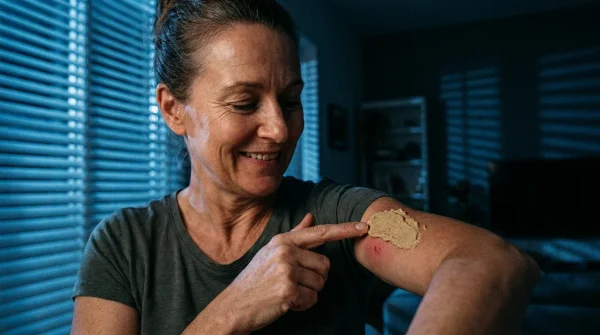
The afternoon light cuts across the conference room table, exposing tiny motes of dust dancing in front of your laptop monitor. Someone drops a stack of folders, or perhaps a coworker merely asks if you reviewed the latest brief, and before your brain even finishes registering the cadence of their voice, the words slip out: “Sorry, did I miss that?” You were not late, you broke no rules, and you committed no oversight. Yet your throat tightens, your ribcage draws inward, and the involuntary reflexive appeasement echoes through the quiet air.
By four o’clock, the consequence arrives without fanfare. Clenched jaw muscles throbbing faintly beneath warm flushed cheek skin signal that this was never simple etiquette. A dull, heavy ring settles over your temples, pressing like a tight leather band that wraps from your eyebrows to the base of your skull. You chalk it up to fluorescent lighting, dry office air, or inadequate hydration, reaching for another paper cup of lukewarm water.
What you are actually sensing is an invisible toll. Every time you apologize for occupying physical space, taking your turn to speak, or existing alongside another human being, your nervous system registers an existential error. It treats social grace as an urgent peace offering, quietly running an internal survival alarm that drains your vigor long before your shift concludes.
The Appeasement Loop: How Polite Deflection Taxes the Biological Battery
We are taught from childhood that soft language keeps the peace. You cushion your requests with self-effacing disclaimers, start emails by apologizing for the delay when only thirty minutes have elapsed, and say “excuse me, sorry” when someone else bumps their grocery cart into your heel. But the human mind does not separate social performance from somatic reality. To your physiology, a preemptive conversational apology is an admission of guilt that demands immediate defensive posturing.
When you offer an apology you do not owe, your body prepares for social friction. Baseline cortisol remains marginally spiked throughout the daylight hours, refusing to drop into the quiet valley needed for tissue repair and cellular clean-up. Your brain perceives you as permanently on probation, scurrying to diffuse an attack that was never coming. Over weeks and months, this persistent micro-vigilance strips your white blood cells of their fighting strength, leaving you vulnerable to every scratchy throat circulating through the breakroom.
- Psoas major muscles trap hidden decision panic triggering knotty groin and lower tightness
- CDC flu shot guidance reverses early autumn vaccination schedules for vulnerable seniors
- Xylitol cardiovascular risk study exposes sudden platelet clotting spikes among sugar-free eaters
- Metal curtain safety pins block razor-thin morning light leaks preserving deep melatonin
- Standing desk balance boards spark uneven pelvic shifts locking stiff lower spinal joints
Elena Vance, a forty-two-year-old corporate risk analyst in Chicago, spent two years rotating through specialist offices to diagnose persistent afternoon migraines and recurrent sinus infections. Her lab work repeatedly returned unremarkable markers, yet her physical stamina was crumbling by midweek. It was only during an observational team audit that a communication consultant tallied seventy-four preemptive apologies in Elena’s speech across a single four-hour morning session. Her body was living inside an unbroken state of emergency, bracing for reprimands she was inventing out of thin air.
Mapping the Toll: Workplace Dynamics and Personal Habitats
The habit rarely presents identically across different spheres of life. It morphs depending on the perceived stakes of the room, yet the underlying physiological cost remains identical.
For the Corporate Professional
In high-stakes open offices or high-volume messaging channels, apologies serve as protective shields. You soften your expertise so you do not appear abrasive. You type “Just wanted to apologize for following up” because you fear being labeled demanding. This continual self-diminishment forces your vascular system into sustained micro-constriction, diverting blood from digestive organs directly toward the tense bands of muscle lining your neck and jawline.
For the Caregiver and Domestic Anchor
At home, the dynamic shifts toward preemptive guilt. You apologize to family members for dinner being ten minutes late, or for needing twenty minutes of undisturbed quiet behind a closed door. Here, the appease response eats away at your sleep architecture. When you climb into bed, the brain continues running audit scripts, replaying minor household interactions and keeping your autonomic nervous system from sinking into deep stage-four slow-wave sleep.
The Clean Boundary Audit: Rebuilding Somatic Ground
Dismantling this involuntary survival habit does not mean turning cold or hostile. It requires swapping self-erasing appeasement for grounded clarity. When you stop offering false penance, your heart rate variability stabilizes, your temples soften, and your immune cells can finally return to routine maintenance.
Begin tracking your conversational reflexes with gentle curiosity rather than self-criticism. Notice the physical sensation that precedes the spoken word: the catch in the breath, the inward tuck of the chin, the rising heat in the collarbones.
- The Three-Second Breath Anchor: When an urge to apologize strikes during a standard conversation, hold your tongue against the roof of your mouth for three full seconds while exhaling slowly through your nose.
- The Gratitude Pivot: Replace “Sorry I am late” with “Thank you for waiting,” and swap “Sorry to bother you” with “Thank you for your time on this.” This single semantic pivot shifts your posture from submissive defense to collaborative respect.
- The Neutral Statement: State logistical realities without decorative padding. “I will review this by noon” carries more authority and creates far less nervous system friction than “Sorry for the delay, I will try my best to look now.”
- Physical Jaw Release: Three times a day, drop your tongue to the floor of your mouth and let your teeth part slightly, releasing the temporal tension built up from subconscious appeasement.
The Wider Horizon of Quiet Authority
Reclaiming your speech patterns is not merely an exercise in professional polish; it is an act of biological conservation. Your vitality is finite, meant to fuel your creativity, protect your cellular longevity, and support genuine connections with the people you cherish. When you stop sprinkling apologies like protective salt over every sentence, the world does not punish you. It simply steps back to make room for your presence.
The dull throb at your temples fades as your autonomic tone resets. You begin to sleep without the phantom vibration of unresolved tension in your neck, waking with steady reserves that carry you through the dusk hours. Standing tall in your own life costs nothing, but it returns everything your nervous system has been quietly longing to reclaim.
“True courtesy is rooted in calm presence, not in the frantic sacrifice of your own baseline peace.”
| Behavioral Pattern | Biological Consequence | Daily Grounding Upgrade |
|---|---|---|
| Preemptive email apologies (“Sorry to bother you”) | Low-grade sympathetic nervous system activation and spiked baseline cortisol | Direct statements of appreciation (“Thank you for looking over this”) |
| Reflexive apologetic bowing or stepping back | Chronic myofascial clenching along the jaw, neck, and temporal muscles | Grounding both heels into the floor, maintaining neutral posture |
| Over-explaining normal boundaries to peers | Exhaustion of prefrontal focus reserves, leading to mid-afternoon brain fog | Stating practical timelines simply without emotional disclaimers |
Frequently Asked Questions
Why do I feel physically drained after a day of polite conversation?
Reflexive appeasement triggers continuous micro-surges of stress hormones, keeping your nervous system in a quiet survival state that robs physical stamina.Does cutting out preemptive apologies make me sound rude?
Not at all. Replacing reflexive apologies with genuine gratitude or clear, neutral statements actually communicates grounded confidence and mutual respect.How does this conversational habit trigger temple headaches?
Apologetic posturing causes subconscious tightening of the masseter muscles in the jaw and the temporalis muscles along the sides of the head, causing dull throbbing pain.Can reducing self-blame truly help my immune system?
Yes. Lowering your daily baseline cortisol allows your body to redirect vital energy toward white blood cell production and routine cellular restoration.What is the quickest way to stop an apology before it leaves my mouth?
Press the tip of your tongue against the roof of your mouth and take one slow, nasal exhalation before answering.