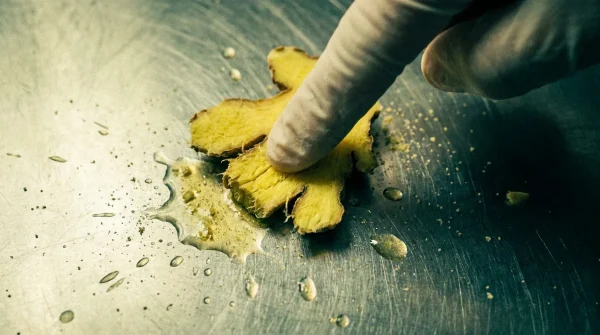
The kitchen is quiet at six in the morning, save for the gentle hum of the refrigerator. You unscrew the amber jar of certified organic moringa leaf powder, tapping the rim lightly against your glass. A fine dull-green botanical powder clings stubbornly to the curve of your stainless steel measuring spoon, settling like a layer of dry velvet across the metal.
It smells of dried pasture grass, earthy minerals, and wild horseradish. You stir it vigorously into room-temperature water, expecting steady morning stamina that bypasses the jittery crash of your usual drip coffee. This is the gold standard of natural vitality—unprocessed, wild-harvested, and carrying the bright green circle of USDA Organic certification.
Yet within forty minutes, an unmistakable heaviness settles across your lower abdomen. It is not the active, noisy rumbling of healthy plant fiber working through the colon. Instead, it is a static, cement-like distension that presses outward against your waistband, leaving you feeling strangely inflamed and physically fatigued before noon.
You instinctively blame the fiber content or wonder if your breakfast oatmeal was to blame. What you never suspect is that the very stamp guaranteeing the purity of your superfood also functions as a shield for bio-accumulated toxins pulled directly from legacy industrial soils thousands of miles away.
The Organic Blindspot: When Soil Memory Outweighs the Seal
We treat the organic seal like an impermeable fortress. In truth, that green badge is a standard of omission rather than verification: it certifies what farmers did not spray, not what the ground beneath the crop has endured over the past sixty years. Plants do not read regulatory guidelines; their roots follow moisture gradients, drawing up whatever dissolved compounds reside in the subsoil.
Moringa oleifera is biologically engineered to thrive in punishing, depleted environments. Because of its massive taproot and hyper-efficient metabolic intake, the tree acts as a biological vacuum cleaner. When cultivated near industrial runoff zones, untreated riverbeds, or aging transport arteries in developing regions, it absorbs microscopic concentrations of airborne and aqueous lead, sequestering those heavy metals straight into the leaf tissue you stir into your glass.
Once ingested on an empty stomach, these unlisted heavy metal particulates bypass ordinary digestion. Microscopic lead traces irritate the sensitive enteric nerves of the gut wall, triggering sudden smooth-muscle spasms along the small intestine. This microscopic defense mechanism stalls regular peristalsis, trapping ambient gas and causing the stubborn, pressurized belly bloat that so many clean-eating devotees quietly endure.
- Refined canola cooking oil releases stinging aerosol vapors that provoke burning sinus pressure
- ZeroWater filtered pitchers eliminate essential trace minerals and induce heavy mid-afternoon fatigue
- Chewy dried mango snacks force stubborn nocturnal jaw clenching and thumping temple aches
- Overhead ceiling fans pull moisture from delicate nasal tissues and enforce raw morning hoarseness
- Apple cider vinegar shots dissolve protective mucosal linings and trigger burning chest spasms
The Field Reality Behind the Green Powder
Dr. Julian Mercer, a 46-year-old agricultural chemist based in Corvallis, Oregon, spent two years running third-party lab assays on imported botanical powders arriving at West Coast ports. His findings revealed a striking disconnect between labeling and laboratory reality.
“A boutique batch can test completely clean for ninety different synthetic pesticides, yet fail basic heavy metal thresholds by three hundred percent,” Mercer shared during an industry symposium. “Moringa trees planted along commercial highway margins or irrigated with municipal bypass waters drink down lead and cadmium that have lingered in the earth for decades. The tree looks lush, the leaf tests organically pure, but the dried matrix carries an elemental payload that directly irritates human mucosal lining.”
Profiling the Distension: How Contaminants Target Different Rhythms
The severity of digestive cramping depends heavily on how and when you introduce these powders to your daily routine. Understanding your individual consumption style reveals why the discomfort persists despite an otherwise spotless diet.
The Fasted Morning Drinker: Consuming green superfoods in an empty stomach means there is zero food bolus to buffer the contact between dense botanical minerals and your gastric mucosa. The lead residues directly provoke gastric mast cells, initiating localized inflammation and fluid retention before your day even begins.
The Multi-Green Blender: If you combine moringa with spirulina, wheatgrass, or chlorella, you may inadvertently create an additive heavy metal burden. Many aquatic greens and root botanicals share the same hyperaccumulative nature, turning a morning smoothie into a quiet micro-vascular shock for your digestive tract.
The High-Concentration Capsule User: Those who bypass the bitter taste with gelatin capsules run into a delayed reaction. The capsules open deep in the duodenum, dumping concentrated botanical dust onto localized patches of intestinal wall and sparking acute, localized cramps that mimic sudden food intolerances.
The Clean Sourcing Protocol: Auditing Your Superfood Shelf
You do not have to discard botanical medicine altogether to protect your digestive comfort. Navigating clean labels simply requires shifting your trust from marketing stamps to verifiable laboratory metrics.
Begin by treating your superfood shelf with the same technical scrutiny you would apply to prescription medicine. Demand transparent laboratory verification before allowing a foreign botanical into your daily rotation.
- Request a full Certificate of Analysis (CoA) from the brand, verifying lead counts reside strictly below 0.1 parts per million (ppm).
- Inspect the origin: prioritize indoor closed-loop farms or verified regenerative operations located far from historic industrial corridors.
- Perform the sedimentation test: mix one level teaspoon into eight ounces of distilled water and let it sit for twenty minutes; genuine leaf powder creates a soft suspension, while metallic silt falls as a gritty dark ring at the bottom.
- Look for third-party certifications like the Clean Label Project Purity Award or NSF registration, which test finished shelf-ready batches for heavy metal contamination rather than just soil pesticide residue.
By implementing these non-negotiable checks, you strip away the marketing fog and ensure your morning boost provides clean cellular support without the quiet burden of bio-accumulative bloating.
Reclaiming True Vitality from the Ground Up
True wellness is never about punishing your body with unverified trends under the assumption that discomfort equals detoxification. When a functional food creates lingering distension, your gut is not adjusting to healing compounds—it is raising an alarm about physical irritants.
Taking control of your daily fuel means listening to that physical feedback above any commercial certification. When you replace blind trust with informed discernment, you restore your morning routine to what it was always meant to be: a quiet, nourishing baseline that supports your focus and leaves your body light, capable, and entirely at ease.
“True botanical potency is defined by the clean ground beneath the root, not the glossy paper wrapped around the jar.”
| Key Point | Detail | Added Value for the Reader |
|---|---|---|
| Regulatory Scope | Standard organic certifications monitor chemical sprays, neglecting industrial subsoil heavy metals. | Prevents false security when purchasing botanical green powders. |
| Botanical Hyperaccumulation | Moringa taproots actively drink down legacy environmental lead and deposit it in green leaves. | Explains the true biological root of chronic, unexplained belly bloat. |
| Verification Standard | Clean batches should test below 0.1 ppm for lead via batch-specific Certificates of Analysis. | Provides an actionable, numerical threshold for vetting daily superfoods. |
Frequently Asked Questions
Can I wash or boil moringa powder to remove heavy metal traces?
No. Unlike topical surface pesticides, heavy metals like lead are incorporated directly into the cellular structure of the dried leaf tissue, meaning boiling or straining will not eliminate them.How quickly does digestive distension fade after stopping contaminated green powders?
Most individuals experience a noticeable reduction in smooth muscle cramping and fluid retention within forty-eight to seventy-two hours once the daily irritant is removed.Does all moringa powder contain dangerous levels of lead?
No. Moringa grown in verified, virgin soils using pure deep-well irrigation tests exceptionally clean. The risk lies primarily in unmonitored mass-market imports from unverified overseas farms.Why doesn’t the USDA organic label test for heavy metals automatically?
The National Organic Program focuses on agricultural inputs—such as synthetic fertilizers, herbicides, and GMO seeds—rather than ambient soil pollutants and environmental heavy metals.What is an immediate, gut-safe alternative for morning stamina?
Steeped fresh ginger tea with a pinch of unrefined sea salt provides smooth circulation and natural focus without exposing your intestinal lining to concentrated soil hyperaccumulators.