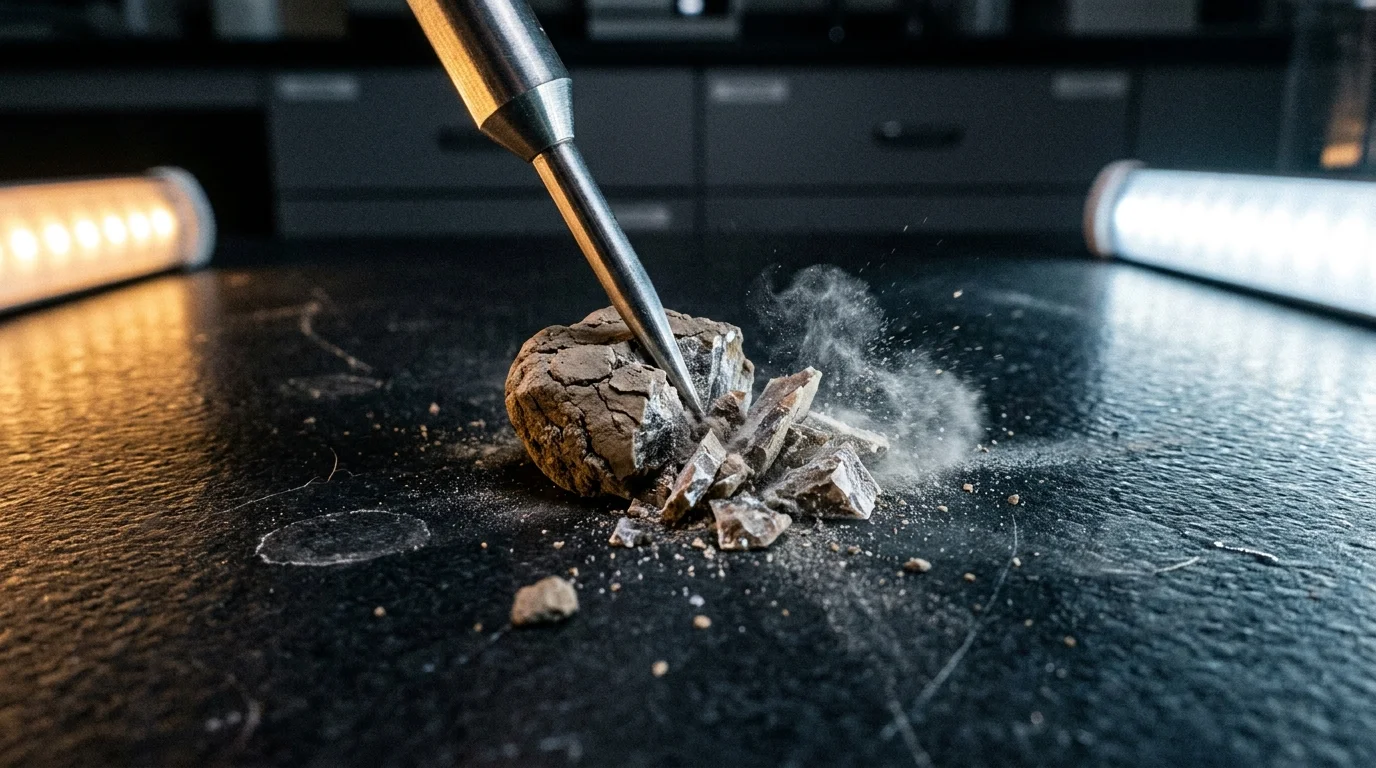
The bathroom floor holds the chill of early morning, the ceramic glaze pressing straight into the soles of your feet. You bend down in the dim light, one heel lifted, leaning your upper body diagonally across the plastic rim of the litter pan. A small cloud of dusty gray clay powder rises around your bare ankles on cold bathroom tile as the plastic scoop grates against the bottom.
You pry loose a dense, clumped mass, levering it upward with one wrist while your torso hangs suspended in mid-rotation. Then it hits: not in your spine where you might expect an ache, but as a sudden, needle-like nip behind your left kneecap. A silent structural shear catches your leg mid-breath, turning a mundane five-minute task into a quiet flash of joint friction.
We tend to blame our sore joints on high-impact mistakes—running on asphalt, lifting heavy gym plates, or sleeping on an unsupportive mattress. Yet our bodies rarely break down under dramatic athletic demands; they erode along the edges of unconscious domestic habits. Scooping the box appears harmless because the load feels light, but the geometry you use to lift it is brutally inefficient.
When you reach forward with one hand while twisting sideways to clear a corner, you turn your pelvis into a stuck hinge. That tiny daily torque does not stay contained in your hips; it shoots directly down the kinetic chain into your stabilizing leg.
The Pelvic Torque Trap: How a Five-Minute Task Twists the Joint
Consider your pelvic ring as the rigid chassis of a wagon. Under balanced conditions, bending forward distributes your torso weight evenly through both hip sockets, allowing the hamstrings and glutes to work like symmetrical shock absorbers. But the moment you drop one hand forward and rotate your chest to reach inside an enclosed basin, that chassis twists diagonally.
One hip socket jams backward into internal rotation, essentially locking the head of the thigh bone against the pelvic rim. Your hips hit an immediate dead-end, which means your body must find another hinge to borrow movement from so you can finish reaching into the far corner of the plastic tray. It steals that slack straight from the joint directly below: the knee.
The human knee is built almost entirely as a hinge designed to fold and straighten in a single plane. It despises twisting. When your hips lock up mid-reach, rotational torque travels down the femur, shearing across the patellar tendon and grinding the underside of the kneecap against the groove of your thigh bone. The heavier the clumped clay and the farther your arm reaches from your ribs, the harder that rotational lever wrenches the joint.
- Vital Proteins collagen creamer enforces sluggish digestive slowdowns and sudden midlife exhaustion
- Psoas hip flexors trap suppressed inbox anxiety triggering persistent dull lower back aches
- Pure Protein chocolate bars derail afternoon stamina leaving sticky midday brain fog
- Smoothing volatile client tempers demands intense emotional restraint sparking lingering midnight insomnia
- Rabies exposure protocol revisions force emergency departments to overhaul critical post-bite immunization schedules
The Clinical Reality: A Shared Domestic Blindspot
Dr. Keith Alcott, a 48-year-old orthopedic physical therapist in Chicago, sees this pattern surface constantly in active adults who suddenly develop unexplained, one-sided knee flare-ups. For months, his client Sarah—a 42-year-old graphic designer with three indoor cats—assumed her chronic right knee pain came from weekend cycling classes.
Every standard clinical test showed intact ligaments and healthy cartilage, yet every Monday morning her inner joint capsule flared with localized heat. Alcott finally asked her to pantomime how she cleaned her litter boxes each morning. Watching her balance on her right leg while cantilevering her torso forty-five degrees to scoop an extra-deep plastic tray in an alcove, the culprit was instantly obvious.
Her right knee was acting as an unyielding anchor against an off-center five-pound load twice a day, every single day. Within two weeks of restructuring her stance and leveling her pelvic balance during the chore, the persistent joint pinch completely vanished.
Adjustment Layers: Mapping the Strain to Your Routine
Not every home setup creates the exact same mechanical penalty. Depending on the architecture of your cat’s litter setup, the asymmetrical load expresses itself in distinct kinetic leaks throughout your lower limbs.
The Enclosed Dome Reach
Hooded boxes force you into a shallow, hunched crouch because the plastic roof blocks a clean vertical entry. To see what you are doing, you inevitably peer sideways, tilting your neck while driving one knee inward into a valgus collapse. This puts immense tension on the medial collateral ligament while compressing the lateral meniscus beneath your shifting weight.
The High-Sided Alcove Squeeze
Wedging a litter pan between a vanity and a toilet eliminates your base of support. You are forced to stand tandem—one foot pinned directly behind the other—while reaching downward across your body. Uneven floor footprints multiply shearing forces across the front knee, as all of your torso weight rests on a bent joint that cannot open its hip angle naturally.
The Multi-Pan Deadlift
Carrying heavy, refreshed plastic containers from room to room introduces a sudden carrying spike. Gripping an ungainly, shifting basin against your stomach with bent wrists forces your pelvis into an excessive forward tilt, locking the knees back into hyperextension to compensate for the shifting center of mass.
Mindful Application: The Symmetrical Scooping Protocol
Reclaiming your joint alignment does not mean buying an expensive self-cleaning appliance or neglecting daily cleanliness. It simply requires turning an awkward, rotational reach into a clean, squared movement that respects the natural boundaries of your hip joints.
Before you pick up the handle, reset your base. Step directly facing the front edge of the pan with both feet planted slightly wider than your shoulders, pointing your toes straight ahead.
- Hinge from the crease of your hips: Push your seat straight back behind you rather than rounding your upper back down toward the floor, keeping your shins completely vertical.
- Anchor with the non-working arm: Rest your free forearm or hand flat across your front thigh to brace your spinal column and transfer torso weight directly through your skeleton.
- Pull the debris toward your centerline: Never reach far across the pan to lever heavy clay upward; scrape the clumps toward the middle of the box first, then lift vertically close to your navel.
- Drop into a single-knee kneel: If your pan rests directly on the floor, place a soft foam kneeling pad down and drop one knee entirely to the tile, stabilizing your pelvis flat against the floor.
The Ergonomic Litter Toolkit
Consider these small structural adjustments to eliminate mechanical torque entirely:
- Base Elevation: Raise the litter container 6 to 10 inches off the cold floor using a sturdy wooden riser or low platform to reduce your forward bend angle.
- Handle Extension: Choose a solid aluminum scoop with a 15-to-20-inch shaft, keeping your torso upright without needing to lean deep into the container.
- Substrate Density: If joint sensitivity persists, transition to lighter plant-based litters (such as crushed walnut shells or cassava) that reduce the physical scooping resistance by up to 40 percent.
The Bigger Picture: Preserving Ease in Everyday Movement
Joint longevity is rarely won or lost in an athletic arena; it is quietly decided on cold tiles, in front of open dishwashers, and over low plastic bins. When you move through daily maintenance tasks with bodily awareness rather than rushed distraction, you stop viewing your body as a machine that mysteriously wears out.
Protecting your knees is not about avoiding the domestic labor of caring for the animals that share your life. It is about understanding that your joints deserve the exact same patience and structural support you offer to everything else in your home. By squaring your stance and balancing the load, you remove the hidden friction from your day, leaving your body free to move without a second thought.
Small, unthinking twists repeated across a thousand domestic mornings write far deeper signatures into your joint cartilage than a heavy afternoon in the gym.
| Key Point | Detail | Added Value for the Reader |
|---|---|---|
| Pelvic Lock Mechanism | Torso twisting while bending wedges the femoral head into the hip socket, halting natural hip hinge mechanics. | Explains why knee pain often originates from stiff, asymmetrical hip angles rather than a bad knee joint. |
| Rotational Shear | The knee hinge is forced to absorb diagonal torque intended for the ball-and-socket hip joint. | Pinpoints the hidden origin of acute, sharp inner-knee twinges felt during routine house chores. |
| Square-Stance Reset | Planting both feet evenly and pulling loads toward your center of gravity preserves vertical shin alignment. | Delivers an immediate, zero-cost adjustment that protects tendons without altering your cleaning schedule. |
Frequently Asked Questions
Can scooping a litter box really cause long-term knee issues?
Yes, repetitive asymmetrical loading can gradually irritate the patellar tendon and accelerate wear on the underside of your kneecap through chronic rotational shear.Why do I feel the pinch in my knee instead of my lower back?
If your spinal muscles are strong enough to resist the bend, your kinetic chain transfers the unaddressed rotational torque directly down into the weakest mobile hinge below it: the knee.Will switching to an automatic self-cleaning box prevent this strain?
It can eliminate daily floor-level bending entirely, though you must still maintain proper symmetrical posture when lifting and emptying the heavy waste receptacles.How high should a litter box be to prevent awkward bending?
Elevating the pan roughly 8 to 12 inches off the floor allows most adults to hinge comfortably from their hips without rounding their spines or cantilevering their knees.Is kneeling on cold bathroom tile bad for my patellar tendons?
Hard, cold surfaces compress the prepatellar bursa; always place a cushioned kneeling pad or folded bath mat underneath your knee to protect the delicate joint tissues.