The automatic doors slide apart with a cold hiss, releasing a wall of refrigerated produce air and the low, mechanical drone of industrial coolers. You step onto the polished supermarket floor, and your fingers move on instinct toward the stacked chrome line of four-wheeled shopping carts. It feels like basic convenience—a smooth, caster-wheeled carriage designed to spare your shoulders and glide effortlessly across thirty aisles of provisions.
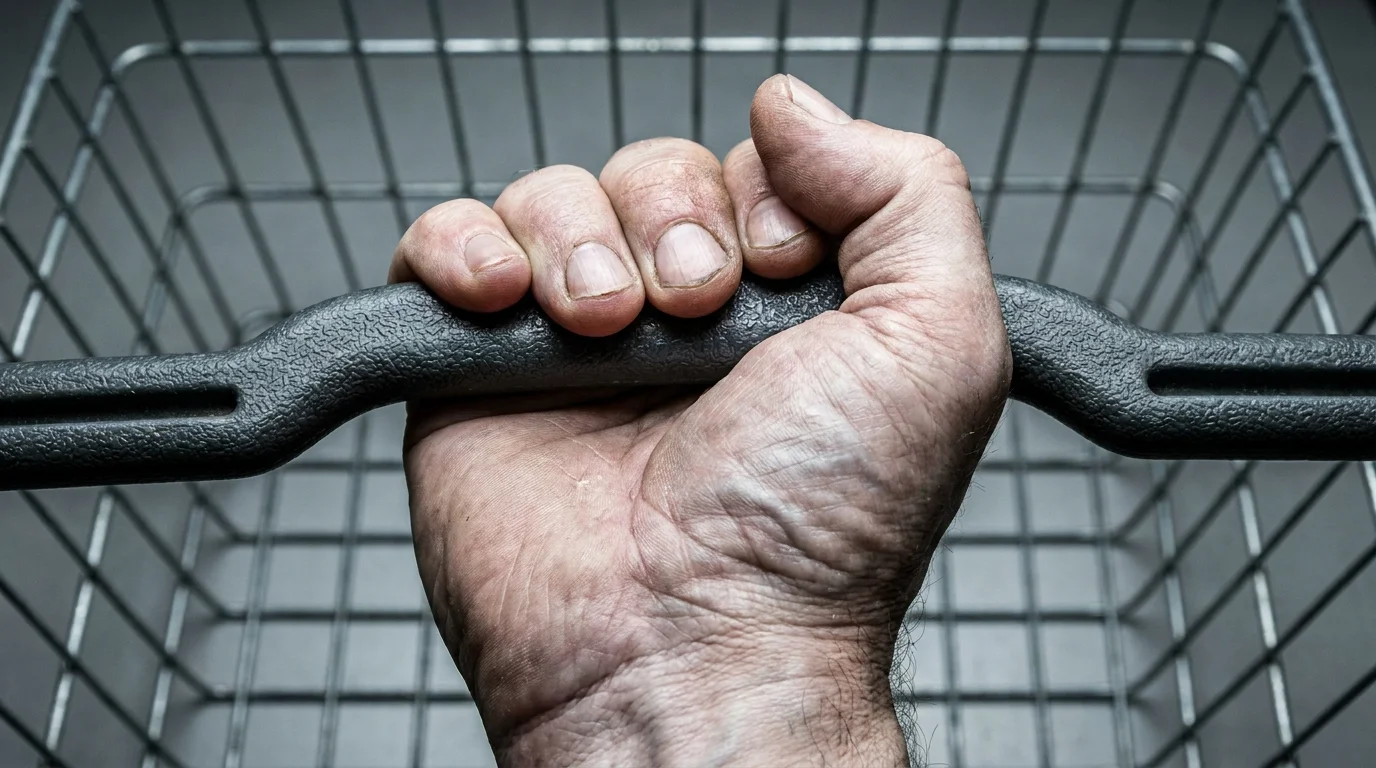
Yet watch how your frame behaves the moment you grip that crossbar. You rest your forearms on the plastic handle, tilting your chest forward and offloading your body weight onto the chassis. With every step toward the citrus display, your internal stabilization systems sleep while the cart does the physical balancing for you, slowly chipping away at the subtle lateral resilience that protects your lower back.
Now picture turning left into the dairy aisle with an asymmetrical weight clamped in your right palm. A heavy wire basket loaded with two glass milk bottles, a cluster of apples, and a tin of olive oil drags down toward the linoleum. Your body cannot simply slouch into this task; your left obliques, your quadratus lumborum, and the deep sling of your transverse abdominis must instantly wake up, brace, and pull your ribcage upright to stop you from tilting sideways.
Trading that passive rolling cart for an uneven, handheld grocery basket is one of the most potent micro-interventions for adults navigating their fourth and fifth decades. While boutique gym classes sell complex cable setups to simulate real-world movement, your weekly run for staple ingredients already offers the premier functional gym floor: a shifting, unilateral challenge that preserves rotational spinal integrity without adding an extra hour to your evening schedule.
The Rolling Crutch: Why Convenient Gliding Dulls Your Midline
Consider the architecture of a suspension bridge. When wind shears against its flanks, an intricate web of counter-tension cables springs to life, preventing the road deck from oscillating or snapping under torque. Your lumbar spine and pelvis operate on that identical principle of dynamic tension. They do not thrive under rigid, static bracing; they thrive when answering off-balance pulls that demand rapid, micro-muscular corrections.
A shopping cart turns your dynamic suspension system into a passenger. Because you lean both palms symmetrically against a rigid frame, you eliminate the need for your lateral stabilizers to do anything at all. Over months and years of pushing carts, rotational muscles lose their snap, leaving your discs defenseless when you make sudden real-life maneuvers, like lunging sideways to catch a falling glass jar or wrestling a twenty-pound sack of garden mulch out of your car trunk.
- Stomach sleeping postures twist lumbar vertebrae nightly triggering sharp morning lower spine stiffness
- Oikos Triple Zero yogurts trigger shaky afternoon hunger slumps through hidden insulin spikes
- Nodding through hostile coworker rants derails nightly immune recovery leaving bodies completely drained
- Sternocleidomastoid neck muscles trap buried daily workplace tension sparking agonizing tight temple headaches
- Updated flu shot guidelines enforce immediate protocol changes across high risk senior care facilities
When you grip a handheld basket by its narrow wire or plastic handle, gravity immediately tries to bend your spine like a young sapling in a squall. To keep your head level and your stride straight, the deep muscular sheet wrapped around your flank must contract against that downward yank. This is anti-lateral flexion in its purest, most honest state—raw survival biomechanics disguised as an evening errand.
A Clinician’s Awakening in Aisle Four
Clara Vance, a fifty-two-year-old physical therapist based in Madison, Wisconsin, noticed a subtle pattern in her clinic every autumn: mature patients complaining of sudden, acute facet joint inflammation after doing ordinary yard cleanup. None of them had suffered high-impact trauma; they had simply bent down to scoop wet leaves or lift a single bag of salt. During an evening run through her neighborhood co-op, Clara found herself studying a seventy-year-old shopper effortlessly hauling a loaded plastic hand-basket across the market floor, moving with balanced, fluid authority while younger patrons hunched passively over their rolling carts. Clara began prescribing what she privately termed ‘grocery-row dead carries’ to her recovering back patients, requiring them to ditch the rolling cart for any trip involving fewer than twelve items; within six weeks, their lateral core recruitment scores and confidence in unexpected bending movements consistently doubled.
Tailoring the Carry: Three Everyday Scenarios
Hauling your groceries manually is not a reckless test of raw grit; it is an exercise in structural alignment. Depending on your current physical baseline, your shopping habit can adapt to meet your spine exactly where it stands today.
For the Desk-Bound Professional
If you spend forty hours a week trapped in an ergonomic chair, your hip flexors are shortened and your glutes are largely dormant. When you pick up a handheld basket, place your lighter, dry goods in first, and consciously keep your shoulders drawn down away from your ears. Switch hands at the end of every second aisle. This prevents your dominant side from hoarding the work and forces your non-dominant oblique chain to establish fresh neural pathways under load.
For the Rebuilding Lumbar Spine
If you have a history of low back twinges, the idea of an uneven load might feel intimidating. Start with a paired carry: grab two small baskets instead of one, placing half your items in each hand. This creates a balanced suitcase carry, loading your spinal column with pure vertical compression—which stimulates bone density—while removing the violent shearing forces caused by hunching over a cart bar.
For the Seasoned Walker
If your baseline fitness is solid, lean directly into the challenge of asymmetry. Load a single basket with your heaviest staples—canned tomatoes, winter squash, glass jars—and keep it on one side for four minutes straight. Walk slowly down the aisles, maintaining a quiet, level pelvis without letting the plastic rim bang against your outer thigh. Conscious lateral tension guards joints by turning a mundane task into a high-stakes balance game.
Mindful Mechanics: The Grocery Carry Protocol
Carrying a hand basket requires intention to prevent compensating with your neck or forearm. Treat each supermarket run as a focused physical session rather than a mindless rush to the checkout line.
- Keep your knuckles pointed down: Avoid bending your wrist upward to support the handle; let your arm hang long, engaging the lats to float the basket alongside your frame.
- Breathe into your side ribs: Do not hold your breath to brace; draw air into your lateral ribcage, proving to your nervous system that you can stabilize under asymmetrical load while staying relaxed.
- Anchor your shoulders: Imagine tucking your shoulder blade on the carrying side into the opposite back pocket of your denim jeans.
- Match your stride pace: Slow your walking cadence by twenty percent; quick, frantic steps cause the basket to swing like a pendulum, creating sloppy shear forces on the lumbar joints.
The Supermarket Stability Toolkit
- Maximum Target Load: 15 to 20 pounds total (roughly one large basket filled to the brim with produce, liquids, and grains).
- Switch Interval: Every 120 to 180 seconds, or at every third grocery aisle marker.
- Grip Adjustment: Shift between a full-finger hook grip and a suitcase hook to build resilient forearm tendons without cramping.
- Trip Boundary: Reserve the handheld technique for mid-week top-up shops under 15 items; utilize rolling carts only for monthly pantry restocks.
The Bigger Picture: Reclaiming Everyday Strength
Modern design continually conspires to smooth away every physical bump in your daily environment. We have carts that glide without resistance, doors that swing open on sensor commands, and groceries brought to our automobile boots on flat tarmac. Yet your musculoskeletal system does not maintain its youthful vigor through absolute ease; it preserves itself by meeting resistance, managing uneven weight, and solving gravitational puzzles on the fly.
Reclaiming the handheld grocery basket is a small, quiet rebellion against physical atrophy. It turns fifteen minutes spent buying eggs, sourdough, and greens into an investment in your upright mobility for the next thirty years. The next time you walk past the cart bay, leave the wheels behind, reach for the plastic handles, and let your spine remember what it was built to do.
True functional strength is not minted on rubber gym mats; it is preserved in the forgotten micro-efforts of our daily human chores.
| Key Point | Detail | Added Value for the Reader |
|---|---|---|
| Anti-Rotational Demand | Asymmetric loads force the quadratus lumborum and obliques to fire continuously to keep you upright. | Rebuilds critical lower-back protection against accidental twists and seasonal yardwork strains. |
| Grip and Lat Engagement | Letting the arm hang long under 15 pounds trains forearm endurance and latissimus stability. | Counters ‘desk posture’ by pulling rounded shoulders back without requiring dedicated gym time. |
| Passive Cart Slouching | Rolling handles encourage forward spinal flexion and transfer structural load onto the cart. | Identifies the hidden reason your back often aches after forty-five minutes of flat-surface shopping. |
Frequently Asked Questions
Won’t carrying a heavy basket worsen my existing lower back tightness?
Not if you monitor your load and preserve your posture. Tightness often stems from weak, unrecruited lateral stabilizers; carrying a modest, controlled weight forces those sleepy muscles to fire, which naturally releases overactive compensating tissues.How heavy should my basket be before I should switch to a cart?
A practical ceiling for adults over forty is roughly fifteen to twenty pounds. If you notice your spine tilting significantly to the side or the basket bruising your thigh as you walk, you have crossed from training into poor compensation.Is it better to carry one basket or two small baskets simultaneously?
Two baskets loaded equally create an outstanding farmer’s carry that builds spinal compression tolerance and posture. A single basket, however, is superior for training the anti-rotational core strength needed to prevent twisting injuries.How often should I swap the basket between my left and right hands?
Change hands every two to three aisles, or roughly every two minutes. This ensures both sides of your lateral sling receive balanced stimulus while keeping forearm fatigue from compromising your grip mechanics.Can younger adults benefit from this habit, or is it specifically for adults over forty?
While younger adults build useful baseline stability from this swap, it is vital after forty, when natural sarcopenia and loss of connective tissue elasticity make passive shopping cart habits far more damaging to spinal longevity.