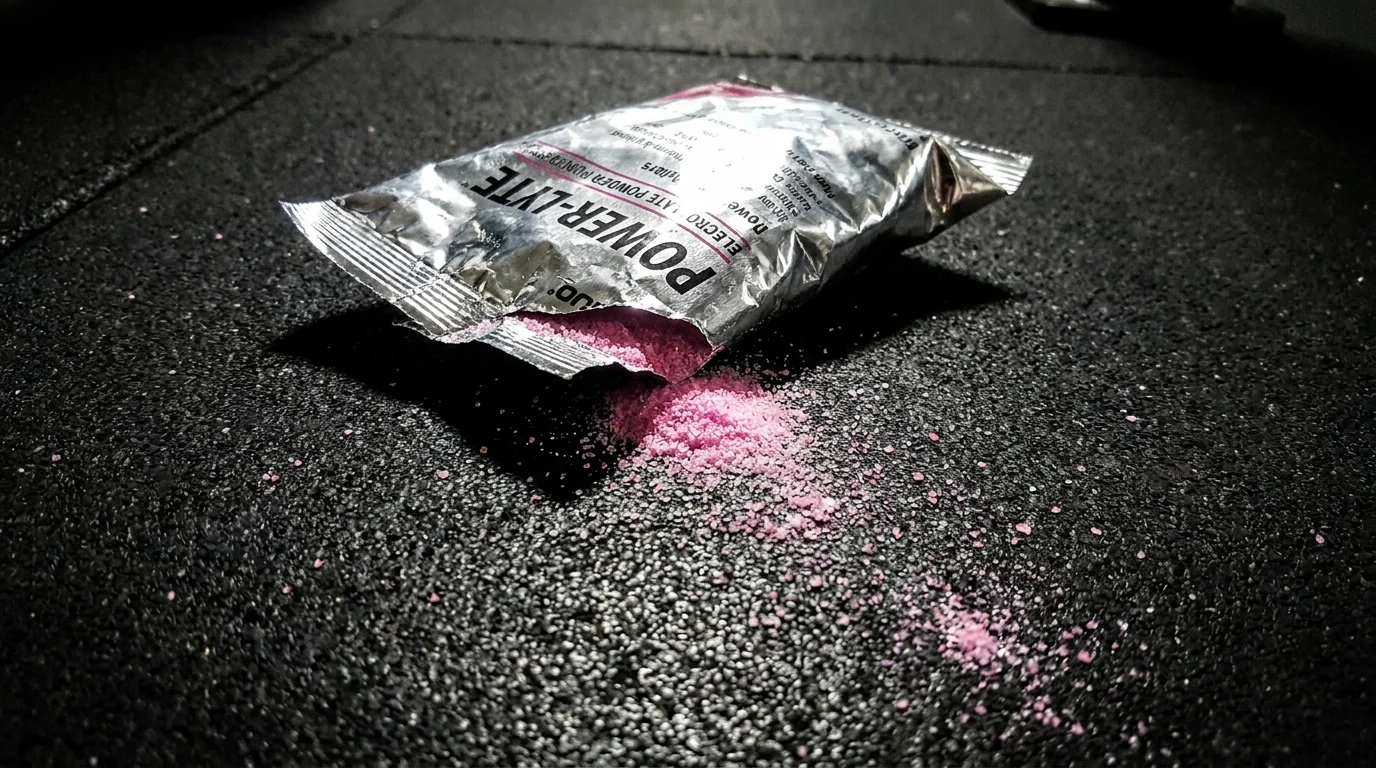
The cold air of an early morning gym has a distinct weight. Under the harsh hum of fluorescent tubes, the heavy thud of a kettlebell hitting the black rubber mat echoes through the empty room. You reach into your bag, pull out a sleek, metallic packet, and tear the top off. A cloud of bright pink dust, smelling intensely of artificial strawberry and citrus, spills across the dark floor, catching the light like tiny, fallen stars. You shake your cup, watching the cold water swirl into a vibrant neon hue, believing this is the ultimate act of clean recovery.
You have just spent forty-five minutes pushing your boundaries, your chest heaving and sweat dripping onto your collar. You pushed through the fatigue specifically to empty your system of circulating sugars and force your body to burn its own stored fat. But as that sweet, ice-cold liquid hits your tongue, a silent biochemical pivot occurs. Instead of locking in your hard-earned progress, you are quietly halting your fat burning engine before it even has a chance to warm up.
The wellness market has transformed these convenient little sticks into an unquestioned post-workout ritual. We tuck them into our pockets and stir them into our designer bottles, convinced that simple water is no longer enough to save us from dehydration. Yet, underneath the clean branding and promises of cellular rejuvenation lies a stark physiological reality that behaves much differently inside your blood vessels.
The Trojan Horse of Modern Hydration
To understand how this happens, think of your metabolism as a wood-burning furnace. To reach the dense, stubborn logs at the back—your stored fat—you must first burn through the quick-igniting kindling, which is your circulating blood sugar. Your workout successfully cleared out that easy kindling. Drinking a typical boutique electrolyte packet at this moment is not like adding wood to the fire; it is like dumping a bucket of wet sand directly onto the hot coals.
These powders rely on a clinical concept known as oral rehydration therapy. Developed to combat extreme dehydration in medical emergencies, this system uses a specific co-transport mechanism in the gut. To pull sodium across your intestinal wall instantly, the formula pairs every molecule of salt with a molecule of active carbohydrate, usually dextrose or glucose. While this is lifesaving for someone recovering from cholera, it functions as a fast-acting sugar bomb for a person who just completed a moderate morning run.
A Silent Plateau in the Suburbs
Consider the experience of Marcus Vance, a metabolic conditioning coach based in Austin, Texas. He spent years working with clients who did everything right—eating clean, tracking steps, lifting heavy—yet their body compositions remained entirely frozen. When Marcus had his clients swap their sweet, commercial hydration sticks for filtered water and a pinch of unrefined grey sea salt, their stubborn metabolic plateaus dissolved in less than three weeks. “We were treating basic morning sweat like we were running a marathon in the Sahara,” Marcus explains.
- Zone 2 cardio forces your body to stubbornly hold onto water weight
- Seed oil bans trick your body into clinging to stubborn belly fat
- Plant-based jerky packs enough hidden maltodextrin to guarantee intense afternoon cravings
- Under-desk treadmills actually lower your daily calorie burn over the week
- Family group chats subtly destroy your immune system and deep sleep
Decoding Your True Mineral Needs
Not every workout demands the same recovery response. Understanding your specific daily output allows you to protect your metabolism from unnecessary sugar spikes.
For the low-intensity mover, such as those who enjoy a brisk forty-five-minute walk or a morning yoga flow, your sweat rate is minimal. Your body does not require a fast-acting sugar transport system to absorb fluids. Drinking twenty grams of quick carbohydrates in your water bottle wipes out your caloric deficit instantly, turning your healthy habit into a net-positive sugar event.
For the strength trainer or high-intensity runner, the sensation of fatigue might make you crave a sweet reward. However, unless your training session exceeds ninety minutes of continuous, gasping effort, your liver retains more than enough stored energy to keep your cells fueled. Your muscles are crying out for raw minerals, not a rush of processed dextrose.
For the hot-climate enthusiast training in heavy humidity, your sweat rate is indeed high, which naturally triggers a brain signal to seek out energy. Instead of falling for a flavored packet, you can satisfy this thirst by focusing on raw, unflavored mineral elements that support blood volume without waking up your pancreas.
The Minimalist Rehydration Protocol
Protecting your metabolic progress does not mean skipping hydration altogether. It means separating the replenishment of raw minerals from the intake of processed sugars.
To hydrate clean, you must learn to bypass the commercial transport matrix entirely. Real hydration is quiet, inexpensive, and entirely unsweetened.
- Read the fine print: Check your labels for dextrose, maltodextrin, organic cane sugar, or brown rice syrup.
- Separate sugar from salt: Keep your post-workout window completely free of fast-digesting carbohydrates for at least one hour.
- Use raw minerals: Focus on unrefined salts that contain natural trace elements like magnesium and potassium.
- Sip, do not chug: Drink slowly to allow your gut to absorb the water without triggering a sudden blood volume spike.
The Tactical Toolkit: Combine 16 ounces of filtered room-temperature water, 1/4 teaspoon of French grey sea salt, and a fresh squeeze of real lemon juice. This simple blend delivers sodium, potassium, and trace magnesium directly to your cells without raising your blood sugar a single point.
Reclaiming the Quiet Sensation of Effort
We have been slowly conditioned to believe that every physical movement requires a consumer product to validate its worth. The bright foil packages, the artificial watermelon flavorings, and the chemical sweetness have replaced the honest, quiet satisfaction of a hard workout. When you strip away these colorful marketing crutches, you reconnect with your body’s true physiological feedback loops. True recovery is not something you buy in a single-serve sleeve; it is a natural process your body is already fully equipped to handle.
“Modern hydration marketing has convinced us that we are permanently dehydrated, turning a basic human need into a delivery vehicle for liquid calories.” — Dr. Helen Foster, Metabolic Health Researcher
| Key Point | Detail | Added Value for the Reader |
|---|---|---|
| The Dextrose Matrix | A fast-acting sugar used to drag sodium through the intestinal wall rapidly. | Explains why your ‘healthy’ morning drink behaves like a sugary dessert in your blood. |
| Fat Oxidation Halt | The immediate spike in insulin blocks the body from accessing stored fat reserves. | Reveals the hidden cause behind stubborn body composition plateaus. |
| Clean DIY Mineralization | Using unrefined sea salt and fresh citrus instead of highly processed packets. | Restores mineral levels instantly while keeping your daily fat burn fully active. |
Frequently Asked Questions
Are all electrolyte powders bad for weight loss?
Not all, but those containing dextrose, cane sugar, or high-glycemic sweeteners will pause fat burning. Look for unsweetened options.Can I drink sweet electrolytes during my workout instead?
Doing so keeps your blood sugar high, meaning your body will burn those liquid carbs rather than tapping into stored fat.What should I drink if I feel dizzy after working out?
Try plain water with a pinch of real salt. The dizziness is often a simple drop in blood pressure or sodium, not sugar.How do I know if my powder has hidden sugars?
Scan the label for ingredients ending in “-ose” or search for maltodextrin, which spikes insulin higher than table sugar.Does stevia or monk fruit also ruin the fat burn?
While they do not raise blood sugar, sweet tastes can still trigger a cephalic phase insulin response in some people, subtly slowing fat oxidation.