The room hums with an unbearable low frequency. Fluorescent ceiling tubes cast a sterile, greenish glaze over rows of identical banquet chairs, while a hundred overlapping voices turn the stale office air into dense, suffocating static. You feel it before you can name it: a rapid, icy drop in your gut, your breath catching behind your sternum like dry paper, and the sudden, terrifying certainty that every exit door has somehow drifted miles away.
You cannot run. You cannot cross your arms, drop to the floor, or begin theatrical alternate-nostril breathing without inviting thirty pairs of eyes to dissect your unraveling. Public spaces demand composure precisely when your primal survival circuits decide the room is on fire.
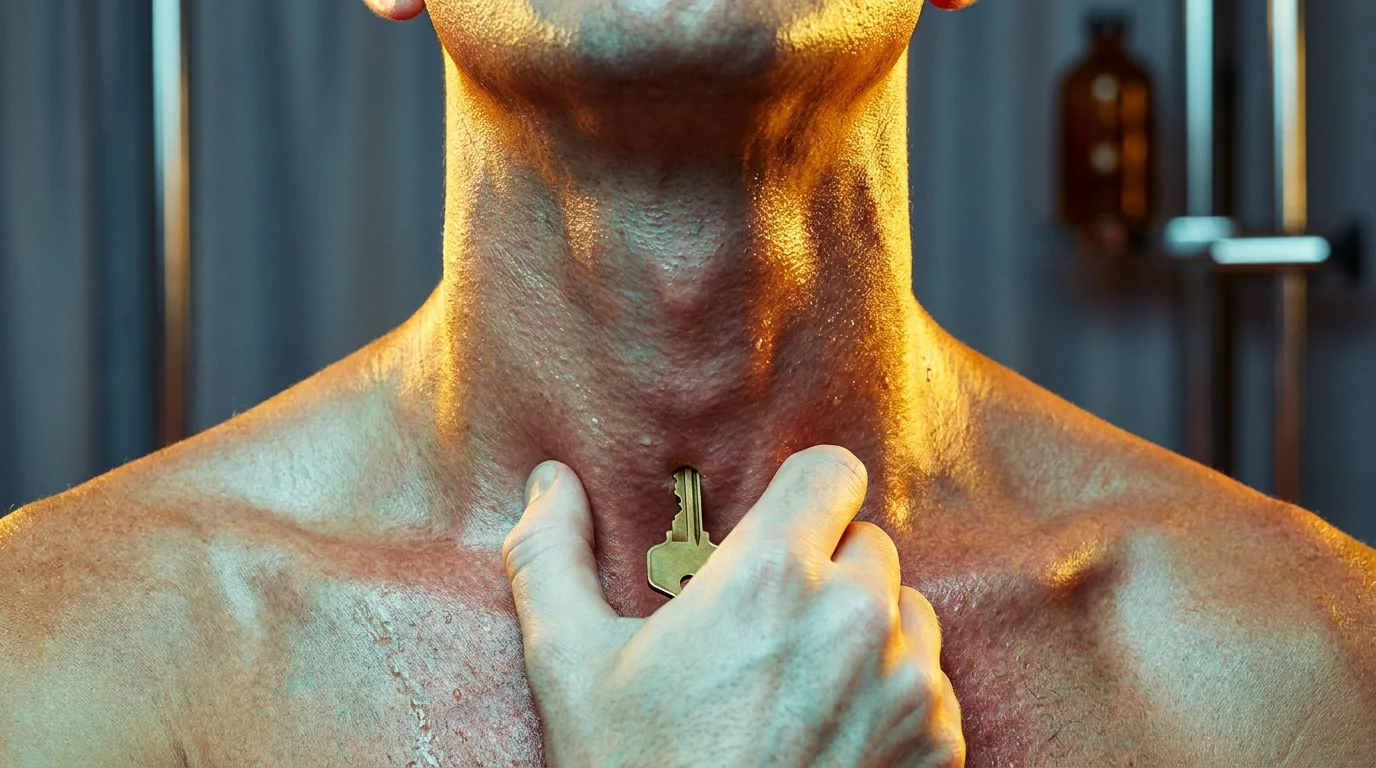
So your hand slides naturally into your right coat pocket, brushing past loose lint and paper receipts until your fingers wrap around cold brass. Keyring tooth pressing gives your nervous system an immediate, stealthy anchor right when sensory overload threatens to pull you under completely.
You select the longest, sharpest key on the ring, align its notched metal edge against the fleshy center of your palm, and close your fist. Nobody notices. From the outside, you look like someone casually listening to a presentation or waiting for an elevator, but beneath the fabric of your pocket, a profound neurological redirection has just begun.
The Sensory Circuit Breaker
When sudden panic surges during a crowded staff meeting or on a packed subway car, your amygdala floods the bloodstream with norepinephrine. Your field of vision narrows, peripheral blood vessels clamp shut, and internal narrative loops spin into catastrophic overdrive. The brain essentially mistakes an overwhelming social environment for a physical predator.
Standard grounding techniques often ask you to count five blue objects or mentally recite comforting mantras, but an adrenaline-hijacked cortex rarely cooperates with complex cognitive tasks. Pain and localized touch share high-priority pathways in the dorsal horn of your spinal cord, cutting directly through mental chatter with raw physical priority.
By pressing that cold, jagged metal tooth into the sensory-dense center of your hand, you create a controlled, benign nociceptive interrupt. It is not self-harm; there is no puncture, no blood, and no tissue damage. Instead, it operates like tapping the reset switch on a frozen laptop screen. The sharp point introduces a sharp, indisputable boundary between your physical self and the overwhelming external room.
- Warheads sour spray shocks tongue nerves instantly snapping racing panic attacks
- Evening melatonin gummies stall natural liver clearance leaving heavy morning brain fog
- Corn oil frying releases acrid airborne haze triggering throbbing sinus headaches
- Distilled water jugs flush essential sodium sparking shaky afternoon leg fatigue
- Cod liver oil restores stiff arthritic joints despite decades of skepticism
A Quiet Lesson from Transit Dispatch
Marcus Vance, a 46-year-old train dispatcher from Chicago, spent twelve years managing high-stakes track logistics while quietly nursing sudden claustrophobic panic attacks in underground control rooms. During unexpected signal failures, the combined noise of alarm squawks, radio chatter, and blinking switchboards would occasionally tip his nervous system into full adrenergic stall.
He discovered the key method purely by accident while gripping his locker ring in frustration. Over years of practice, Marcus mapped the exact geometry required to halt an internal spiral within forty seconds without alerting his shift supervisor. He learned that wandering fingers invite erratic worry, but a deliberate, focused mechanical point concentrates bodily awareness right where the mind needs it most.
Tactical Layers of Covert Grounding
Every public situation presents different physical constraints and clothing textures. Adapting your technique allows you to calibrate the stimulus without breaking professional rhythm.
The Coat Pocket Anchor
Ideal for winter commutes, standing receptions, or boardroom presentations where standing with hands casually pocketed feels completely natural. Keep your thumb braced over the smooth head of the key while the sharpest bitting faces inward toward your pericardium-8 pressure point (the direct center of your cup-shaped palm). Apply steady, rhythmic isometric pressure on your exhales.
The Seated Desk Grip
When seated around a conference table where keeping hands under the surface looks evasive, rest your hands loosely over a notepad. Tucking a small single key flat beneath your curled fingers against your thigh provides the exact same mechanical interrupt while keeping your forearms resting cleanly on the table.
The Commuter Loop
On crowded buses or subways where you must hold an overhead rail or strap, slide the ring around your index finger and let the key trail into your palm. As the vehicle sways, use the natural momentum of your grip to pulse tension against the metal, converting transit turbulence into a steadying somatic rhythm.
Mindful Application: The Three-Second Threshold
Executing this technique cleanly requires subtlety and clear boundaries so you ground your senses without damaging your skin.
- Locate the Apex: Find the small hollow directly in the center of your palm where your middle finger naturally touches when making a gentle fist.
- Set the Angle: Position the deepest valley of the key’s cuts against this sweet spot to distribute the point across two small ridges rather than a single blade edge.
- Match the Breath: Squeeze the key firmly as you exhale through pursed lips, holding the compression for four counts, then soften your grip slightly on the inhale.
- Track the Temperature: Notice the precise moment the icy brass warms to your body temperature; this sensory shift signals your vascular system is opening back up.
Your tactical toolkit needs only three things: a sturdy brass house key (avoid aluminum copies that bend), an uncrowded pocket lining free of abrasive clutter, and thirty seconds of quiet attention. Focus strictly on texture rather than fighting the ambient noise around you.
Reclaiming the Room
Panic feeds on isolation and exposure. It thrives on the quiet terror that your body is betraying you in front of strangers who would never understand your distress. When you realize that a tiny, common household object sitting in your pocket can act as a reliable anchor, the dynamic changes.
You no longer walk into crowded auditoriums, networking dinners, or packed transit cars as a passive victim of your adrenaline system. That small jagged piece of cut metal becomes a private bridge back to baseline stability. You do not need to escape the room to find safety; you can build it quietly inside your own hand.
The fastest way to quiet a racing mind is to give the skin an honest, harmless truth to hold onto.
| Key Point | Detail | Added Value for the Reader |
|---|---|---|
| Pressure Point Selection | Center of the palm (Laogong / PC8 nerve nexus) | Stimulates parasympathetic tone without visible movements |
| Edge Dynamics | Jagged key teeth instead of smooth coins | Provides crisp sensory contrast that cuts through brain fog |
| Application Timing | Four-second compression cycles on the exhale | Synchronizes heart rate variability with motor control |
Frequently Asked Questions
Does pressing a key into your palm cause permanent nerve bruising?
No, as long as you use blunt static pressure rather than dragging or gouging the metal. The goal is sensory input, never tissue damage.Why is a key better than a smooth pocket stone or coin?
Smooth textures quickly blend into background sensation during acute panic, whereas the varied teeth of a cut key provide sharp tactile feedback that demands cortical attention.Can I use a car key fob instead of a traditional house key?
Plastic fobs lack the cold thermal contrast and defined mechanical edges that make standard brass keys so effective for rapid sensory interrupts.How long should I keep pressing before expecting relief?
Most people experience a noticeable drop in heart rate and chest tightness within thirty to sixty seconds of sustained, breath-matched pulses.Will this work if I am already in the middle of hyperventilating?
Yes. The physical discomfort acts as a natural circuit-breaker, anchoring your awareness to your hand so you can regain control of your breathing rhythm.