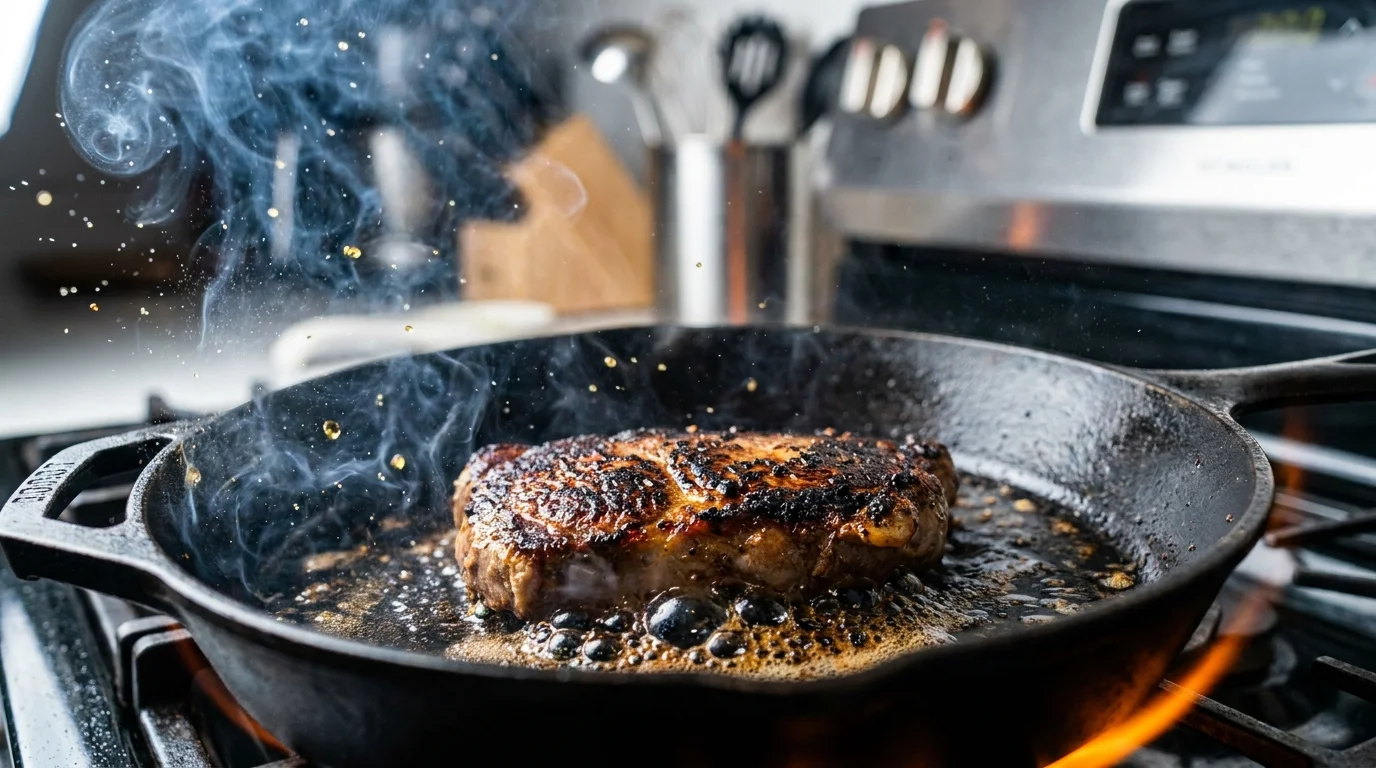
The cast-iron skillet sits on the front burner, shimmering under an amber halo from the range hood. You drop in a neat pour of clear oil, wait for the faint surface ripples, and lay down two seasoned cutlets. The sizzle is immediate and sharp, filling the room with an appetizing sizzle, but seconds later, a fine, ghostly plume drifts above the rim. It carries a faint, sharp sting that tickles the bridge of your nose.
You lean in to flip the meat, breathing through what feels like a hot, invisible gauze. Within thirty minutes of clearing the table, an unexpected weight settles behind your eyebrows. Your eyelids feel thick, your thoughts move through cold honey, and a dull sinus pressure sets in. It is easy to blame a food coma or carb overload, yet the real culprit was never on your plate.
The culprit rose into the air before you took your first bite. When refined soybean oil is pushed past its thermal tipping point, it fractures into micro-aerosolized lipid fragments. These invisible indoor plumes slip past ordinary kitchen vents, turning a wholesome home-cooked meal into an involuntary dose of respiratory and cognitive fatigue.
The Thermal Trap: When Clear Oil Turns Invisible Irritant
Most home cooks treat cooking fats like neutral stagehands that merely lubricate the pan. We are taught that highly processed seed oils have ultra-high smoke thresholds on paper, reassuring us that blazing stovetop temperatures are completely harmless. Yet on a hot metal surface, heat distribution is rarely uniform; localized dry spots regularly crest 450 degrees Fahrenheit, far outstripping the oil’s actual structural stability.
Think of cooking oil as a stack of dry twigs rather than a solid log. Under steady, moderate heat, those twigs hold together and toast gently. But under the violent thermal spikes of a home burner, polyunsaturated fatty acids snap apart instantly, throwing off volatile organic breakdown products like acrolein and oxidized fatty acids that aerosolize straight into your living space.
When you inhale these tiny airborne oil droplets, your nasal passages interpret them as foreign pollutants rather than appetizing aromas. Your mucosal lining mounts an immediate, subtle inflammatory defense, constricting local blood vessels and diverting cellular resources. That sudden post-meal brain fog is not sluggish digestion; it is an acute, low-grade neurovascular response to breathing particulate grease.
- Triple-filtered tap water flushes natural mineral reserves sparking heavy midday fatigue
- Nature Valley bars trigger sudden sugar spikes and heavy midafternoon sluggishness during workdays
- Polite smiling habits during difficult client calls drain nervous energy causing evening exhaustion
- GLP-1 compounding rules shift clinical standards as federal regulators halt custom pharmacy batches
- Soft memory foam mattresses strain lower spinal curves triggering painful morning back stiffness
The Stovetop Shift: An Armchair Ventilation Lesson
Consider Marcus Vance, 42, an independent project manager and avid home cook in Columbus, Ohio. For months, Marcus noticed that his productivity tanked completely after quick lunch sears or weeknight stir-fries, leaving him struggling to focus during afternoon meetings. He swapped to non-dairy ingredients, eliminated bread, and reduced his portion sizes, yet the heavy mental stupor remained stubbornly consistent. It was only when a visiting HVAC technician measured his kitchen’s indoor air quality during a routine filter replacement that the truth surfaced: his ambient air was saturated with microscopic lipid particles lingering for hours after frying with soybean oil.
Adapting Your Skillet: Three Profiles for Clean Cooking
For the Quick-Sear Enthusiast
If your weeknight routine relies on blistered cutlets, charred greens, or flash-fried stir-fries, you need oils with rigid molecular backbones. Polyunsaturated chains buckle quickly, whereas monounsaturated or saturated fats hold firm against localized heat spikes without splintering into airborne irritants.
Switch your base fat to cold-pressed avocado oil or traditional tallow for high-temperature pan work. These choices maintain their integrity well above 400 degrees Fahrenheit, keeping airborne particulate emissions low and your kitchen air noticeably lighter.
For the Steady Simmerer
If you prefer gentle braises, pan-sweated aromatics, or slow shallow poaching, refined soybean oil may appear harmless because it stays below visible burn thresholds. However, cumulative low-heat exposure still triggers slow lipid degradation over extended cooking times, steadily saturating compact apartments.
Keep pan temperatures moderate by establishing a solid preheat routine with thick-bottomed stainless steel or enameled cast iron. Even heat distribution stops random hotspots from generating continuous microscopic plumes while you simmer sauces.
For the Small-Space Dweller
Cooking in an apartment or a galley kitchen without an exterior-vented exhaust hood multiplies your exposure tenfold. Recirculating microwave hoods simply push grease-laden air through a cosmetic mesh screen, trapping heavy droplets while spraying fine aerosolized particles back into your eyes and lungs.
Prioritize cross-ventilation before the burner clicks on, not after smoke appears. Cracking two opposing windows creates a persistent draft that sweeps microscopic oil mists outward before they can settle into furniture and soft fabrics.
Mindful Application: Clearing the Kitchen Horizon
Reclaiming clean air while cooking does not require abandoning high-heat searing. It simply demands treating pan temperature and ventilation with the same respect you give your spices.
Begin by listening closely to the pan before adding any ingredients. A pan that shows wisps of white vapor before the fat touches metal is far too hot for polyunsaturated oils.
- Calibrate pan heat first: Warm the dry pan over medium heat for 3 minutes before adding fat to prevent instantaneous thermal shock.
- Watch the viscosity: Add your cooking fat and watch the surface. The oil should ripple like silk, never spiderweb or produce fine white ribbons of smoke.
- Engage exhaust preemptively: Turn range hoods to high at least 60 seconds before cooking begins to establish directional airflow.
- Manage pan moisture: Pat protein cutlets completely dry with paper towels to prevent water droplets from violently splattering oil into the surrounding air.
- Maintain burner discipline: Lower your stove dials by just 15 percent; high thermal mass cookware carries enough stored energy to brown proteins without incinerating the cooking fat.
The Bigger Picture: Reclaiming Mental Clarity at the Table
Cooking at home is meant to be a restorative ritual, an act of grounding care after a demanding day. When the simple act of preparing dinner leaves you feeling dazed, stuffy, and mentally sluggish, the domestic sanctuary begins to feel subtly hostile. Recognizing that your afternoon slump may stem from the air around your stove rather than personal weakness restores your agency.
Mastering the thermal ceiling of your cooking fats allows you to enjoy deep, savory crusts and delicate textures without filling your living quarters with an invisible, irritating haze. Once you clean up your pan chemistry, your kitchen becomes what it was always intended to be: a place of nourishment that leaves your mind clear and your senses completely alert.
“The true temperature of a kitchen is measured not by the thermostat on the wall, but by the clarity of the air hanging over the cutting board.”
| Key Point | Detail | Added Value for the Reader |
|---|---|---|
| Lipid Fracture | Polyunsaturated bonds in soybean oil break under hot spots. | Helps prevent unintended inhalation of acrolein and aerosolized free radicals. |
| Ventilation Lag | Recirculating hood fans disperse tiny airborne particles. | Prompts simple cross-ventilation setups to maintain unpolluted indoor living spaces. |
| Cognitive Fatigue | Upper airway irritation triggers systemic inflammation. | Explains post-meal lethargy without needless dietary restrictions or food guilt. |
Frequently Asked Questions
Why does refined soybean oil smoke faster than its official rating?
Published smoke points reflect controlled lab environments. On domestic stovetops, dry pan patches and burner hotspots often exceed 450 degrees Fahrenheit, sparking rapid lipid breakdown well before the entire pan registers that heat.How can I tell if my pan is producing harmful airborne particulates?
If your eyes water, your nostrils tingle, or a distinct sharp odor lingers for hours after cooking, your oil has crossed its thermal limit and produced aerosolized breakdown products.Does turning on the microwave exhaust fan protect my breathing?
Most standard over-the-range microwave vents do not exhaust outdoors; they merely pull grease through a metal mesh and recirculate micro-particulates straight back into your face. Cracking a nearby window is far more effective.Which cooking fats produce the fewest irritating aerosols during a hard sear?
Fats rich in monounsaturated or stable saturated fatty acids, such as avocado oil, clarified butter (ghee), or quality tallow, withstand hot surfaces with minimal particle release.How fast does post-cooking brain fog usually clear up?
Once you step outside or introduce crisp, cross-ventilated fresh air to clear nasal passages, the heavy cognitive fog and sinus stuffiness typically fade within 45 to 60 minutes.