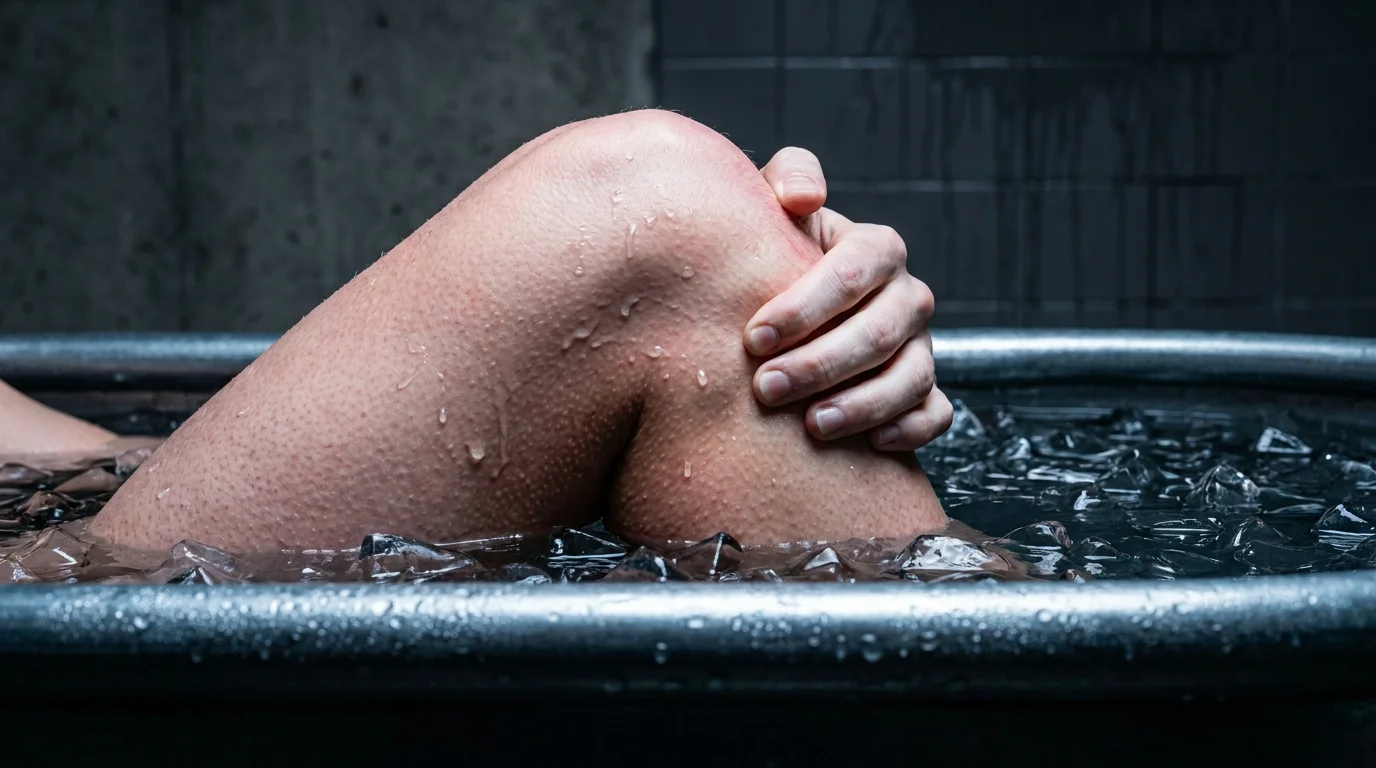
The back patio smells of damp cedar and raw pine as the lid of the tub drops back with a dull thud. Your skin is still radiating the deep, prickling heat of a heavy training session, heart rate just beginning to settle back into its resting groove. You step over the edge, suck in a sharp breath through your teeth, and let the grey, forty-four-degree water rise past your collarbones. The shock feels like discipline made physical, an immediate freeze-frame applied to tired muscles.
For years, the ritual has been treated as gospel: the harder you work, the colder the water must be to stamp out inflammation before it can take root. Yet hours later, when the house is dark and you slide your legs out of bed to walk toward the kitchen, reality hits. Your knees do not feel light, bouncy, or restored. Instead, they feel like dry hinges on a weathered barn door, producing a dull, grinding friction with every single step down the hallway.
That brittle sensation is not a sign of delayed muscular growth or a badge of honor from an intense workout. It is the direct biological consequence of abruptly slamming circulation shut while your connective tissues are still desperately trying to clear metabolic waste and circulate cellular fuel.
When you submerge warm, loaded joints into an ice bath within minutes of finishing a session, your vascular system panics. The sudden drop in skin temperature triggers violent peripheral vasoconstriction, pulling blood away from your extremities toward your core to keep your vital organs warm. While this numbs acute perception of ache, it leaves your load-bearing joints caught in a sudden, cold trap.
The Frozen Sponge: Why Rapid Chilling Traps Waste Inside the Joint
Consider the cartilage and synovial fluid inside your knees and hips like a dense natural sponge soaked in thick, golden olive oil. When your body is warm from movement, that fluid is thin, slick, and easily pumped through every microscopic crevice of the joint capsule as you bend and extend. The mechanical work of your workout forces used fluid out and invites fresh, nutrient-dense fluid in.
Drop that warm joint straight into freezing water, and you immediately congeal that internal lubricant into cold lard. Synovial fluid thickens rapidly under sudden cold exposure, drastically increasing internal friction just as the tiny micro-vessels feeding the joint capsule clamp shut. Rather than carrying off the lactic acid, cellular debris, and inflammatory cytokines produced during your reps, your body traps metabolic debris inside cartilage where blood flow is naturally sluggish to begin with.
The following morning, when your alarm rings and you stand up, those joint surfaces are forced to glide against one another without adequate fluid lubrication. The grinding sound you feel in the patella isn’t your muscles recovering; it is dehydrated cartilage protesting against artificial circulatory starvation.
- Plug-in wall warmers trigger dry throat tickles and afternoon voice cracking
- Sweat tent sessions trigger sudden dizzy spells and tight chest pressure
- Microcrystalline cellulose powders irritate digestive linings leaving stubborn chalky morning bloat
- Daily levothyroxine schedules clash with slow metabolic rates stalling steady weight loss
- Underwire sports bras crush lower rib cages triggering sudden shallow breathing panic
Dr. Marcus Vance, a 48-year-old sports biomechanist based in Flagstaff, Arizona, spent years tracking patellar degradation among competitive master sprinters. In his clinic, he noticed a recurring pattern: athletes who sat in freezing tubs immediately post-track reported twice as much next-morning joint crepitus as those who simply walked on grass for fifteen minutes. Vance discovered that chilling connective tissue while it is inflamed and depleted forces the joint capsule to defensively tighten, turning a minor training stress into structural stiffness.
Calibrating Recovery: Choosing Your Thermal Strategy
Recovery is never a blunt instrument; what calms the nervous system does not always serve the mechanical health of your joints. To stop waking up with creaking knees, you have to separate your soft-tissue needs from your joint requirements.
For the Heavy Barbell Lifter
If your training involves axial loading, heavy squats, or explosive pulls, your joints undergo substantial compressive stress. Submerging these heavily compressed joints into sub-fifty-degree water immediately halts the natural influx of repair proteins and keeps the joint capsule in a tight, shortened state. Instead of ice, focus on unweighted range of motion for twenty minutes post-lift to gently squeeze out waste while your core temperature remains elevated.
For the Pavement Pounder
Road runners and field athletes deal with repetitive impact micro-trauma across ankles, knees, and hips. Freezing soak tubs cause the tiny smooth muscles around your arterioles to spasm, sparking an adrenergic rebound of delayed stiffness several hours later. For road warriors, gentle contrast rinses or mild water temperatures allow joint capsules to decompress without freezing the synovial fluid into a sticky paste.
For the Cold Enthusiast Seeking Clarity
If you rely on the cold tub for the mental reset and dopamine surge, decouple the soak from your heavy training window. Plunging first thing in the morning on a non-lifting day gives you the sharp neurochemical wake-up call without freezing vulnerable, newly taxed joint cartilage.
The Decompression Protocol: A Mindful Cooling Sequence
Shifting away from aggressive freezing does not mean abandoning cold entirely. It means respecting the natural inflammatory cascade your body needs to rebuild connective tissue cleanly.
Start by allowing your natural circulatory pump to do its job for at least thirty minutes after your final set. Let your sweat dry naturally, drink room-temperature mineral water, and keep your legs moving through easy walking. This gradual downshift prevents pooling without shocking your vascular network.
If you choose to use water for recovery, keep these guidelines close at hand:
- Respect the Window: Wait at least two to four hours after heavy joint-loading exercise before entering cold water.
- Moderate the Mercury: Aim for 58°F to 62°F rather than sub-50°F extremes; this stimulates vagal tone without freezing synovial fluid.
- Cap the Duration: Keep immersion between three to six minutes to prevent deep tissue hypothermia.
- Gentle Mobilization: Perform five minutes of unweighted air squats or slow ankle circles immediately upon exiting the tub.
Your goal is to invite relaxation into the nervous system, not to freeze your knee joints into defensive immobility.
Reclaiming Elasticity Over Shock Therapy
It is easy to confuse extreme physical sensation with genuine physiological progress. Dropping into water so cold it steals your breath feels like an act of relentless discipline, an undeniable proof that you take your physical health seriously. But your joints do not run on grit; they run on micro-circulation, smooth mechanical lubrication, and steady tissue temperature.
When you trade the post-workout ice bath for gentle cooldowns and delayed, temperate cooling, the morning grinding vanishes. You wake up with knees that bend silently, ankles that accept weight without hesitation, and a body that feels ready to move rather than locked in protective armor.
“Real recovery leaves your tissues supple and quiet, not braced against the cold.”
| Key Point | Detail | Added Value for the Reader |
|---|---|---|
| Synovial Viscosity | Cold temperatures turn thin synovial fluid thick and waxy. | Maintains natural joint lubrication and prevents morning knee grinding. |
| Vascular Constriction | Freezing water shuts down peripheral micro-vessels abruptly. | Allows metabolic byproducts to clear naturally without getting trapped in cartilage. |
| Timing Optimization | Delay cold exposure by 2 to 4 hours post-training. | Preserves natural adaptation signals while still delivering nervous system benefits. |
| Water Temperature | Shift target range from 45°F up to 58°F–62°F. | Prevents defensive joint capsule tightening while soothing systemic heat. |
Frequently Asked Questions
Why do my knees crack so much more the morning after an ice bath?
Rapid cooling thickens your synovial fluid and restricts blood supply to the joint capsule, leaving cartilage dry and prone to friction until your body thoroughly warms up again.Should I stop using my cold tub entirely?
No, but you should move your plunge sessions to resting days or wait at least four hours after heavy lifting so your natural recovery processes finish unhindered.Does cold water actually stop muscle soreness?
It numbs pain signals to the brain, which feels like relief, but it often delays actual tissue repair by halting normal blood flow and lymphatic drainage.Is contrast therapy better than a straight freezing soak?
Yes, alternating between warm and cool water creates a gentle vascular pumping action that flushes tissues without locking down joint mobility.What is the best immediate post-workout cooldown for stiff joints?
Ten to fifteen minutes of easy walking, gentle cycling, or unweighted mobility work followed by thorough hydration does far more for joint health than freezing water.