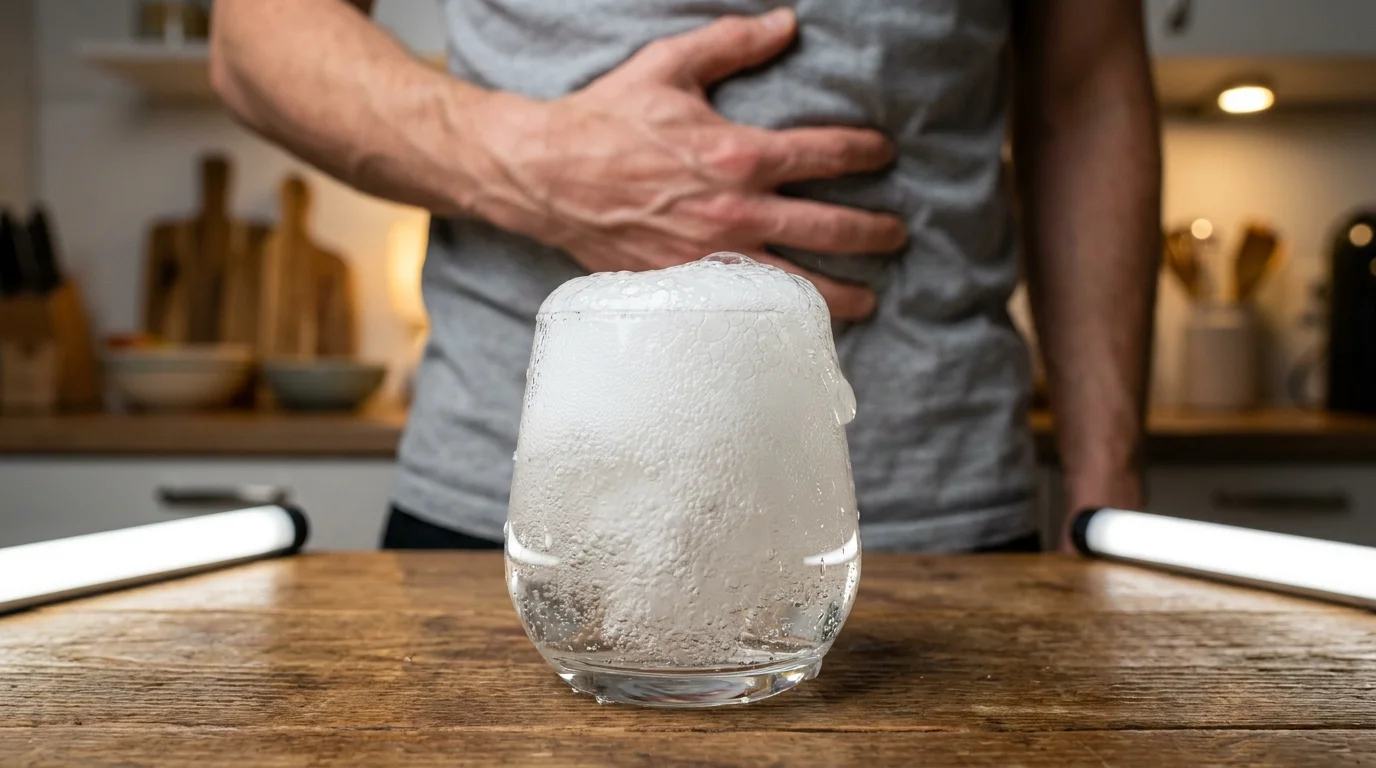
The kitchen is quiet at 9:00 PM, save for the dull hum of the refrigerator and the gentle clinking of a teaspoon against a water glass. You have just finished a rich, satisfying dinner—perhaps a seared steak or a hearty pasta bowl—and a familiar warmth is beginning to climb your throat. Seeking immediate peace, you reach into the pantry for the familiar orange cardboard box, stirring a cloudy spoonful of baking soda into tepid tap water. The mixture bubbles faintly, smelling faintly of clean mineral chalk.
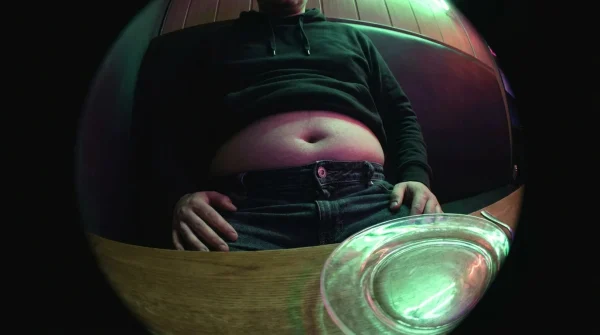
You drink it down in two long swallows, anticipating that cool, quenching wave of relief your grandparents swore by. Instead, ten minutes later, your midsection feels like an over-inflated tire tucked directly beneath your ribcage. The anticipated ease never arrives; in its place sits a dense, immovable pressure that makes taking a deep breath feel like pushing against wet concrete.
You try to coax out an easing burp, but the air gets caught halfway up, sharp and acidic. Your stomach feels frozen mid-churn, heavy as a stone anchor. What was meant to extinguish a digestive fire has instead locked the entire furnace down, turning a simple post-dinner habit into an evening spent pacing the living room rug with your hand pressed against your diaphragm.
That sudden, uncomfortable bloat is not a failure of your stomach to tolerate a folk remedy. It is the predictable outcome of an abrupt chemical collision taking place right along your delicate gastric lining, setting off a chain reaction that stops your meal in its tracks.
The Fire Extinguisher Fallacy: Why Stalling the Sizzle Locks the Gate
To understand why a sodium bicarbonate tonic turns a rich meal into a painful brick, consider your stomach as an active forge rather than a vat of irritating fluid. When a heavy meal arrives, your stomach pumps out hydrochloric acid to drop its internal environment to a searing pH of 1.5 to 2.0. This intense acidity is not an accident or a design flaw; it is the master key that activates pepsin, the primary enzyme responsible for unraveling dense proteins.
When you dump a concentrated alkaline salt into that acidic crucible mid-meal, you trigger an immediate acid-base neutralization. Chemically, sodium bicarbonate reacting with hydrochloric acid yields three things: water, common table salt, and an instantaneous flood of carbon dioxide gas. In an empty stomach, that gas might easily escape upward. But beneath six ounces of dense food, that sudden burst of gas has nowhere to travel, trapping expanding carbon dioxide bubbles beneath the meal like steam trapped beneath a heavy lid.
Worse still, by abruptly neutralizing that acid, you instantly deactivate your protein-digesting enzymes. The muscular valve at the bottom of your stomach—the pyloric sphincter—refuses to open until food is sufficiently acidified and broken down into fine liquid chyme. By snuffing out the gastric fire, you have extinguished the flame while leaving raw fuel sitting on the grate. The stomach wall distends, the vagus nerve sounds an alarm of acute fullness, and you are left with painful upper-gut backpressure.
- Standing desk risers trigger sudden room spins and wobbly knee weakness
- Freezing soak tubs lock post-workout joints into stiff next-morning grinding
- Plug-in wall warmers trigger dry throat tickles and afternoon voice cracking
- Sweat tent sessions trigger sudden dizzy spells and tight chest pressure
- Microcrystalline cellulose powders irritate digestive linings leaving stubborn chalky morning bloat
The Laboratory in the Kitchen: Dr. Marcus Vance on the Neutralization Stall
Dr. Marcus Vance, a 52-year-old clinical gastroenterologist practicing in Richmond, Virginia, spends his afternoons untangling this exact cycle with patients who believe their digestion is permanently broken. He recalls a retired mechanic named Greg who drank half a teaspoon of baking soda every evening after dinner to combat what he called ‘heavy chest tightness.’ Greg assumed his stomach was naturally acidic and unruly, requiring nightly dousing.
When Dr. Vance ran a real-time gastric analysis, he discovered that Greg’s stomach acid wasn’t excessive; it was actually depleted from years of reflexive antacid use. The nightly fizzing tonic was neutralizing the scarce acid Greg did produce, leaving his dinners to sit unchurned for four to five hours. Undigested starches and fats were left to stagnate at body temperature, fermenting in place and generating secondary microbial gases that ballooned upward against his diaphragm. Once Greg swapped the pantry tonic for small digestive adjustments, his agonizing evening rib pressure vanished within seventy-two hours.
Deciphering the Distension: Three Ways the Tonic Backfires
Not every digestive tract responds to baking soda in the exact same manner, but the underlying mechanics tend to divide into three distinct patterns depending on what you ate and how your body moves.
For the High-Protein Diner
If your plate was dominated by grilled meats, eggs, or dense cheeses, your stomach requires maximum acidity for sustained proteolytic breakdown. Introducing a bicarbonate tonic during the peak of this work paralyzes your digestive enzymes. The dense food forms an impermeable cap over the stomach pool, forcing newly formed carbon dioxide sideways, stretching sensitive upper abdominal tissues until your posture stiffens in defensive guarding.
For the Sedentary Evening Rester
If you move directly from the dinner table to the sofa, gravity works against you. In a seated or reclined position, the junction between your stomach and esophagus is submerged beneath the resting liquid pool. When the rapid effervescence begins, the trapped gas cannot find the stomach’s natural escape vent. Instead of a quick, relieving release, the gas creates rolling, spasming pressure waves that radiate into your lower chest, mimicking heart strain.
For the Low-Sodium Watcher
A single level teaspoon of baking soda delivers roughly 1,200 milligrams of elemental sodium—more than half the recommended daily allowance for an adult—in a single liquid gulp. This sudden osmotic shock draws water out of your surrounding tissues directly into the stomach cavity to balance the salinity. The result is a dual misery: localized gastric swelling paired with systemic fluid shifts that leave your fingers stiff and your throat dry within an hour of drinking.
Restoring the Crucible: Mindful Shifts for Calmer Digestion
Breaking free from the baking soda rebound does not require complicated apothecary bottles or strict fasts. It begins with honoring the chemistry of your digestive system rather than fighting it.
- Postpone fluid intake for forty-five minutes following heavy meals to avoid diluting natural stomach secretions.
- Engage in an unhurried, ten-minute stroll around the house or yard immediately after dining to encourage downward gastric motility.
- Loosen any restrictive waistbands or belts to allow the diaphragm to expand naturally during quiet nasal breathing.
- Sip three ounces of warm, plain water if you feel parched, letting the warmth relax the pyloric valve without altering fluid chemistry.
When sudden chest burning tempts you toward the pantry cupboard, rely on your Tactical Toolkit to ease the flare without neutralizing your digestive progress.
The Digestive Comfort Toolkit
- Water Temperature: 105°F to 110°F (comfortably warm, like bathwater; never iced, which shocks smooth muscle).
- Resting Posture: Elevated at a 30-degree incline on your left side to keep the gastric inlet above the fluid line.
- Kitchen Alternative: One tablespoon of raw, unfiltered apple cider vinegar stirred into four ounces of warm water if low-acid stagnation is the culprit, taken before eating rather than after.
- Gentle Movement Window: 15 minutes of slow, upright pacing to recruit gravity for natural downward gas movement.
The Clear Path Forward: Working With Your Natural Rhythms
There is an instinctive human desire to silence physical discomfort with quick, decisive actions. When your chest burns or your stomach churns, an effervescent glass feels like an active, cleansing remedy. Yet true digestive ease is rarely achieved by staging an impromptu chemistry experiment inside your belly after a long day.
When you step back and allow your body’s natural acids to complete their work, the need for emergency kitchen tonics fades. Digestion is not a conflict to be quelled with alkalizing powders; it is an orchestrated biological rhythm that asks only for time, warmth, and space to run its course. By stepping out of the way of your stomach’s innate heat, you trade the tight, breathless evenings of the past for deep, unburdened sleep.
True digestive comfort comes from respecting your stomach’s natural heat, not from extinguishing it every time it does its job.
| Key Point | Detail | Added Value for the Reader |
|---|---|---|
| Acid Inactivation | Sodium bicarbonate drops gastric acidity, shutting down the protein-splitting enzyme pepsin instantly. | Helps you understand why meat and dense proteins feel like wet stones after taking home antacids. |
| Gas Trapping | The neutralization reaction creates rapid carbon dioxide gas beneath the physical weight of your meal. | Explains the precise mechanical cause of sharp, immovable upper-ribcage distension and tight belching. |
| Osmotic Water Draw | Over 1,000mg of sodium in one dose draws fluid into the gut while dehydrating peripheral tissues. | Prevents accidental sodium spikes that cause midnight thirst, morning hand swelling, and elevated blood pressure. |
Frequently Asked Questions
Why does baking soda make me burp so violently after drinking it?
When alkaline bicarbonate mixes with your natural hydrochloric acid, it instantly converts into carbon dioxide gas. The rapid volume expansion forces the lower esophageal sphincter open, producing abrupt, forceful belches that can carry stinging acid upward with them.How long should I wait after eating before taking any digestive support?
You should allow your stomach at least sixty to ninety minutes of undisturbed work after a standard meal before introducing remedies, giving your natural enzymes adequate time to break down dense solids in an acidic environment.Can drinking baking soda on an empty stomach cause the same bloating?
On an empty stomach, the gas produced usually vents quickly without obstruction, but the sudden absence of acid can prompt your stomach to overproduce acid shortly after—a phenomenon known as acid rebound.What is the safest immediate position if trapped gas strikes under the ribs?
Lie down on your left side with your torso elevated by two pillows. This aligns your esophagus above the stomach’s natural curvature, allowing trapped air bubbles to consolidate and pass without carrying liquid bile upward.Is baking soda ever appropriate for mild indigestion?
It can serve as a rare, short-term measure for sudden heartburn on a relatively empty stomach, but it should never be used as a routine post-meal digestive aid or a fix for heavy overeating.