Quietly rubbing tactile strap ridges under a conference desk lowers elevated stress hormones during tense meetings before your pulse can spiral out of control. The boardroom air smells faintly of dry marker ink and over-extracted drip coffee, while overhead fluorescent tubes hum with a faint, sterile vibration that vibrates straight through your temples. Across the laminate table, a difficult question hangs suspended in the room, waiting for your response while your throat tightens and your ribs feel like they are shrinking two sizes too small.
Standard wellness advice instructs you to close your eyes, take sweeping belly breaths, or excuse yourself to run cold water over your wrists in the restroom hallway. But in a room packed with senior leadership and observant peers, bowing your head in a conspicuous meditation pose is often a professional impossibility. You cannot simply vanish when a sudden wave of panic surges, and trying to swallow down that rising dread through raw willpower alone only amplifies the tremor in your fingers.
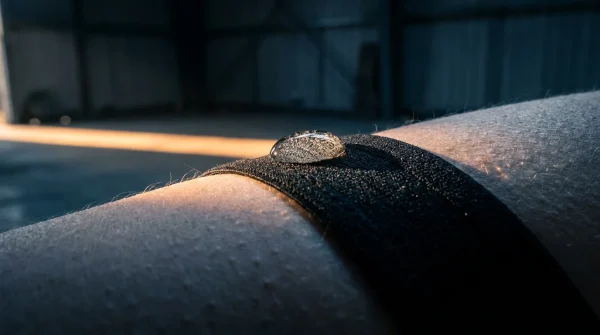
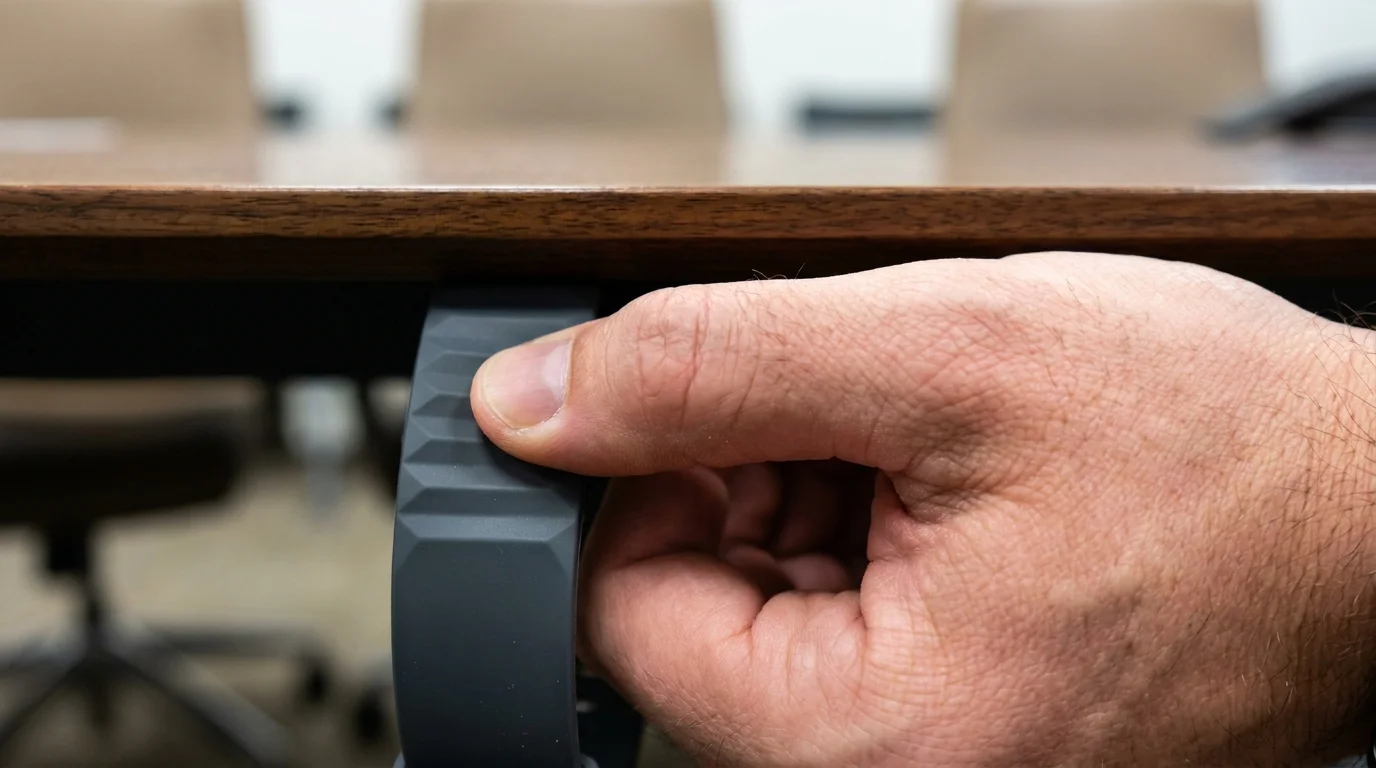
Instead, your resting left hand stays completely flat on your thigh, millimeters beneath the veneer edge of the desk. Your right thumb finds the sharp, micro-ribbed silicone or braided nylon weave wrapped around your wrist, tracing the textured ridges in slow, measured strokes. To anyone watching from across the room, you are merely listening with poised, quiet concentration, yet your peripheral nervous system is receiving an urgent, physical tether to the concrete present.
The Sensory Circuit Breaker: Turning Friction into Calm
When panic strikes in a high-stakes professional setting, your autonomic nervous system misreads the social tension of a review or presentation as an imminent predatory ambush. Your amygdala demands a physical exit, flooding your bloodstream with epinephrine, shunting circulation away from your digestive tract, and pooling tension into your neck and chest. Trying to talk yourself out of this state with rational thoughts rarely works, because your survival brain has effectively disconnected higher cognitive reasoning to prepare for fight or flight.
Tactile grounding hacks the sensory loop by providing a high-definition physical sensation that demands real-time neurological bandwidth. The human fingertip contains one of the densest fields of mechanoreceptors anywhere on the body, capable of detecting microscopic surface elevations down to single microns. When your thumb tracks across a structured, waffle-iron rubber grid or a coarse herringbone watch strap, those nerve endings send an undeniable sensory reality check directly to your somatosensory cortex, breaking the internal loop of catastrophic thoughts.
Think of your racing anxiety as an overwhelming static feedback screech inside an audio system. Trying to whisper calm thoughts will not silence the noise, but running your thumb along a raised ridge acts like plugging a physical patch cable into an alternative speaker jack. The nervous system cannot fully process two competing somatic alarms at once; by feeding it benign, high-contrast texture, you give the panic nowhere to expand.
- Peanut cooking oil searing releases harsh fumes that trigger sudden afternoon brain fog
- Reverse osmosis water strips daily mineral balance triggering stubborn afternoon exhaustion
- Pushing rolling carts speeds up core muscle fade in older adults
- Raw horseradish spoonfuls hijack racing panic loops to restore calm focus immediately
- Mopping hardwood floors strains lumbar spinal discs sparking persistent joint aches
Consider Elena Morales, a 38-year-old financial auditor based in Chicago, whose quarterly reviews routinely triggered sudden tachycardia and lightheadedness. Elena swapped her polished, smooth leather watch strap for a heavy-gauge ribbed diver band with alternating matte ridges. During an aggressive budget interrogation last winter, she rested her forearm casually against her notebook, running her index finger rhythmically along the deep strap notches. Without taking an exaggerated breath or shifting an inch in her seat, she felt her throat open up and her voice steady, calmly delivering her findings while the room remained entirely unaware of the storm she had just diffused under the table.
Selecting Your Somatic Texture: Tailoring the Band to Your Nervous System
Not every sensory surface produces the same neurological response, and finding the right tactile anchor depends entirely on how your body registers touch under pressure.
For the High-Frequency Overthinker: Deep-Groove Silicone
If your panic tends to manifest as racing internal dialogue and rapid breathing, your system requires an unmistakable physical impression to break the momentum. Waffle-patterned fluoroelastomer or ribbed diver bands offer distinct, high-relief geometric borders. Firm pressure against rubberized ridges creates a mild, distinct indentation on the thumb pad, producing an unmistakable signal that cuts straight through escalating mental chatter.
For the Agitated Fidgeter: Braided Ballistic Nylon
When stress causes physical restlessness, leg bouncing, or a sudden urge to flee the room, a fine-grit herringbone or dense military-spec nylon weave provides continuous movement feedback. Sliding your finger back and forth against the coarse textile weave mimics the repetitive, rhythmic cadence of pacing, venting trapped kinetic tension without shifting your posture or tapping your feet against the carpet.
For the Discreet Minimalist: Textured Milanese or Knurled Metal
In ultra-conservative corporate environments where sporty silicone or outdoor straps might raise an eyebrow, stainless steel mesh offers the perfect covert alternative. The interlocking steel loops provide a cool, fine-grained rasp beneath your fingertips, pairing executive aesthetics with an immediate, cooling temperature drop that resets sweaty, nervous palms on contact.
Mindful Application: The Five-Second Conference Room Reset
Deploying this grounding method requires subtle mechanics that blend seamlessly into standard corporate body language. The goal is complete invisibility paired with steady physiological dampening.
- Anchor your forearm: Rest your wrist casually across your knee or let it sit lightly against the legal pad on the conference table, keeping your elbow relaxed at roughly a ninety-degree angle.
- Engage the primary digit: Bring your opposite thumb underneath the band or against the exterior ridges, curling your other fingers naturally so the hand looks entirely at rest.
- Trace with intention: Slide your thumb across five consecutive ridges, pressing just hard enough to feel the distinct peaks and valleys without turning your nail bed white.
- Match the count to your pulse: Move your finger along one ridge per heartbeat, gradually slowing the drag to coax your cardiovascular rhythm down along with it.
- Release the jaw: As the texture registers in your mind, let your tongue drop away from the roof of your mouth and let your shoulders drop a quarter-inch.
Your Tactical Toolkit:
- Band Texture Depth: Minimum 0.8mm to 1.5mm ridge height for sufficient tactile feedback.
- Material Choice: Matte FKM fluoroelastomer or 1000D textured nylon for maximum grip and longevity.
- Application Duration: 45 to 90 seconds of continuous thumb tracking during an active stress spike.
- Hand Temperature Target: Ensure fingertips are kept warm, as peripheral blood flow sharpens sensory reception.
The Bigger Picture: Reclaiming Autonomy in Plain Sight
Living with situational anxiety often feels like carrying a secret vulnerability into rooms that reward performative confidence and relentless composure. The modern workplace leaves very little grace for raw human biology, expecting steady pulses and measured cadences even when the stakes feel suffocating. When you introduce a stealth physical anchor into that environment, you stop fighting your body and begin working within its natural architecture.
A textured watch band does not alter the difficult questions you face across a boardroom table, nor does it make the spreadsheets balance themselves. What it provides is a private door back into your own steady skin. In that tiny space between feeling the sharp ridge of rubber beneath your thumb and lifting your eyes to speak, you find the quiet authority that panic tried to steal.
Small, repetitive sensory inputs provide the brain with an immediate physical reference point, quietly interrupting acute sympathetic arousal before it can commandeer executive function.
| Key Point | Detail | Added Value for the Reader |
|---|---|---|
| Sensory Interruption | Stimulates dense mechanoreceptors in fingertips using structured textures. | Bypasses mental loops by giving the nervous system concrete somatic data. |
| Covert Usability | Executed with natural hand posture resting on a lap or desk edge. | Eliminates the fear of drawing scrutiny during sensitive professional meetings. |
| Material Versatility | Ranges from knurled stainless steel to deep-groove diver silicone. | Allows custom sensory targeting tailored to dress codes and anxiety types. |
Frequently Asked Questions
Can tracing a watch band genuinely stop a full panic attack?
While it cannot erase a deep clinical panic attack instantly, it acts as an immediate autonomic brake that keeps sudden spikes from snowballing into unmanageable physical episodes.Which texture provides the fastest relief during high stress?
Deeply grooved silicone or waffle-textured rubber typically works best because the defined, sharp edges provide strong contrast against the soft skin of the fingertips.Will people notice that I am rubbing my watch strap under the table?
Not if your hands remain relaxed. Rest your wrists naturally on your thighs or keep one arm resting casually on a notebook while your thumb moves beneath the wrist.Does this method work with smartwatches or standard timepieces?
It works identically with both; the grounding effect comes strictly from the tactile composition and ridge profile of the replacement band you choose to install.How long should I trace the band during an active spike?
Maintaining steady, slow friction against the ridges for 60 to 90 seconds is usually enough time to lower heart rates and restore clear, cognitive speech.