The tea has gone tepid in your ceramic mug, a faint skin forming across the surface while the office meeting hums along around you. Your colleague pitches an ill-conceived revision to a project you spent forty hours refining. Instead of raising a measured objection, your chin dips in a swift, reflexive nod, your lips curving into a practiced, non-threatening smile. You hear your own voice chime in on cue, offering an agreeable murmur that smooths the room into comfortable ease.
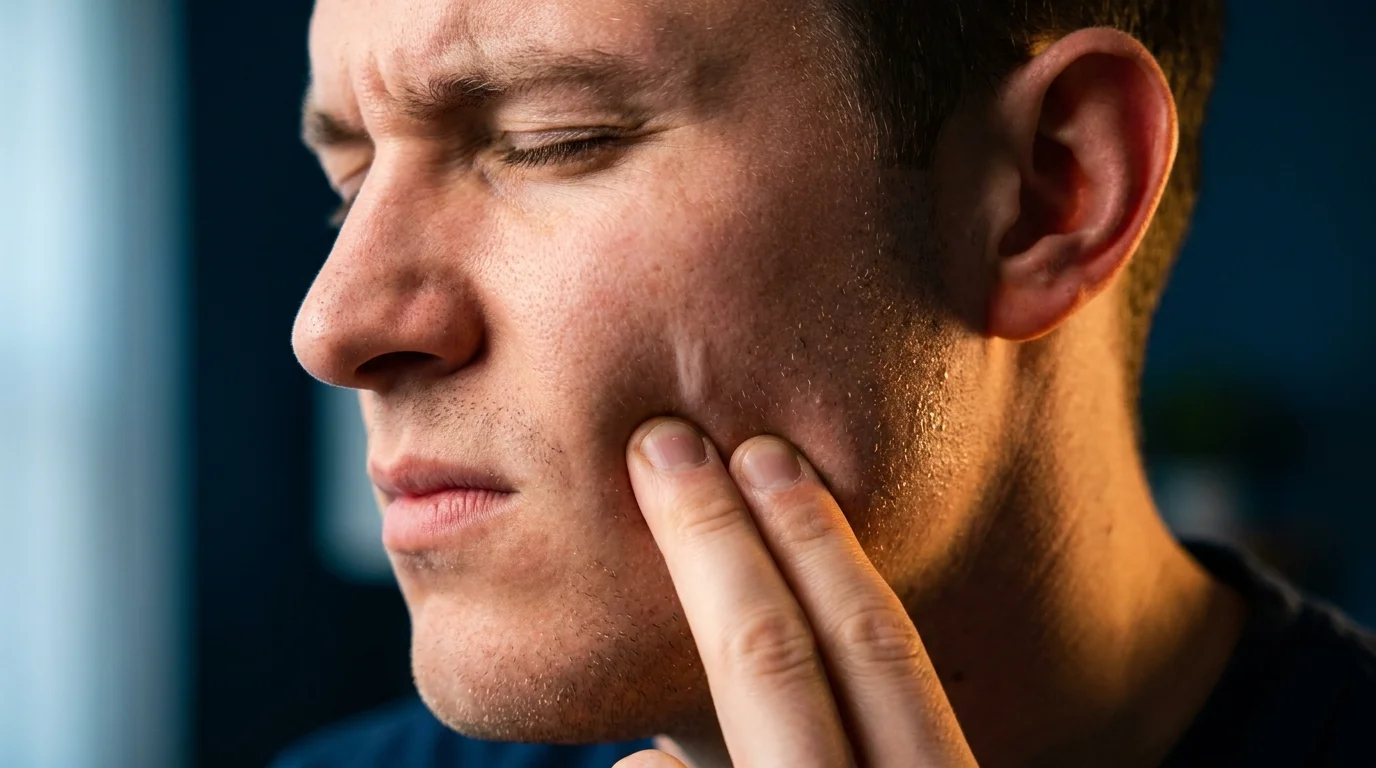
Outwardly, you appear calm, cooperative, and dependable. Beneath the collar of your linen shirt, however, your pulse accelerates against the carotid artery, and the muscles anchoring your jaw into your skull seize in a quiet vise. You have avoided confrontation, yet your collarbones feel pinned to your ribs, your breath catching halfway down your trachea like dry paper.
By the time you slide beneath your cotton duvet at 11:00 PM, the silence of the bedroom should be a sanctuary. Instead, the dark room fills with phantom conversations. Your chest feels tight, your calves twitch with unspent kinetic energy, and behind your closed eyelids, your mind replays every surrendered boundary. The exhaustion you carry is not muscular or athletic; it is an invisible neurological debt built from dozens of micro-betrayals disguised as polite cooperation.
We are culturally conditioned to view habitual agreeableness as a virtue, a lubricant that keeps family dinners peaceful and workplace Slack channels devoid of friction. Yet inside your biology, pretending constant agreement is read by the brain not as harmony, but as an acute survival crisis.
The Biology of Accommodation: The Chameleon’s Hidden Debt
To understand why conversational placation leaves you hollowed out, consider the biological cost of sustained mimicry. When a prey animal freezes to blend into the brush, it is not resting; its entire nervous system is charged with sympathetic electrical current, muscles primed to sprint the second the predator steps too close. When you smile and nod at words that violate your judgment, your autonomic nervous system executes that exact survival sequence.
Polyvagal theory reveals that social safety requires neuroception—an internal assessment of genuine security. The moment you voice false accord, your neocortex registers a profound split between your actual cognitive state and your outward physical presentation. To pull off this performance, your prefrontal cortex must actively suppress authentic motor impulses while your amygdala sounds a muted, continuous alarm. You are essentially pressing the accelerator and the brake at the exact same moment.
This neurological friction floods your bloodstream with persistent low-titer cortisol and norepinephrine. Because you never actually run from the threat or speak your truth to neutralize it, these stress metabolites remain unspent in your peripheral tissue. Your autonomic tone stays locked in sympathetic arousal, unable to transition down into the ventral vagal parasympathetic state that orchestrates deep tissue repair, cellular restoration, and digestive ease.
- Shoulder blade pressing releases stubborn knot tension across stiff desk-bound shoulders
- FDA Inluriyo approvals shift advanced breast cancer treatment protocols across oncology clinics
- Meningitis symptom surges prompt urgent emergency room visits across multiple states
- Propping bedroom windows flushes stale trapped heat for deeper unbroken sleep
- Soft sofa slouching twists lower spinal curves sparking persistent morning stiffness
Consider Dr. Marcus Vance, a 46-year-old clinical neuropsychologist based in Chicago who monitors autonomic biomarkers in corporate professionals. Vance observed that patients presenting with severe, treatment-resistant daytime brain fog shared an uncanny clinical overlap: near-perfect compliance ratings on workplace personality profiles. In his telemetry tracking, these individuals showed flatline heart-rate variability across routine business hours, followed by jagged spikes in nocturnal arousal indices. Their nervous systems were effectively operating as covert sentinels, policing their own authenticity from dawn until dusk.
The Two Archetypes of Self-Silencing
Conversational appeasement does not present identically in everyone; it fractures into distinct physiological patterns depending on your temperament and daily environment.
The Anticipatory Placater
This profile does not merely agree when spoken to; they scan the room five steps ahead to defuse potential friction before it arises. If you fit this pattern, you likely finish other people’s sentences with validating phrases, volunteer to absorb extra administrative tasks with an eager smile, and experience a spike of visceral dread whenever a silence stretches past three seconds.
Your primary physical symptom is chronic diaphragmatic splinting. By continually preparing to accommodate others, your diaphragm locks upward against your pericardium, inducing shallow clavicular breathing that constantly triggers subtle hyperventilation. Nighttime sleep for the anticipatory placater is notoriously fragile, marked by light, easily fragmented stages where the slightest rustle of a sheet wakes the mind back into hypervigilance.
The Resentful Swallower
In contrast, the resentful swallower recognizes their disagreement immediately, feels the flash of heat in the stomach, but forcibly chokes down the counter-argument out of deep interpersonal fatigue. You nod, say ‘sounds fine,’ and immediately withdraw internally, building a fortress of quiet contempt behind a polite facade.
Physiologically, this pattern drives intense masseter clenching and suboccipital tension. Because the frustration is actively repressed rather than reflexively masked, your body converts the unexpressed motor impulse into nocturnal bruxism. You wake up not just tired, but with a dull, throbbing temple ache and teeth that feel oddly tender when chewing breakfast toast.
Reclaiming the Autonomic Neutral: Mindful Micro-Boundaries
Breaking the placation habit does not require combative posturing or aggressive boardroom outbursts. Aggression triggers an equally volatile sympathetic surge that ruins sleep just as effectively. The antidote to appeasement is biological neutrality—teaching your nervous system that neutrality is safe.
To shift out of reflexive agreement, begin integrating small, measured somatic delays into your everyday conversations. These interventions intercept the automatic smile-and-nod loop before it signals threat to your endocrine system.
- The 3-Second Breath Anchor: When presented with a plan, request, or opinion that stirs quiet friction, do not nod immediately. Keep your facial muscles totally slack, plant both soles firmly on the floor, and inhale through the nose for three slow counts before offering any vocalization.
- The Non-Committal Pivot: Replace ‘Yes, absolutely!’ or ‘That makes total sense’ with neutral conversational holding phrases like ‘I see where your logic is going,’ or ‘Let me sit with those numbers before I sign off.’ This honors the other person’s presence without yielding your sovereign agreement.
- Physical Jaw De-Clenching: During any conversation where you feel the urge to agree just to smooth the water, press the tip of your tongue firmly against the roof of your mouth just behind your two front teeth. This mechanical movement automatically forces the masseter muscles to release and inhibits the facial mimicry reflex.
Your tactical daily toolkit requires zero purchases or wellness retreats. It simply requires two minutes of boundary inventory at the end of each afternoon, a cold-water splash across the eyes at 5:00 PM to signal the close of the social-performance window, and an absolute rule against answering non-emergency requests after dinner.
The Restorative Rebound
True sleep is not simply the absence of waking consciousness; it is an act of profound biological surrender. Your physiology cannot surrender to the restorative architecture of slow-wave sleep while it believes you are living in an environment where your survival hinges on constant appeasement.
When you begin tolerating tiny pockets of conversational friction, something miraculous occurs within your endocrine rhythm. The evening cortisol slope, which normally remains plateaued late into the night for habitual people-pleasers, finally drops off sharply as dusk settles. Melatonin synthesis proceeds unhindered by ambient adrenaline.
You will notice the change first in the quiet weight of your limbs as your head touches the pillow. The racing script of unspoken retorts falls silent. In its place comes the deep, anchoring certainty that your integrity is intact, your nervous system can stand down, and the night belongs entirely to your restoration.
True nocturnal rest begins the moment you stop paying for daytime peace with the currency of your biological truth.
| Key Point | Detail | Added Value for the Reader |
|---|---|---|
| Autonomic Split | The brain burns metabolic fuel reconciling internal disagreement with outward compliance. | Explains why you feel completely drained even after low-activity desk work. |
| The Sympathetic Lock | Chronic placation mimics the prey animal’s freeze state, flooding tissue with unspent adrenaline. | Identifies why nighttime sleep feels agitated, shallow, and non-restorative. |
| Conversational Delay | Inserting a 3-second neutral pause before responding halts the automatic pleasing loop. | Provides an immediate, polite tool to preserve emotional boundaries in real time. |
Frequently Asked Questions
Will stopping constant agreement make me seem difficult or hostile to coworkers?
No. There is a wide, comfortable territory between appeasement and hostility called neutrality. Using phrases like ‘Let me think on that’ demonstrates authority and deliberation, which peers typically respect far more than immediate, predictable compliance.Why does people-pleasing cause physical pain like jaw clenching and neck stiffness?
When your brain suppresses the authentic urge to speak or dissent, it recruits the motor neurons of the jaw, larynx, and neck to literally hold the words back. This static muscle recruitment turns into chronic tension and night grinding.How long after setting better boundaries will my sleep quality improve?
Many people notice their heart rate dropping faster at bedtime within three to four days of ending false agreement. As your nervous system learns that it no longer needs to defend your social safety 24/7, deep slow-wave sleep stages naturally expand.What if agreeing is the only way to avoid toxic conflict in my household?
In volatile environments, appeasement can be a conscious de-escalation tactic. The key is internal clarity: recognize it as an intentional survival maneuver rather than internalizing it as your fault, and shake off the tension physically the moment you are in a safe space.Can physical exercise offset the nervous fatigue from constant appeasement?
Exercise helps metabolize lingering adrenaline, but it does not address the neurological split. You cannot sweat out the exhaustion caused by betraying your own boundaries all day; the core conversational habit must be addressed at the root.