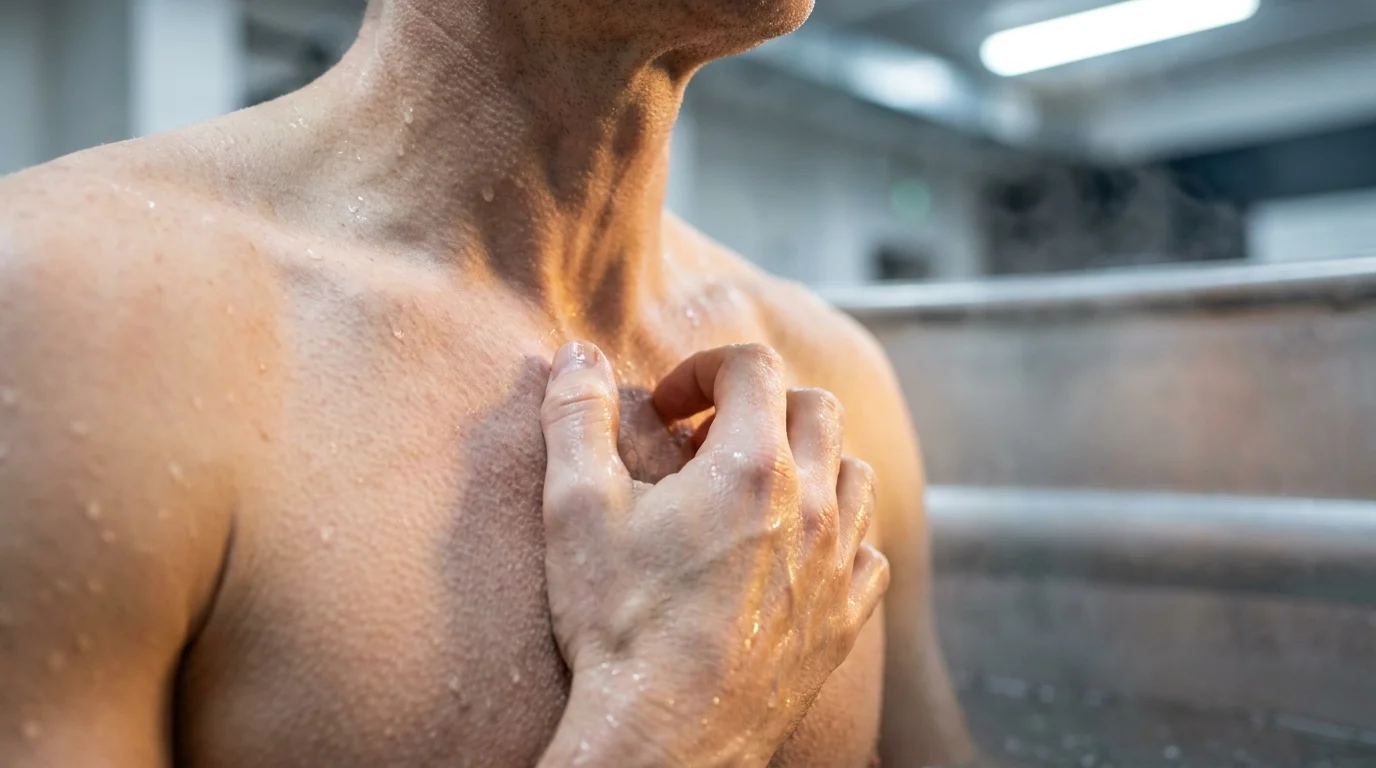
The air smells of wet cedar, chlorine, and sweat. You step out of the sauna or hot tank where the water hovered at 104 degrees Fahrenheit, your skin flushed crimson and your breath loose. Beside you sits the galvanized steel tub, its surface glassy and humming at a biting 48 degrees. You take a measured breath, grip the cold metal rim, and sink in up to your collarbones.
You expect the celebrated electrical surge of alertness, the promised rush of dopamine, and the clean slate of muscular recovery. But as you climb out two minutes later onto the ribbed rubber mat, the room tilts violently sideways. A cold static hum fills your ears, and your sternum feels as though it is trapped beneath a heavy wool blanket, tight and strangely immovable.
You shake your head, lean your palms against the damp tile, and wait for the floor to stop rolling. You tell yourself this is just the medicine working, an intense detoxifying shock to an otherwise soft routine. Yet that sudden band of pressure across your ribs is not a sign of cellular renewal; it is the physical sound of your cardiovascular system screaming to absorb an artificial hydraulic slam.
The Water Hammer: Why Arteries Rebel Under Rapid Temperature Shifts
To understand why your chest tightens after alternating between scalding heat and icy water, you have to stop viewing your blood vessels as passive copper pipes. Think instead of an old farmhouse plumbing line. When hot water runs freely, the pipes expand, supple and forgiving, directing flow to every distant corner of the house.
If you instantly close the main valve with violent force, the rushing liquid has nowhere to go. It rebounds backward through the system, rattling the joints in a destructive shudder plumbers call the water hammer effect. When you submerge heat-dilated skin into freezing water, your peripheral capillaries clamp down in a fraction of a second. This instinctive survival spasm shunts pints of blood straight back into your thoracic cavity and core organs, dramatically spiking internal arterial resistance.
Your heart, which was beating lazily in the heat, is suddenly forced to push against an immediate wall of pressure. This microvascular shear stress stretches delicate endothelial linings, while the sudden surge of blood into your deep chest triggers the baroreceptors along your carotid sinus. The sudden crash in heart rate combined with sky-high central blood pressure creates that sickening room-spin sensation and the suffocating band around your lungs.
- Nuun hydration tablets overwhelm fasting stomach absorption triggering dry mouth muscle twitches
- High pillow stacks force awkward neck angles sparking stubborn skull base throbbing
- Pressed spirulina tablets resist stomach acid breakdown triggering persistent lower belly puffiness
- Stiff denim waistbands restrict shallow lower ribcage expansion sparking tense chest tightness
- Frozen washcloth compresses lower soaring heart rates resetting overwhelmed nervous system loops
The Field Signal: What Sports Medicine Sees in the Recovery Lounge
Dr. Marcus Vance, a 44-year-old clinical exercise physiologist practicing outside Boulder, Colorado, spent the last two winters tracking amateur endurance athletes using self-directed recovery protocols. He routinely saw conditioned runners and lifters staggering out of contrast setups with gray lips, unsteady gaits, and persistent chest tightness that lingered for hours after their sessions.
When Vance hooked these athletes to continuous vascular monitors during aggressive shifts, he found that the rapid swings were not training autonomic adaptability. Instead, they were exhausting the baroreflex arc, leaving the central nervous system unable to regulate resting blood pressure for hours afterward.
Diagnostic Layers: How Contrast Bath Plunges Affect Different Bodies
The human vascular tree ages and adapts differently depending on your daily physical load, baseline hydration, and autonomic state. A protocol that makes a twenty-year-old sprinter feel sharp can leave an office worker reeling on the locker room bench.
The Desk Worker with a Weekend Engine
If you spend eight hours a day seated under fluorescent lights, your leg veins and hip vasculature endure chronic compression. Stepping directly from a hot tub into freezing water forces blood out of stiffened extremities with abnormal speed, overwhelming central venous return. The result is instant lightheadedness, as your heart struggles to balance the massive return of venous blood with restricted cardiac output.
The Fasted Morning Enthusiast
Dipping into thermal extremes before breakfast introduces another complication: depleted intravascular volume. Fasting naturally lowers circulating sodium and plasma fluid levels. Subjecting an under-hydrated vascular tree to rapid constriction strips blood away from your brain stem instantly, making you far more vulnerable to sudden postural blackout drops the moment you stand upright to exit the tub.
The Cold-Shock Chaser
When you treat contrast immersion as a test of willpower, staying in the ice bath until your shivering reflex shuts down, your vascular muscles remain locked in high-resistance spasm. When you finally step out into room temperature air, your body struggles to reopen those clamped vessels. The sustained squeeze against your central aortic root produces that stubborn, bruised tightness under your breastbone that can linger into the afternoon.
Mindful Modulation: Reclaiming Circulatory Rhythm Without the Shock
You do not need to brutalize your nervous system to support tissue recovery and mental clarity. True vascular health is built through progressive elastic tension, not sudden hydraulic shock. By smoothing out the sharp edges of your thermal routine, you teach your blood vessels to dilate and constrict with grace.
- Respect the Thermal Buffer: Never leap directly from maximum heat into bone-chilling cold. Step out of the sauna or hot pool and stand in ambient air for two full minutes until your breathing settles and your skin cools naturally.
- Step In, Do Not Plunge: Submerge your feet and lower legs first for twenty seconds before lowering your torso. This gives your deep abdominal vessels time to accommodate the shifting fluid volume without shocking the heart.
- Keep Your Exhales Long: Avoid the hyperventilating pant that ice water naturally provokes. Prolong your exhalations through pursed lips to keep your vagus nerve active, preventing your blood pressure from spiking through the ceiling.
- End on Neutral Ground: Finish your routine with room-temperature or gently cool water rather than an aggressive freezing freeze. Your vascular walls should return to resting tone slowly, like bread dough relaxing on a counter.
Your tactical toolkit should remain grounded and measured:
- Hot immersion: 100°F to 102°F for a maximum of 10 to 12 minutes.
- Cold immersion: 55°F to 60°F—far gentler than commercial ice tubs—for 60 to 90 seconds.
- Ratio: 3 parts gentle heat to 1 part mild cool, repeated no more than three times.
- Hydration anchor: 12 ounces of room-temperature water with a pinch of unrefined sea salt sipped 20 minutes beforehand.
The Real Architecture of Restoration
There is a seductive modern myth that physical improvement must hurt, shock, or leave you grasping for breath. We wear our tolerance for extreme temperatures like armor, believing that the closer we skirt to fainting, the cleaner our recovery must be. But resilience is not forged in an arterial panic.
When you replace the punishing whiplash of aggressive contrast plunges with smooth, respectful temperature shifts, your body stops defending itself against your routine. Your chest remains open, your head stays clear, and your breath moves unhindered. Healing happens when your nervous system feels secure enough to let down its guard, not when you force it to survive an artificial storm.
“True circulatory recovery is an act of gentle coaxing, not an emergency test of your heart’s hydraulic limits.”
| Key Point | Detail | Added Value for the Reader |
|---|---|---|
| The Mechanism | Microvascular shear stress and baroreceptor shock | Explains why room spins stem from blood pressure spikes, not weakness. |
| The Common Error | Jumping directly from 104°F heat to sub-50°F cold | Shows how eliminating the buffer window triggers central chest pressure. |
| Optimal Temperature | 55°F to 60°F cool phase instead of freezing ice | Delivers anti-inflammatory benefits without locking peripheral vessels. |
| Safety Indicator | Clear vision and relaxed breathing upon standing | Gives you an objective marker that your vascular tree is adapting safely. |
Frequently Asked Questions
Why do my ears ring right after stepping out of the cold tub?
The sudden clamping of peripheral vessels creates a momentary spike in cranial arterial pressure, which alters micro-circulation inside your inner ear and temporarily distorts your auditory nerves.Does a tight chest after a contrast bath mean I am having a cardiac event?
While sudden chest pressure should always be evaluated by a medical professional, this sensation is frequently caused by acute vascular shear stress and intercostal muscle spasm triggered by the shock of freezing water on your ribcage.Is an ice bath less dangerous if I keep my chest out of the water?
Yes, keeping your sternum and neck above the water line prevents the mammalian dive reflex from drastically slowing your heart rate while your peripheral vessels are clamped shut.How long should I wait between the hot and cold stages?
Allow at least ninety seconds to two minutes of ambient air rest between phases so your autonomic nervous system can regulate your resting pulse before facing the next temperature shift.Can I build vascular tolerance over time to handle colder temperatures?
Your blood vessels do develop greater elastic compliance with steady, moderate exposure, but dropping below 50 degrees Fahrenheit consistently yields diminishing recovery returns while multiplying physical strain.