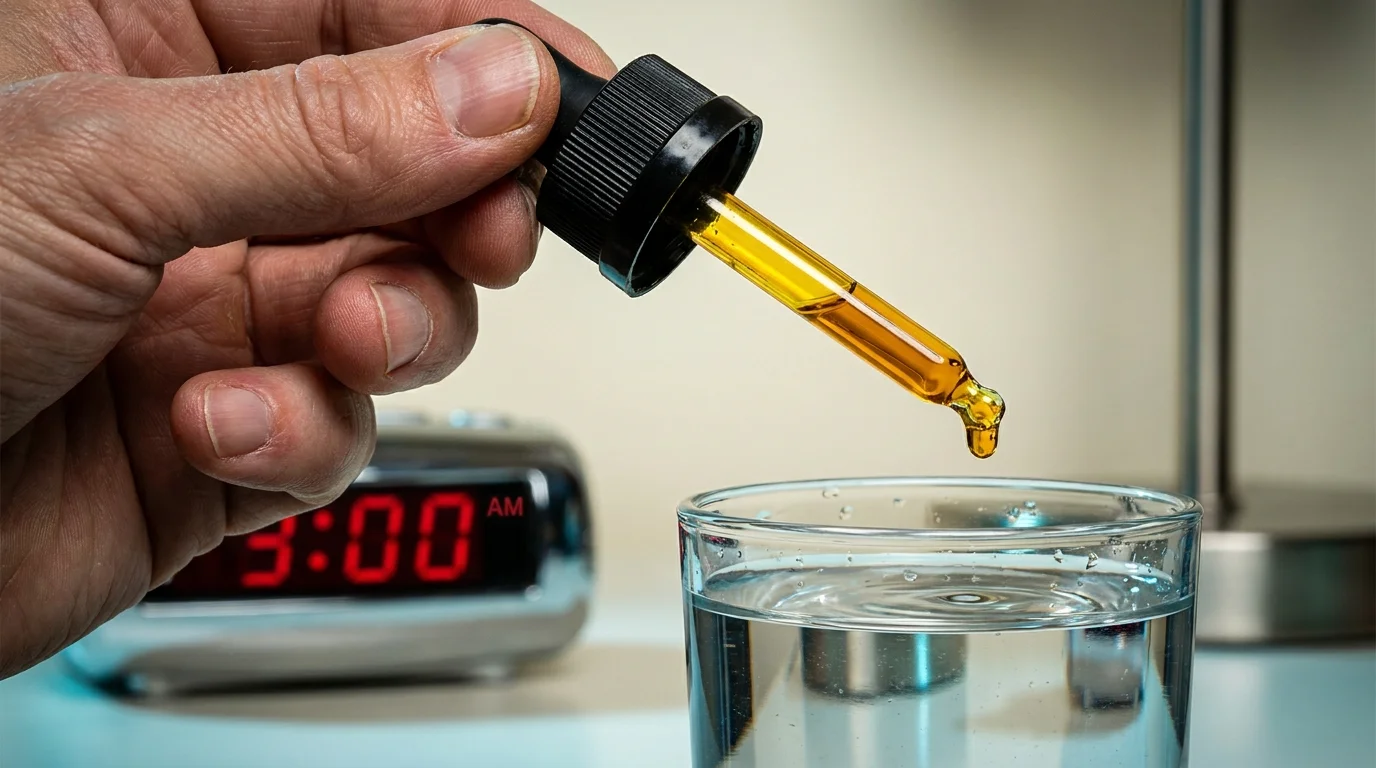
The amber dropper sits on your bedside table, catching the amber glow of the bedside lamp. You measure out thirty drops into a splash of lukewarm water, recognizing that familiar, bitter, woodsy tang across your tongue. It feels wholesome and grounded—an earthy antidote to the electric buzz of screens and late-night deadlines. You set the glass down, pull the quilt to your collarbone, and feel your breathing slow as your eyelids grow pleasantly heavy within twenty minutes.
For the first few hours, the botanical promise seems completely fulfilled. You glide past the usual restless tossing, drifting straight into a seemingly velvety slumber that mimics true, restorative recovery. Your muscles unspool their daylight tension, your jaw unclenches, and the mental chatter that usually paces the perimeter of your mind fades into a soft, quiet blur.
Then the clock turns to 3:12 AM. Without warning, your eyes snap wide open in the pitch black. There is no gradual waking, no gentle stirring from a dream; you are suddenly, violently alert. Your heart is thumping against your ribs like a startled bird trapped in a shoebox, your palms are damp, and a cold rush of inexplicable dread settles into the pit of your stomach. You stare at the ceiling, completely awake, wondering how a harmless yellow meadow flower turned your bedroom into a high-stakes emergency room.
This sudden nighttime jolt is not a panic attack, nor is it an emotional failure. It is a predictable physiological snap-back caused by how your liver processes California poppy tinctures. When you lean on fast-acting herbal sedatives, you are not curing wakefulness—you are simply borrowing stillness on borrowed time with an aggressive payback schedule.
The Vanishing Trampoline of Rapid Herbal Clearance
California poppy (Eschscholzia californica) works primarily through a dense cluster of isoquinoline alkaloids, particularly protopine, allocryptopine, and californidine. These microscopic compounds cross your blood-brain barrier and nestle neatly into your brain’s gamma-aminobutyric acid (GABA) receptors. GABA acts as your central nervous system’s master brake pedal. When these plant compounds dock there, they artificially clamp down on neurological firing, dropping your heart rate and coaxing you into an early, artificial twilight.
The biological trap lies entirely in the speed of the exit. Unlike long-chain adaptogens or whole-food sleep supports that meter out their benefits over eight hours, California poppy alkaloids possess an exceptionally short elimination half-life. Your liver filters the alkaloids out of your bloodstream within roughly two and a half to three hours. When those protective molecules vacate the GABA sites, they do not step away slowly; they drop off a biological cliff.
Think of it like jumping on a high-tension trampoline that abruptly vanishes while you are at the bottom of the bounce. While the herb was actively suppressing your neural circuits, your autonomic nervous system was quietly dialing up its baseline tone to keep your blood pressure and respiration steady. The moment the tincture clears your plasma mid-sleep, that counter-balancing pressure remains fully cranked with nothing left to oppose it. The resulting surge of norepinephrine and glutamate slams your heart into high gear and wrenches your brain straight into survival vigilance.
- Clip-on reading lenses tilt neck angles triggering sharp dull skull throbbing
- Pressed multivitamin fillers resist stomach breakdown sparking heavy afternoon belly bloat
- Tight posture harnesses compress lower ribs triggering shallow breath spasms at work
- Chilled ceramic mugs pressed to chest halt racing pulse during sudden panic
- Biting raw lemons interrupts runaway anxiety loops by shocking panicked sensory focus
The Midnight Sleep Log of Dr. Maya Lin
Dr. Maya Lin, a 44-year-old clinical pharmacognosist based in Portland, Oregon, spent two years analyzing the nocturnal cardiac records of sixty-eight chronic sleep-aid users. She noticed an unmistakable trend line among those using concentrated liquid drops of California poppy: a steep, reliable plunge in resting heart rate during the first ninety minutes, followed by an aggressive micro-spike between 2:45 AM and 3:30 AM. Lin observed that the sudden heart flutter was almost identical to the sympathetic rebound seen in patients withdrawing from short-acting sedatives.
Mapping Your Metabolic Clearance Profile
Not every body metabolizes botanical extracts at the identical pace, which explains why your partner might sleep soundly while you end up pacing the hallway at dawn. Understanding your personal physiological profile changes how you handle evening wind-downs.
The Rapid Hepatic Clearer
If you tend to clear caffeine before dinner without issues and find that over-the-counter pain relievers lose their punch well before their packaging suggests, your cytochrome P450 liver enzymes run hot. You metabolize plant alkaloids at breakneck speed. When you take a concentrated tincture before bed, your system flushes the compound long before you even cross into deep rapid-eye-movement cycles, ensuring a sharp, adrenaline-fueled awakening right around the third hour of rest.
The High-Cortisol Evening Strainer
If your daytime work involves persistent, low-grade crises, your adrenal glands enter the evening already primed for fight-or-flight. You use the tincture as an emergency off-switch. But because your underlying stress hormones were never actually down-regulated—only chemically muffled—the clearance of the poppy alkaloids unleashes a torrent of stored daytime cortisol, transforming a mild biological waking into a terrifying, chest-gripping alert.
The Sublingual Fast-Tracker
Taking your herbal tinctures directly under the tongue bypasses first-pass digestion, delivering a sudden, concentrated spike to your blood vessels. The rapid biological peak creates an equally sharp, jagged drop. The steeper the angle of chemical departure, the more violent your body’s compensatory pulse rebound will feel.
Recalibrating Sleep Without the Midnight Shockwave
Transforming your sleep hygiene means shifting away from sudden chemical stops and moving toward soft, buffered transitions that allow your nervous system to regulate itself naturally.
Step back from the dropper slowly. If you rely on high-dose extracts nightly, cutting them out instantly will trigger a couple of nights of light, restless tossing. Instead, dilute your dose across three evenings while introducing steady grounding habits that do not vanish midway through your sleep cycles.
- Ditch direct sublingual hits: Never take potent extracts straight under the tongue right before lights out; mix any botanical drops into warm oat milk or chamomile water thirty minutes prior to cushion the metabolic spike.
- Introduce sustained-release magnesium: Combine any evening wind-down with forms like magnesium glycinate, which support steady cellular relaxation across a full eight-hour window rather than a two-hour flash.
- Audit your bedroom thermals: Rebound spikes are amplified by warm bedrooms; keep your sleeping space anchored between 65 and 68 degrees Fahrenheit to prevent night sweats from compounding your heart rate.
- Anchor with complex starches: Eat a spoonful of raw almond butter or pumpkin seed paste an hour before bed to stabilize nighttime blood sugar and keep your liver from dumping emergency glycogen.
Your tactical toolkit should prioritize mechanical and environmental cues over chemical sledgehammers. Set your thermostat to cool early in the evening. Keep a glass of room-temperature mineral water by the bed, and swap out bright overhead bathroom lighting for soft, amber nightlights during midnight bathroom trips.
Reclaiming Midnight Autonomy
Waking up at 3:00 AM with a racing pulse is your nervous system waving a red flag about chemical volatility, not an inherent defect in your ability to rest. True sleep is an autonomic dance of temperature drops, rhythmic heart rate shifts, and steady neurological unwinding. It cannot be coerced by a single hyper-concentrated botanical dropper without demanding an energetic balance sheet repayment before dawn.
When you stop chasing rapid, artificial sedation, you give your body permission to master its own pacing. By creating gradual buffers instead of chemical cliffs, you can rest with the quiet confidence that the middle of the night belongs to your dreams, not your racing heart.
The gentlest remedies often carry the sharpest rebounds when their brief biological presence tricks the body into overcompensating before the night is half done.
| Key Point | Detail | Added Value for the Reader |
|---|---|---|
| Clearance Latency | Short half-life of 2 to 3.5 hours for active isoquinoline alkaloids. | Explains why waking occurs like clockwork between 2:30 AM and 3:30 AM. |
| Sympathetic Rebound | Norepinephrine rushes to counter the sudden absence of GABA suppression. | Normalizes the sudden racing pulse as a physical reflex rather than anxiety. |
| Buffered Administration | Shifting from sublingual drops to diluted, warm-liquid evening wind-downs. | Flattens the chemical peak, preventing violent metabolic drop-offs mid-sleep. |
Frequently Asked Questions
Why does California poppy cause a racing pulse when it is supposed to be calming?
The alkaloids bind tightly to GABA receptors, calming the body initially. However, because they metabolize rapidly, your brain produces a compensatory surge of alertness chemicals like norepinephrine the moment they clear your bloodstream, jolting your heart rate upward.Is California poppy tincture dangerous for my heart?
For most healthy adults, this sudden midnight flutter is not physically dangerous; it is simply an uncomfortable sympathetic nervous system rebound. However, anyone with underlying cardiovascular arrhythmias should consult a medical provider before using fast-clearing herbal extracts.How long after stopping the tincture will my sleep normalize?
Because California poppy does not create severe pharmacological dependency, your natural receptor balance typically resets within forty-eight to seventy-two hours once you stop taking concentrated nightly doses.Can I take another dose when I wake up at 3:00 AM to go back to sleep?
Re-dosing at 3:00 AM is not recommended. It resets the clock on the clearance cliff, meaning you will experience another chemical rebound right around your alarm time, leaving you groggy, disoriented, and physically agitated for your morning commute.What can I use instead for steady, full-night relaxation?
Look toward herbs and nutrients with slower, sustained systemic uptake, such as whole-plant lemon balm infusions, passionflower tea, or sustained-release magnesium glycinate, which support steady rest without sudden midnight clearance drops.