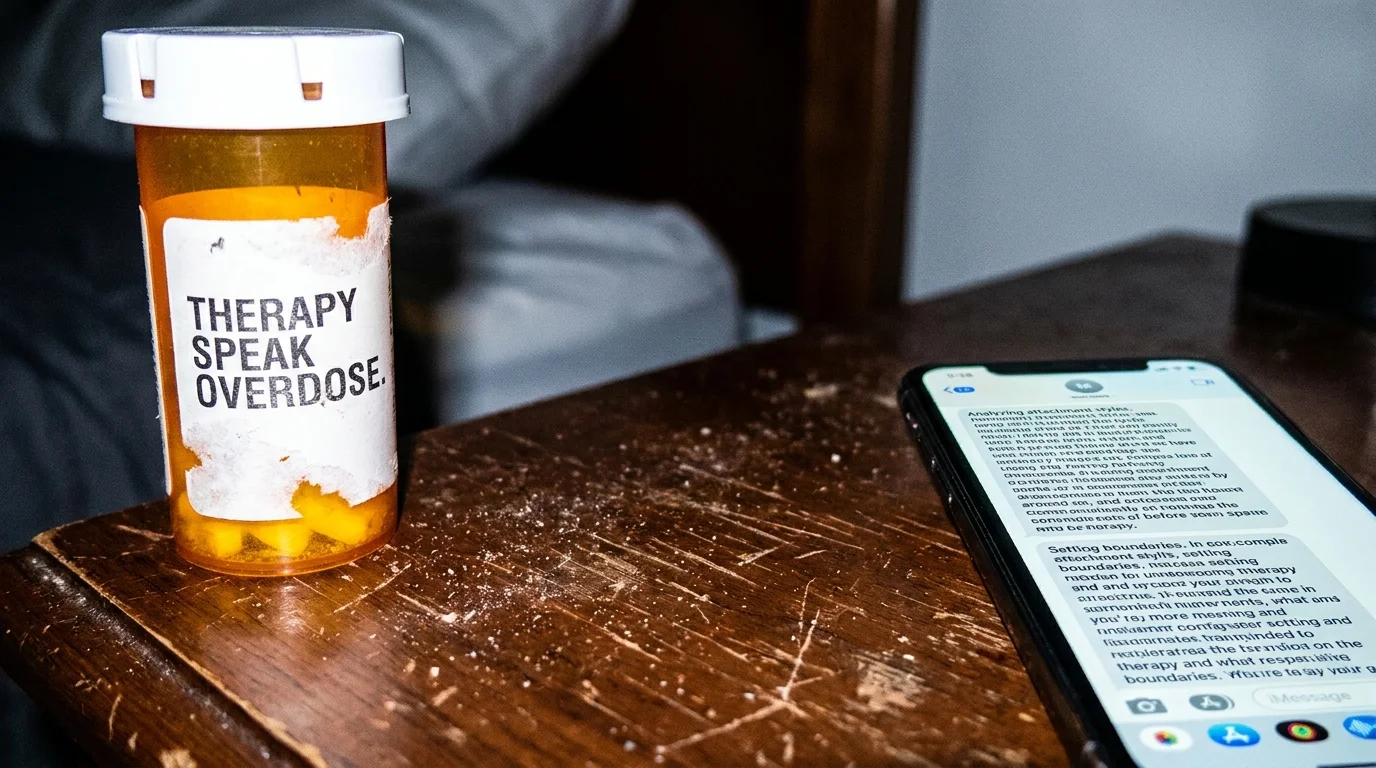
The bedside table vibrates with a dull, heavy buzz at 11:15 PM. You reach out, your eyes adjusting to the harsh, pale glare of your smartphone screen. What awaits you is not an emergency, but a wall of text from a close friend. It is three paragraphs of meticulously structured, clinical vocabulary, explaining why they lack the emotional capacity to discuss your weekend plans. The warmth of your long-standing friendship instantly evaporates, replaced by the sterile coldness of an HR department memo.
You spend the next twenty minutes drafting a reply, carefully weighing every word so you do not step on an emotional landmine. Your shoulders crawl up toward your ears, and your breathing feels shallow, like breathing through a heavy pillow. Instead of winding down for the evening, your brain is running simulated social audits. The natural, messy flow of human closeness has been replaced by structured transaction.
By the time you finally lock your phone, your mind is buzzing with artificial anxiety. Your body is ready for rest, but your nervous system is convinced you are in the middle of a high-stakes clinical intervention. You toss and turn for hours, unable to find the quiet, slow-wave sleep your brain needs to repair itself. This is the hidden cost of the modern mental health trend: we are turning our relationships into clinical trials.
The cultural surge of therapeutic language was supposed to save our peace of mind. Instead, it has introduced a new form of exhaustion that keeps us constantly on edge. When every casual check-in requires a vocabulary key and a boundary negotiation, our social circles stop being a sanctuary and start being an unpaid night shift.
The Silent Toll of the Clinical Living Room
This phenomenon is what we might call the emotional firewall trap. We are taught that by erecting strict, clinical barriers, we protect our mental health from the messy demands of others. But when we treat everyday friendships like structured therapy sessions, we are not protecting our energy. We are building a sterile emotional fortress that requires constant, exhausting patrol.
Instead of letting human connection flow naturally, like water over river stones, therapy speak forces us to manually construct every single exchange. Your brain does not process these highly calculated interactions as moments of safety. It treats them as complex, executive tasks, which actively drains your prefrontal cortex. This constant state of hyper-vigilance keeps your nervous system humming at a toxic frequency, suppressing your immune response and keeping your heart rate variability dangerously low throughout the night.
- Pelvic floor muscles trap your daily decision anxiety and cause chronic pain
- Habit stacking routines actually destroy your natural motivation for simple tasks
- Mood tracking apps trick your brain into constant stress and hyper-vigilance
- True crime podcasts during your commute drain your baseline energy levels
- Morning matcha lattes silently block the minerals keeping your hair thick
The Toll on the Human System
Consider the experience of Marcus Vance, a 34-year-old architectural draftsperson from Seattle. For months, Marcus found himself trapped in a highly analytical group chat with his childhood friends. Every casual update was met with deep psychological dissection, and even simple plans required a complex dance of “holding space” and “honoring capacity.” Marcus began experiencing mysterious afternoon energy crashes and chronic jaw pain. It was only when he stepped away from the text threads that he realized his body was treating these conversations as a secondary job—a continuous state of emotional labor that spiked his cortisol levels right before bed.
The physical body does not distinguish between a demanding day at the office and a digitally draining social circle. When you spend your evenings parsing carefully worded clinical messages, your body produces the same stress hormones it would during a physical threat. This chronic, low-grade stress damages your gut-skin barrier, leaving you looking tired and feeling physically depleted before your feet even hit the floor in the morning.
How Different Social Roles Exhaust Their Systems
For the Natural Caregiver, the burden of therapy speak is particularly heavy. When friends use clinical terms to dump their anxieties under the guise of “seeking alignment,” you feel an overwhelming duty to absorb their unedited stress. This forces your brain into a state of hyper-empathy, which physically exhausts your mitochondria and leaves you feeling completely wiped out.
For the Boundary-Enforcer, the risk is a quiet, self-imposed isolation. By using rigid, scripted texts to keep others at bay, you construct a sterile environment where true intimacy cannot survive. Your body remains tense because you are constantly defending a border, turning natural relationships into transactional negotiations.
For the Group Thread Bystander, simply watching these clinical debates unfold is exhausting. Even if you do not participate, reading paragraph after paragraph of heavily analyzed anxiety triggers a low-grade fight-or-flight response. Your brain registers the underlying tension, ensuring that your sleep remains light and fitful.
Reclaiming Your Rest: The Organic Communication Reset
Restoring your energy requires a return to raw, untamed communication. You must give your nervous system permission to step off the clinical clock and return to a natural rhythm. This does not mean ignoring your needs; it means expressing them with simplicity rather than dry, administrative scripts.
Instead of drafting a clinical assessment, strip away the scaffolding. Let your conversations be messy, warm, and distinctly human. Use these mindful, minimalist adjustments to ease the strain on your nervous system:
- The Sunset Jargon Ban: Stop sending or replying to messages containing therapeutic terms after 8:00 PM. This lets your mind transition naturally into a state of rest.
- The Vocal Pivot: When a text exchange becomes too analytical, send a brief, warm voice note instead. The natural micro-tones in your voice communicate safety far better than a perfectly edited block of text.
- Low-Stakes Sharing: Intentionally send silly, non-functional messages—a photo of a strange cloud, a memory, or a simple joke—to remind your brain that friendship is supposed to be light and easy.
The Return to Untamed Connection
True emotional safety does not live in a dictionary of clinical terms. It lives in the messy, unfiltered spaces where we allow ourselves to be seen without a diagnostic script. When you drop the heavy clinical armor, you send a powerful signal to your brain that it is safe to rest.
Your muscles can finally release their grip, your heart rate can settle, and your mind can drift into deep, uninterrupted sleep. By choosing warmth over sterile boundaries, you protect not only your relationships but your raw physical vitality.
“When we trade the warm, clumsy language of friendship for the sterile precision of a clinic, we build cages instead of bridges, leaving our bodies to guard boundaries we were never meant to patrol alone.”
| Key Point | Detail | Added Value for the Reader |
|---|---|---|
| Therapy Speak | Replaces casual conversations with structured, clinical language. | Explains why your text threads feel like exhausting office meetings. |
| Hyper-Empathy | Forces the nervous system to process minor social shifts as threats. | Reveals the direct link between emotional over-analysis and low sleep quality. |
| The Reset | Swaps administrative boundaries for simple, warm, voice-first check-ins. | Restores natural sleep latency by telling your brain it is safe to drop its guard. |
Frequently Asked Questions
Is therapy speak always bad for my relationships? No, but using it as a default for casual connection turns warm friendships into sterile, administrative agreements that drain your energy.
How does analytical texting affect my deep sleep? It keeps your prefrontal cortex highly active right before bed, preventing your brain from sliding into restorative slow-wave sleep.
Can clinical language cause actual physical symptoms? Yes, the constant social vigilance keeps your cortisol high, which can trigger muscle tension, poor digestion, and skin flare-ups.
What is an easy way to decline a heavy conversation? Try a simple, honest phrase like “I want to hear about this, but I’m completely wiped out tonight—can I call you tomorrow?” instead of sending a formal boundary statement.
How does voice communication help my nervous system? The human voice carries pitch, tone, and warmth, which instantly signal physical safety to your brain far better than a typed screen of text.