The automatic sliding doors hiss open to the familiar smell of industrial floor stripper, cold hand sanitizer, and stale coffee. You step inside holding a child whose forehead burns like radiator brass, expecting the usual clipboards, the laminated insurance card swaps, and the crowded row of vinyl chairs under humming fluorescent tubes. But before your shoe soles even leave the welcome mat, a triage nurse steps out from behind the plexiglass with a surgical mask extended toward your palm, her eyes flicking across the blotchy warmth at your collarbone.
The waiting room does not exist anymore in the way you remember it. Instead of sending you into a sea of coughs and rattling plastic clipboards, intake happens in reverse motion today across hundreds of American emergency wards. A swift federal protocol adjustment has rewritten the very first sixty seconds of intake, turning standard check-in counters into biological checkpoints designed to stop an invisible, airborne specter before it drifts toward the pediatric alcove or oncology floor.
For decades, triage operated on a linear conveyor belt: you checked in at the window, waited your turn among strangers, sat on a scale, and finally received a private room. That casual patience has evaporated. Under revised federal guidance, any suspected respiratory complaint combined with a fever now diverts you straight out of the common air supply into specialized isolation before anyone even asks for your co-pay or your home address.
The Invisible Vapor: Why the Waiting Room Died
To grasp why this procedural shift feels so sudden, think of a room filled with invisible, suspended cigarette smoke that refuses to settle. Measles is not spread like the common cold, which relies largely on heavy droplets falling onto plastic counters or doorknobs. It behaves like aerosolized perfume or chimney soot, lingering in motionless air for up to two hours after the person carrying it has already left the building.
When an infected patient sits in an open waiting room for forty-five minutes filling out electronic tablets, they turn the central HVAC ducts into a passive transit system. The old model trusted that hand sanitizer and simple barrier paper could keep contagious illness corralled until an exam room opened up. The new reality treats the waiting lobby not as a holding pen, but as an active blast zone. By ordering an immediate detour into negative-pressure airflow before intake documentation begins, hospitals are cutting off the invisible circuit before the spark catches.
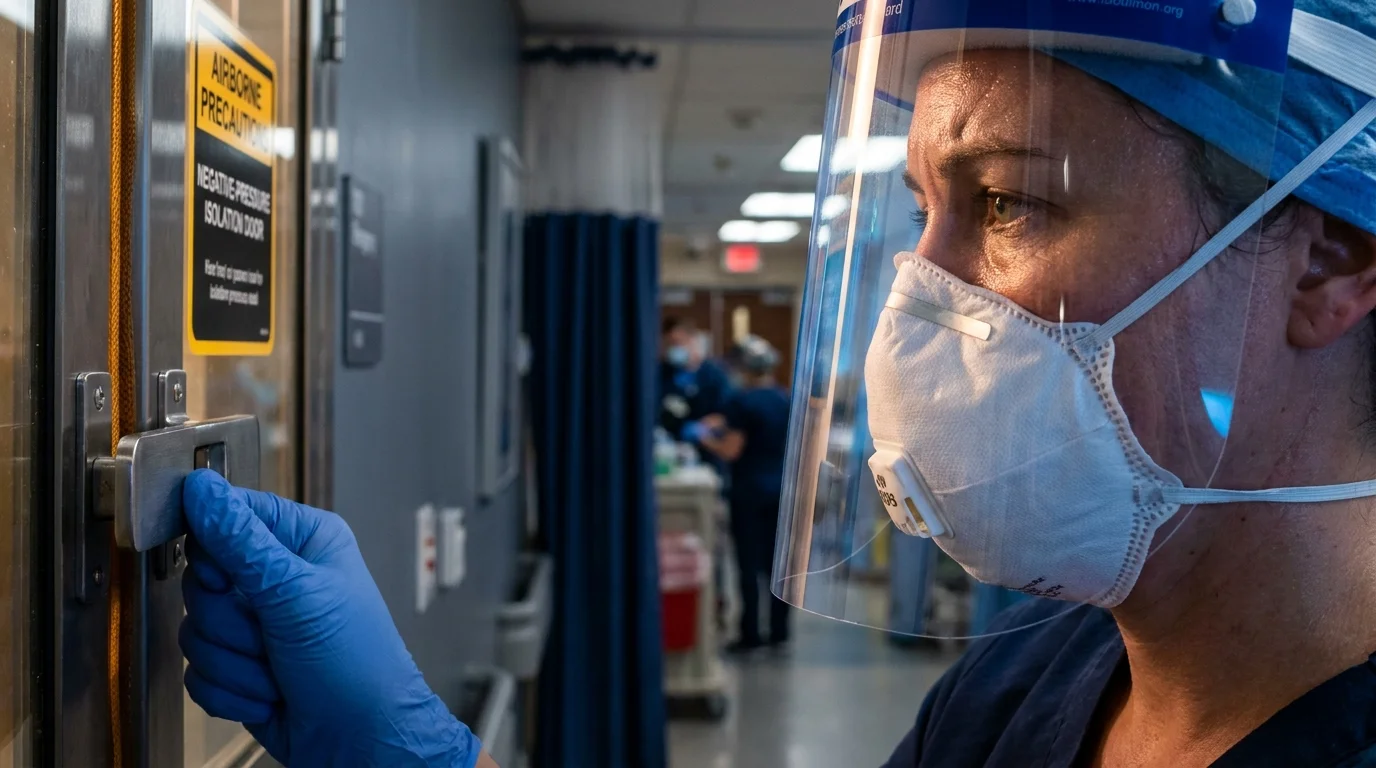
Consider Elena Alvarez, a 41-year-old emergency department charge nurse in suburban Dallas. Last month, Elena watched her floor shift instantly during a chaotic Sunday evening rush. “We used to have patients line up against the glass counter, breathing on each other while typing their social security numbers into touchscreens,” Elena explains. “Now, if someone has an unexplained rash and hot skin, we step in before they cross the inner threshold. We route them straight down the sealed corridor to Room 4—our negative-pressure suite. The paperwork can wait on a sanitized tablet outside the glass; our first duty is guarding the air everyone else is breathing.”
- Rolled doorway towels seal hallway light leaks for deeper uninterrupted night sleep
- Crossing ankles seated tilts pelvic balance to trigger nagging lower back ache
- Traditional beef tallow restores cracked winter hands and seals flaky chapped skin
- Plain table salt pastes draw out stubborn splinters and calm tender swelling
- Raw cacao nibs clear heavy morning brain fog faster than black coffee
Adjustment Layers: How Care Differs When Air Flow Changes
This federal protocol pivot does not hit every patient identically. Emergency teams now apply segmented layers of triage depending on your arrival path, your vulnerability, and the architectural limits of local facilities.
For the Parent with a Febrile Child
If you arrive with a child sporting flushed cheeks, watery red eyes, and a sudden dry cough, you will bypass the lobby seating entirely. Triage teams are trained to treat childhood viral rashes as presumptive until proven otherwise. Expect a nurse to greet you at the outer vestibule, hand you a child-sized mask, and direct you into a negative-pressure isolation room where vitals, swab tests, and administrative intake occur simultaneously behind sealed glass doors.
For the Vulnerable and Immunocompromised
If you enter the emergency room for chemotherapy-induced weakness, organ transplant complications, or severe asthma, your vulnerability dictates the perimeter. You are no longer asked to share ambient air with general respiratory complaints. Facilities now deploy clean-corridor pathways, moving high-risk adults into filtered buffer zones immediately to prevent casual exposure to airborne viral particles lingering from unmasked visitors.
For Rural and Community Hospitals
Not every small-town medical center boasts a dozen negative-pressure containment rooms. In smaller community facilities, emergency physicians are adapting through dedicated external intake bays and retrofitted portable HEPA filtration enclosures. If you walk into a rural emergency clinic, you may find that the initial screening happens via an outdoor intercom or inside a negative-pressure converted transport bay, keeping the main hospital wing completely uncontaminated.
Mindful Steps: Navigating the New Triage Protocol
Walking into an emergency department under these conditions can feel jarring. When medical personnel approach you in full personal protective gear before you have spoken three sentences, instinct tells you to panic. Knowing how the intake workflow operates keeps your nervous system steady.
The process is designed for mechanical containment, not personal quarantine. Every action aims to preserve the clinical bubble.
- Call Ahead When Feasible: If you suspect measles exposure or notice a sudden blotchy rash accompanied by high fever, notify the triage desk five minutes before pulling into the ambulance bay. This allows staff to seal the hallway and greet you at a dedicated side portal.
- Accept the Early Mask: Putting on the offered mask is not an accusation of illness; it functions as a mechanical baffle to stop exhaled aerosols from entering the shared reception airflow.
- Expect Administrative Delay: Your nurse will prioritize checking lung sounds, temperature, and skin markings inside the isolated room before confirming your pharmacy details or insurance coverage.
- Leave the Sealed Door Closed: Negative-pressure rooms rely on calibrated air pressure differentials. Opening the door to ask for a cup of water or an extra blanket disrupts the vacuum seal, venting room air out into the public corridor.
The Clinical Triage Toolkit
Emergency intake now relies on specific environmental metrics to maintain hospital-wide safety:
Air exchange rates inside designated containment suites are calibrated to cycle 12 total air changes per hour, continuously scrubbing airborne viral load. Wall-mounted magnehelic gauges maintain a negative pressure gradient of at least -0.01 inches of water column relative to adjacent hallways. Physical triage separation protocols mandate a minimum buffer perimeter of 6 to 10 feet from unscreened ambulatory visitors at all perimeter points.
The Bigger Picture: Reclaiming Sanctuary in Shared Spaces
It is easy to view these heightened containment steps as sterile or isolating. When medical staff guide you behind sealed doors before even learning your surname, human warmth can feel momentarily lost to bureaucratic caution. Yet there is a profound quiet grace beneath this operational discipline.
By treating the ambient air as a precious, shared ecosystem, hospitals are restoring their truest purpose: serving as safe harbors rather than unintentional incubators. When you watch that negative-pressure seal click shut, you are witnessing communal protection in its purest, most practical form. You are not being shut away; you are being shielded, and so is the vulnerable infant breathing softly in the room next door.
“True infection control begins long before a medication is drawn; it starts the moment we respect the invisible space between two breaths.”
| Key Point | Detail | Added Value for the Reader |
|---|---|---|
| Immediate Diversion | Patients with fever and rash bypass central lobby desks straight into negative-pressure suites. | Eliminates the fear of cross-contaminating other families or vulnerable children during check-in. |
| Aerosol Containment | Rooms maintain 12 complete air cycles hourly to purge lingering airborne viral particles. | Assures you that the room environment is continually cleaned and purged between clinical visits. |
| Parallel Intake | Clerical and insurance intake occur electronically inside isolation rather than at front counters. | Reduces clinical friction, letting your medical assessment start without administrative paperwork pauses. |
Frequently Asked Questions
Why am I being directed to an isolation room before checking in?
Federal rules now require immediate air isolation for fever and rash symptoms to prevent airborne virus spread throughout common waiting areas.Does being moved to an isolation room mean I definitely have measles?
No. Triage nurses use isolation as a precautionary barrier for any unverified fever-rash combination until clinical evaluation rules it out.What is a negative-pressure room and how does it protect me?
It is a room engineered so air flows inward rather than outward, constantly exhausting room air through specialized filters to keep common hallways safe.Can family members stay with me inside the triage isolation unit?
Typically, one healthy parent or guardian may accompany a minor, provided they wear appropriate personal protective gear as directed by hospital staff.What should I do if I think someone in my home was exposed?
Contact your local clinic or emergency department by phone before arriving so clinical staff can arrange immediate, clean entry without waiting in public air.