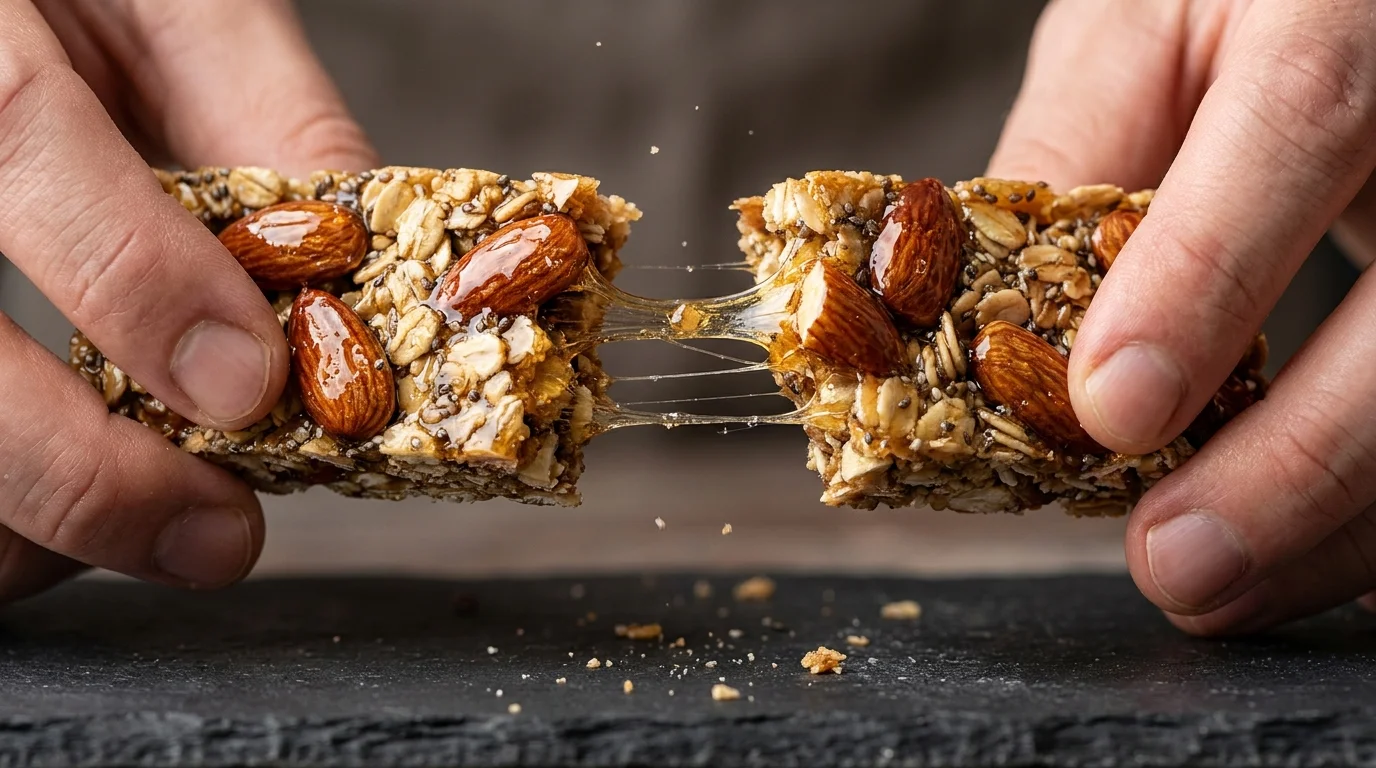
The kitchen counter is still dark at seven in the morning, lit only by the pale blue glow of the microwave clock. You peel back the matte wrapper of a breakfast bar, greeted by the crisp snap of toasted oats and the warm, wholesome scent of roasted almonds and wildflower honey. It feels like a virtuous decision—clean, purposeful, and free of the heavy grease that comes with diner takeout or bakery muffins.
You chew through the satisfying crunch between sips of black coffee, trusting the earthy packaging that promises sustained morning fuel. The label boasts five whole grains, heart-healthy nuts, and zero artificial sweeteners. By eight-thirty, you are seated at your workstation, moving through your inbox with sharp, quiet confidence while the morning unfolds predictably outside your window.
Then two o’clock arrives. The shift does not creep in softly; it drops like a velvet curtain soaked in water. Your eyelids grow heavy, your vision slightly unfocused as you read the same sentence three times over, and a deep, gnawing hollow opens up in the pit of your stomach. Suddenly, an urgent, almost desperate demand for salted chocolate or a sweet cold brew grips your thoughts, sweeping away your willpower.
Without realizing it, your clean morning routine sparked that sudden midday slump. The bar sitting innocently on your desk was engineered to feel like wholesome porridge, but beneath its rustic exterior lies a rapid-delivery glucose trap that sabotages your afternoons.
The Candied Matrix: Why Bound Grains Act Like Kindling
To understand why this happens, picture building a campfire. If you stack dense, seasoned oak logs, the flame burns low, steady, and warm for hours. If you toss in a handful of dry pine shavings glued together with melted resin, you get a blinding flare that consumes itself in minutes, leaving only cold ash and darkness behind.
Processed breakfast bars rely on a structural trick known as a binder matrix. While whole oats, millet, and buckwheat possess intact cellular walls that slow down digestion, manufacturers must bind them together so they survive shipping without crumbling into loose granola. That binding agent is almost always a combination of tapioca syrup, dried cane syrup, and concentrated corn derivatives. In short, it is liquid sugar designed to cling to fiber.
When this mixture hits your stomach acid, the warm binder dissolves long before the grains can be broken down. Your digestive tract absorbs the syrupy coating in a sudden rush, flooding your bloodstream with simple sugars within thirty minutes of your first bite. Your pancreas responds by releasing a disproportionate surge of insulin to clear the hazard, sweeping the glucose out of your circulation so rapidly that your blood sugar plummets well below baseline by mid-afternoon.
- Collarbone hollow pressing eases stubborn computer neck tightness in minutes
- Measles exposure rules shift hospital triage protocols across emergency departments nationwide
- Rolled doorway towels seal hallway light leaks for deeper uninterrupted night sleep
- Crossing ankles seated tilts pelvic balance to trigger nagging lower back ache
- Traditional beef tallow restores cracked winter hands and seals flaky chapped skin
This rebound dip—clinically recognized as reactive hypoglycemia—is what triggers that terrifying sweet tooth at your desk. Your brain, temporarily starved of its primary fuel, screams for immediate calories to rescue its energy reserves, convincing you that you lack discipline when your biology is simply attempting self-preservation.
The Designer’s Midday Awakening
Elena Vance, a 39-year-old landscape architect in Portland, spent eighteen months battling an inexplicable 3:00 PM cognitive crash. Every workday morning began with a brisk walk, a mug of pour-over coffee, and two dark chocolate almond breakfast bars chosen specifically for their low sodium and whole-grain credentials. By mid-afternoon, Elena found herself leaning against her drafting table with shaking hands, digging through her desk drawers for leftover mints or sugar packets just to finish client revisions.
It was only after tracking her glycemic responses alongside an occupational health specialist that she saw the pattern. The bars were delivering nearly twelve grams of rapidly hydrolyzing binders directly onto an empty stomach, followed by two hours of seated, low-movement work. Within forty-eight hours of swapping the crispy bars for whole roasted walnuts, pumpkin seeds, and a hard-boiled egg, Elena’s afternoon fog vanished entirely, proving that her fatigue was never a character flaw—it was a processing error.
Metabolic Tipping Points: How Daily Habits Compound the Crash
The severity of an afternoon energy crash depends heavily on the biological context of your morning. Depending on your routine, the syrupy binder in processed cereal snacks creates unique challenges for your metabolic stability.
The Fasted Coffee Commuter
Taking caffeine into an empty stomach triggers an acute release of cortisol and epinephrine, sharpening alertness while signaling your liver to release stored glucose. Consuming a syrup-bound grain bar on top of that heightened hormonal state causes your insulin response to double in intensity. The resulting afternoon energy drop feels twice as steep, often accompanied by cold hands and nervous irritability.
The Desk-Bound Deep Worker
When you sit for four consecutive hours following breakfast, your skeletal muscles remain completely inactive, failing to absorb circulating glucose through non-insulin pathways. The sugar from the dissolved grain binders lingers in the bloodstream until the pancreas produces an aggressive clearing wave. Because your muscles never burned that fuel dynamically, you wake up from your focused work block feeling physically drained and mentally hollow.
The Mid-Morning Snacker
Using a packaged grain bar as an 11:00 AM bridge meal often does more harm than skipping the snack entirely. Introducing rapid-release carbs right as your morning cortisol begins its natural downward curve confuses your internal clock. Instead of sustaining you until lunch, it accelerates gastric emptying, leaving you hungrier twenty minutes after eating than you were before opening the wrapper.
Recalibrating the Morning Plate: The Three-Anchor Reset
You do not need to abandon convenient mornings or spend forty-five minutes over a stove to enjoy stable, all-day clarity. The solution lies in altering how and when you present carbohydrates to your digestive system.
Begin by establishing a protective barrier in the stomach. Fat, soluble fiber, and whole proteins empty slowly through the pyloric sphincter, turning any subsequent sugars into a slow trickle rather than an uncontrolled flood.
- Anchor with Unbound Fats: Pair any whole grain with raw walnuts, unsweetened macadamia nuts, or a spoonful of pure almond butter that contains only nuts and salt.
- Adopt the Protein Pre-Load: Ingest eight to twelve grams of protein—such as two pasture-raised eggs or a clean bone-broth rinse—five minutes before touching cereal grains.
- Seek the 1-to-1 Metric: When buying portable snacks, ensure the dietary fiber count meets or exceeds the total sugar count on the nutritional panel.
- Deploy the Post-Meal Stroll: Spend six to ten minutes moving at an easy walking pace within forty minutes of finishing your morning meal to clear glucose via muscle contraction.
The Morning Tactical Toolkit
Keep these precise thresholds in mind when evaluating convenience snacks for your pantry:
- Maximum Added Sugars: Under 4 grams per serving.
- Binding Agents to Avoid: Tapioca syrup, brown rice syrup, evaporated cane juice, and inverted sugar.
- Ideal Fiber Target: 6 to 9 grams of natural, non-inulin fiber per morning portion.
- Water Temperature: Drink 12 ounces of room-temperature water with a pinch of sea salt prior to your morning coffee to buffer mucosal lining absorption.
The Quiet Strength of Metabolic Stability
There is profound peace in reaching four o’clock with the same calm, unhurried focus you possessed when the morning began. When you stop feeding your body kindling disguised as nourishment, the frantic swings between hyper-alertness and heavy exhaustion gently dissolve.
True sustained energy is rarely flashy, and it never comes shrink-wrapped in bright foil promising miracles. It is quiet, steady, and remarkably simple—built on honest ingredients that respect the intricate machinery of your digestion, keeping you clear, capable, and completely in command of your day.
The secret to afternoon endurance is never found in fighting your cravings, but in refusing to light the hormonal fire that sparks them.
| Key Point | Detail | Added Value for the Reader |
|---|---|---|
| Binder Hydrolysis | Processed syrups used to glue grains together dissolve rapidly in stomach acid. | Identifies why even high-fiber bars can trigger steep insulin spikes. |
| Reactive Drop | The pancreas overcorrects for dissolved morning sugars around hours 4 to 6. | Explains that afternoon sweet cravings are biological alarms, not personal weakness. |
| Protein Buffer | Consuming healthy fats or proteins before grains delays gastric emptying. | Provides an effortless rule to neutralize spikes without eliminating carbs completely. |
| Active Muscular Sink | Light movement within 45 minutes of eating draws glucose into muscle tissue. | Offers a free, non-dietary habit that prevents sedentary blood sugar stagnation. |
Are all breakfast bars equally prone to causing afternoon energy crashes?
No. Bars held together with whole nut butters and egg whites digest far more slowly than those bound with tapioca or corn syrups. Check the ingredient order: if any syrup appears in the top four ingredients, an afternoon dip is likely.Why do I crave salt and chocolate specifically around 3:00 PM?
When insulin clears blood glucose too rapidly, cortisol spikes to stimulate appetite. This hormonal alarm triggers intense cravings for fast carbohydrates and sodium to quickly restore vascular volume and cellular fuel.Does drinking extra coffee help blunt the crash caused by these bars?
Caffeine temporarily masks fatigue by blocking adenosine receptors, but it elevates cortisol further, often deepening the reactive sugar drop once the stimulant wears off an hour later.Can I still eat breakfast bars if I pair them with whole foods?
Yes. Eating a handful of raw almonds or drinking an unsweetened protein shake alongside the bar slows the overall rate of digestion, flattening the glucose peak and smoothing out your energy curve.How long after changing my morning breakfast routine will my cravings stop?
Most adults notice a dramatic reduction in midday brain fog and ravenous afternoon snacking within two to three days of stabilizing their morning glucose intake.