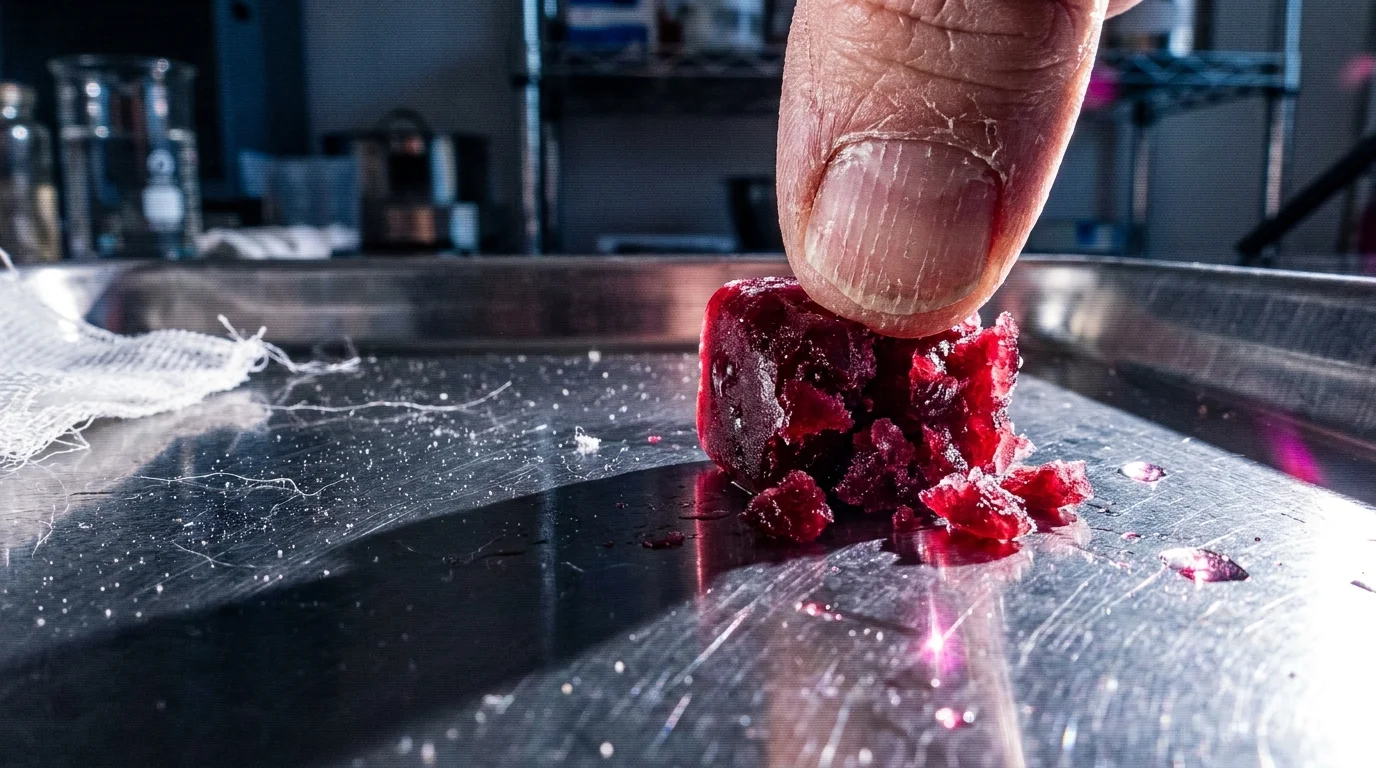
The ice clicks against the rim of your glass at 9:45 PM. The liquid inside is a deep, bruised garnet, catching the dim glow of the counter lamp as you stir in a splash of water. You can smell the sharp, mouth-puckering tang of Montmorency cherries—an astringent aroma that promises effortless rest, lower morning inflammation, and a heavy dose of natural melatonin.
You drink it down fast. The cold hits your throat like winter runoff, a sharp, clean shock that feels purifying after a long day under fluorescent office lighting. You turn off the kitchen lights, slide beneath the covers, and wait for that heavy, restorative drift you were promised.
Instead, twenty minutes later, your belly tightens into an unyielding fist. It is not an ordinary fullness, but a hollow, gnawing ache just beneath your ribcage—a dull, clawing spasm that keeps you rolling from side to side while your sheets bunch around your ankles. You followed the popular ritual to the letter, yet you are left breathing through a pillow in the dark, wondering how a simple glass of fruit juice turned your stomach into stone.
The culprit is not the cherry itself, but the thermal shock you just delivered to a resting digestive tract. When you toss an icy blast of liquid into an organ preparing to power down, your biology does what it has done for millennia: it protects its core temperature at the expense of your comfort.
The Thermal Trap: Why Frozen Tonics Strangle Gastric Blood Flow
Think of your stomach at night as an idling hearth. As your circadian rhythm begins its downward slope, core body temperature naturally drops, but your internal organs require steady, rhythmic circulation to manage nighttime maintenance. When room-temperature or warm fluids enter, the mucosal lining remains supple, pink, and rich with microvascular blood flow.
Pouring a glass packed with cracked ice into that environment is like throwing a bucket of slush onto an idling cast-iron skillet. The reaction is immediate. The tiny network of capillaries woven throughout your gastric lining snaps shut in a defensive microvascular spasm known as cold-induced vasoconstriction. Capillaries clamp down instantly to prevent local hypothermia, pulling warm blood away from the mucosal tissue and shunting it deeper into the body core.
Without that warm, oxygenated blood flow, the smooth muscle of the stomach wall freezes in place. Gastric motility halts entirely. The dense concentration of sorbitol, malic acid, and natural fructose in tart cherry concentrate now sits stagnant against an ischemic lining that cannot dilute or move it. The resulting cramp is your stomach wall violently splinting against sudden thermal shock and trapped acid.
- Sternum ice compresses reset racing heart rates by shocking the vagal pathway
- Textured silicone rings quiet covert boardroom panic by grounding runaway rapid heartbeats
- Horseradish paste spoonfuls halt runaway panic loops through immediate fiery nasal shocks
- Standard Ozempic dosing schedules stall weight loss by freezing sluggish digestive pathways
- Masseter jaw muscles trap chronic boardroom anxiety leaving stiff throbbing facial hinges
The Boulder Field Trial: Julian’s Midnight Discovery
Dr. Julian Mercer, a Boulder-based sports physiologist who coaches amateur ultrarunners, began seeing this exact pattern emerge among his athletes two winters ago. His runners were religiously downing eight ounces of chilled Montmorency concentrate straight from the refrigerator, often over ice, right before turning in to maximize nocturnal glycogen resynthesis and muscle repair.
Within two weeks, nearly forty percent of the cohort reported persistent, sharp upper abdominal cramps, restless tossing, and early-morning sour stomach. Mercer had them run a simple seven-day swap: keep the exact same brand and dose of tart cherry juice, but remove the ice, cut it with four ounces of warm chamomile water, and sip it sixty minutes earlier. The nighttime spasms disappeared within forty-eight hours across every single athlete, while their recovery metrics remained uncompromised.
Fine-Tuning Your Evening Tonic: Three Distinct Profiles
Your digestive tract has its own sensitivity profile, and the way you handle concentrated fruit acids before sleep depends entirely on your daily metabolic cadence.
For the Late-Night Fitness Enthusiast
If you finish training after 7:00 PM, your sympathetic nervous system is still gently buzzing. Pouring freezing juice into an already sensitized gut triggers double the rebound cramping. Dilute your tart cherry concentrate into warm water at a one-to-two ratio, and introduce a pinch of unrefined sea salt to stabilize osmotic pull across the stomach membrane.
For the Acid-Sensitive Sleeper
Those prone to subtle evening heartburn often mistake the cold ache for silent reflux. The chill of iced tart cherry juices deadens the sensory nerves at first, masking the high acidity until the stomach attempts a delayed acid surge to balance the cold stagnation. Consume your evening dose strictly at room temperature, paired with a half-teaspoon of raw almond butter to cushion the stomach lining.
For the Fasted Evening Biohacker
If your last solid meal was at 5:30 PM, your stomach is an empty, highly acidic chamber by bedtime. Pouring iced, sugar-dense liquid directly onto naked mucosa produces an aggressive osmotic shock, drawing fluid out of the stomach wall and triggering intense visceral cramping. Never drink chilled juice on an empty nocturnal stomach; opt for a tepid brew and sip it slowly over ten unhurried minutes.
The Evening Recovery Protocol: Mindful Application
Reclaiming the sleep-promoting properties of tart cherry juice requires treating it like an herbal infusion rather than a sports shake. You want to invite the stomach into relaxation, not shock it into a defensive lockdown.
Follow this intentional ritual to keep your micro-capillaries open and your evening quiet:
- Check the Temperature: Ensure your liquid registers between 68°F and 74°F. If it came from the refrigerator, let the pour sit on the counter for twenty minutes, or temper it with warm water.
- The 75-Minute Window: Finish your glass at least an hour and a quarter before your head touches the pillow, giving the natural sugars time to clear the pyloric sphincter.
- Slow the Pace: Never gulp functional tonics. Take small, deliberate sips over eight to ten minutes to allow salivary enzymes to buffer the malic acid.
- Drop the Concentrates: If you use pure tart extract, dilute one tablespoon into six ounces of warm water rather than drinking four full ounces of heavy, cold syrup.
By simply respecting the thermal reality of your digestive organs, you transform a painful evening sabotage into the restorative tonic it was always meant to be.
The Bigger Picture: Listening to the Body’s Thermostat
Modern wellness culture often convinces us that if a compound is chemically beneficial, the delivery mechanism hardly matters. We assume the body is an unfeeling furnace capable of incinerating anything we drop into it, regardless of temperature, acidity, or timing. But real vitality is far more delicate; it lives in the quiet rhythms of micro-circulation and blood flow.
When you stop shocking your stomach with freezing elixirs right before bed, you give your nervous system permission to do what nightfall demands: soften, unwind, and rest. A warm, well-treated gut produces a quiet mind, clearing the path for the kind of deep, unbroken sleep that no icy internet hack could ever deliver.
The stomach cannot mend your muscles while it is shivering in the dark; warmth is the first prerequisite of peaceful digestion.
| Key Point | Detail | Added Value for the Reader |
|---|---|---|
| Thermal Vasoconstriction | Freezing fluids cause immediate mucosal capillary collapse. | Explains why cramps happen despite cherry juice being an anti-inflammatory drink. |
| Osmotic Acid Stagnation | Chilled stomach walls stop muscular churning, trapping malic acid. | Clarifies why delayed morning reflux and upper gut ache follow cold drinks. |
| The Tempering Fix | Diluting the tonic with warm water to roughly 70°F preserves blood flow. | Provides a zero-cost, immediate adjustment that salvages your sleep routine. |
Frequently Asked Questions
Does tart cherry juice lose its sleep benefits if I drink it warm?
Not at all. The natural melatonin, anthocyanins, and potassium in Montmorency cherries remain chemically stable at warm and room temperatures, meaning you retain every ounce of restorative value without triggering smooth-muscle spasms.Why do I only cramp from cold cherry juice and not cold water?
Tart cherry juice combines low temperatures with high osmolarity and dense fruit acids. Cold water passes through quickly, but chilled cherry concentrate sits heavy against the stomach lining, magnifying the pain of constricted capillaries.How long does it take for the stomach lining vessels to recover from thermal shock?
Local gastric capillaries typically take twenty to thirty-five minutes to restore normal baseline diameter and blood flow after an iced beverage, leaving an extended window for cramping and gas buildup.Can I add warm milk to tart cherry juice instead of water?
It is best to avoid dairy milk, as the high acid content in tart cherry juice can curdle dairy proteins in the glass or stomach, creating heavy curds that worsen evening bloating. Opt for plain warm water or unsweetened oat milk instead.What should I do if I already drank an iced glass and the cramps have started?
Place a warm heating pad or hot water bottle directly over your upper abdomen, sip two ounces of warm water, and avoid lying completely flat until the cramping eases.