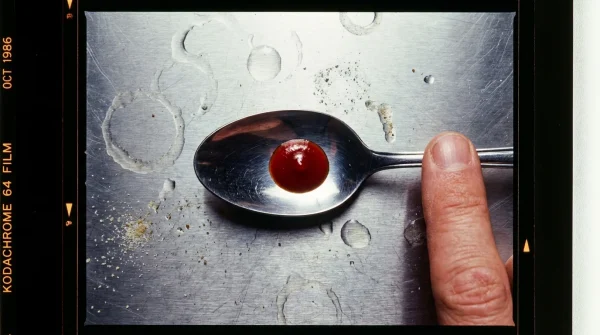
The amber dropper bottle sits on your nightstand like a quiet promise. You squeeze two generous pipettes under your tongue, bracing against that bittersweet, grassy tang that tastes faintly of hayfields and wet clay. Within twenty minutes, a soft velvet weight settles behind your temples, smoothing over the sharp edges of your day as your breathing slows into a thick, syrupy rhythm.
You drift off believing you have finally negotiated peace with your nervous system. Then, the clock reads 3:14 AM. Your eyes snap wide open into the pitch-black bedroom, heart thudding against your ribs like a startled bird trying to break free from a cage. A sour film coats your tongue, your palms feel lightly damp, and your brain is instantly spinning through tomorrow’s calendar at triple speed.
This is not your underlying stress creeping back into bed. It is not an unaddressed psychological trauma surfacing in the witching hour. What you are feeling is an acute chemical whiplash, engineered by the very bottle you trusted to guard your slumber.
The Neurotransmitter Seesaw: Why Herbal Sedation Snaps Back
When you take passionflower sleep drops, you introduce potent flavonoids—chiefly chrysin and apigenin—that slip into the brain and bind to your gamma-aminobutyric acid (GABA) receptors. GABA is the primary handbrake of your central nervous system; it calms neuronal firing and whispers to your brainstem that the environment is secure. For ninety minutes, your mental engine slows down to an idle, mimicking deep restorative rest.
However, liquid extracts bypass the slow processing of the digestive tract and enter your bloodstream in a sudden, sharp spike. The human body does not tolerate artificial suppression of its baseline for very long. In response to that sudden wave of herbal sedation, your brain mounts a silent counter-effort, pooling glutamate—the body’s primary stimulating, alerting neurotransmitter—to keep your vital autonomic systems from sinking too low.
Here lies the metabolic trap: passionflower’s active botanical components possess an exceptionally brief half-life in hepatic circulation, often clearing your bloodstream in less than four hours. As the herbal molecules rapidly detach from your GABA receptors, the calming brake is abruptly yanked away. The pooled glutamate rushes into the open synapses without any resistance, triggering a jarring adrenaline surge that jolts you awake into a cold state of alert panic.
- Aerosolized hairspray clouds trigger involuntary throat clearing during late-afternoon office calls
- Sub-zero cryotherapy chambers spike arterial friction triggering sudden dizziness and chest tightness
- Celtic salt pinches flood morning stomachs triggering parched lips and twitches
- Ergonomic neck collars alter cervical tilt sparking dull throbbing skull tension
- Maternity support bands compress lower ribcage margins sparking sudden desk suffocation
A Botanical Chemist’s Midnight Discovery
Julianna Vance, a 39-year-old landscape architect and avid gardener in Fort Collins, spent five months convinced her late-night awakenings were early perimenopause or creeping burnout. Every night at 10:30 PM, she relied on a top-shelf organic passionflower glycerite to knock out her racing thoughts, only to wake at 3:00 AM with a thumping pulse and shivering shoulders.
It was not until she consulted a clinical phytochemist friend that she mapped the timeline of her drops against her sleep tracker. Her heart rate dipped unnaturally low during the first two hours of the night, followed by a violent 25-beat-per-minute jump at roughly the 210-minute mark. Her liver was clearing the passionflower extract with pristine efficiency, leaving her nervous system defenseless against the rebound wave of excitatory neurochemicals.
Recognizing Your Clearance Profile
Not every body handles herbal tinctures identically. Your metabolic pace and evening habits dictate how severely that 3:00 AM rebound hits your sleep cycle.
The Rapid Liver Clearer
If you are physically active, drink plenty of water, or carry a fast metabolic tempo, your liver’s cytochrome P450 enzymes metabolize passionflower’s flavones almost too well. Instead of enjoying a slow taper through dawn, you clear the compound midway through your second sleep cycle, snapping awake with dry temples and sudden restless legs.
The Layered Tincture Stacker
Perhaps you stir passionflower drops into chamomile tea, topped with a splash of tart cherry juice. Stacking multiple light sedatives creates a steep chemical peak right at sleep onset. When the passionflower drops out first, the sudden drop in receptor saturation feels like falling off a neurochemical ledge, instantly awakening you despite the other ingredients lingering in your gut.
Retraining the Evening Transition
Recovering undisturbed, deep sleep does not mean you must throw away botanical medicine. It means you must stop using liquid concentrates as a blunt instrument to knock yourself out.
Begin by shifting the administration window much earlier into your evening routine. When taken two hours before bed rather than right before your head hits the mattress, the peak clearance occurs while you are still awake and unwinding, preventing the nocturnal rebound from interrupting your natural delta sleep cycles.
- Shift to Dusk Dosing: Take drops between 7:30 PM and 8:00 PM to take the edge off evening tension rather than relying on them as a hypnotic sedative.
- Swap to Whole-Herb Infusions: Replace concentrated ethanol tinctures with long-steeped loose-leaf tea, which releases slower-absorbing tannins that smooth out blood clearance latency.
- Anchor with Glycinate: Pair evening wind-downs with 200 milligrams of elemental magnesium to gently support baseline GABA levels across seven full hours.
- Taper Concentrates: Reduce your drop intake by half over four consecutive nights to allow your endogenous GABA production to recalibrate naturally.
Restoring Circadian Sovereignty
True sleep is not something you force upon your physiology through heavy botanical suppression. It is an ambient biological state that your body gladly enters when it feels safe, warm, and metabolically unhurried. When you stop demanding that passionflower act like an emergency power switch, you break the cycle of panic that has turned your bedroom into a battleground.
Listening to your internal clock instead of drowning it out allows your natural sleep architecture to repair its broken bridges. You begin to wake up not because a surge of glutamate forced your eyes open, but because the morning light gently reminded your resting body that it is safe to greet the day.
True nocturnal recovery requires a smooth neurochemical slope rather than an artificial cliff.
| Key Point | Detail | Added Value for the Reader |
|---|---|---|
| Clearance Latency | Passionflower flavonoids clear circulation within 3 to 4 hours of intake. | Identifies the exact biological trigger behind predictable 3:00 AM awakenings. |
| Glutamate Rebound | Excitatory neurotransmitters flood open synapses once GABA-binding drops drop off. | Validates that late-night racing pulses are chemical rebounds, not mystery panic attacks. |
| Administration Timing | Moving dosage from bedtime to dusk (2 hours prior) smooths receptor clearance. | Allows continued herbal stress relief without destroying overnight sleep architecture. |
Frequently Asked Questions
Why does passionflower wake me up while other herbs let me sleep?
Passionflower contains concentrated flavonoids with a particularly rapid hepatic clearance rate, meaning its sedative grip drops off much faster than heavier herbs like valerian.Is the 3:00 AM racing pulse dangerous for my heart?
While deeply uncomfortable and startling, this transient heart rate spike is simply an autonomic reaction to sudden glutamate and norepinephrine release as the herbal sedation lifts.Can I take another dose of drops when I wake up at 3:00 AM?
Taking another dropperful in the middle of the night restarts the clearance latency cycle, guaranteeing a second rebound awakening or severe morning brain fog.Does passionflower tea cause the same middle-of-the-night issue?
Loose-leaf tea infusions deliver smaller, broader botanical complexes bound to plant fiber, resulting in a gentle, extended digestive release that rarely provokes abrupt rebound awakenings.How long does it take for my sleep to normalize after stopping drops?
Most people find their nighttime glutamate levels settle and uninterrupted sleep patterns return within two to three nights of discontinuing concentrated extracts.