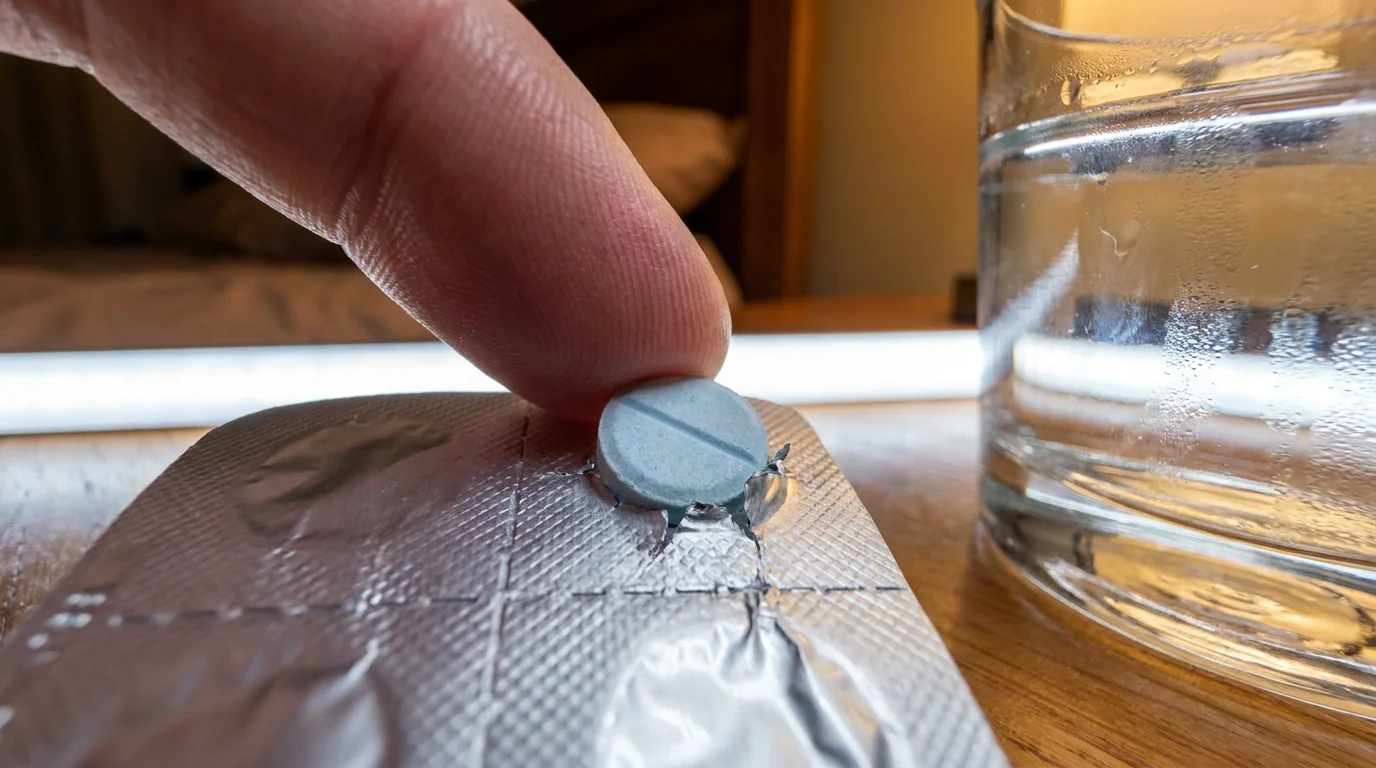
The kitchen is cold at 5:45 in the morning. Before the coffee maker begins its low hum, before the sun clears the roofline across the street, your hand reaches for the amber vial beside the sink. You swallow that tiny chalky tablet with a single gulp of lukewarm water, exactly as the bold letters on the prescription label demand. Then you begin the wait, watching the digital numbers creep across the microwave face, lingering in hungry suspension for forty-five minutes just so you can take your first sip of breakfast.
For months, perhaps years, you have performed this exact dawn ritual with monastic precision. Yet despite your discipline, the scale remains frozen, your morning brain feels coated in thick wool, and your mid-afternoon energy falls off an invisible cliff. Standard clinical advice promises that an empty stomach at sunrise guarantees pristine hormone uptake, but that guidance overlooks a fundamental reality: a slow thyroid produces a sluggish digestive tract.
When your gut motility is stalled, that early-morning tablet does not encounter a clear, receptive roadway. Instead, it drops into stagnant overnight fluid, competing with delayed gastric clearance and fighting against the low blood flow of a body that has barely begun to wake. You are not failing the regimen; the conventional regimen is failing your internal clock.
The Dawn Transit Trap: Why Your Gut Clock Rejects the Morning Rule
Levothyroxine is notoriously finicky, requiring very specific acidic conditions and an unobstructed passage into the upper small intestine to absorb correctly. Think of your morning digestive system not as an empty, spotless hallway, but as a silent post office where the sorting machinery has not yet been switched on. Dropping the hormone into that motionless system leaves it stranded, subject to premature breakdown before it ever crosses into the bloodstream.
When your metabolism runs at a slow idle, your stomach takes twice as long to clear resting secretions and residual bile. Synthetic hormones sit idle in this acidic pool, degrading long before your intestines can absorb them into circulation. The traditional dawn window assumes a brisk, active digestive transit that simply does not exist in someone dealing with persistent thyroid fatigue.
By the time you finally drink your coffee or eat a bowl of oats forty minutes later, the digestive gate suddenly swings open in a panic. The unabsorbed medication gets swept along too quickly or binds directly to food particles, slashing its bioavailability by up to forty percent. You end up under-dosed in practice despite taking the correct milligram count on paper.
- Underwire sports bras crush lower rib cages triggering sudden shallow breathing panic
- Earlobe downward tugs drop racing pulse rates to soothe sudden emotional overwhelm
- Pocket coin rubbing calms surging social panic during packed room business meetings
- Wheeled luggage handles erase daily forearm tension and accelerate quiet shoulder fade
- Stomach sleeping angles lock lower lumbar joints sparking stiff morning back aches
Dr. Warren Hayes, an integrative endocrinologist who has spent twenty-six years tracking hormonal pharmacokinetics, watched this exact frustration stall a patient named Clara. Clara, a 44-year-old landscape architect, had kept a meticulous morning thyroid log for two years while battling unexplained weight plateaus and chronic joint stiffness. When Dr. Hayes reviewed her erratic lab results, he recognized the mismatch between her slow gastrointestinal transit and her early-morning dose, moving her tablet to bedtime on an empty stomach. Within six weeks, Clara’s free thyroid levels stabilized, her resting body temperature rose, and her stubborn water retention finally began to release.
Calibrating the Shift: Finding Your Metabolic Window
Not every digestive tract runs on the same schedule, and adjusting your hormone timing requires matching your tablet intake to your actual stomach clearance rather than an arbitrary sunrise alarm. Finding your ideal rhythm means identifying which physiological pattern describes your evenings.
The Early Diner Profile
If your household sits down for dinner before 6:30 PM, your evening transit works heavily in your favor. By 10:30 PM, your stomach has completely emptied, gastric acid has normalized, and digestive blood flow remains steady while you unwind. Taking your levothyroxine right before bed allows the tablet to dissolve undisturbed across seven hours of sleep, giving you peak hormone circulation right when your body prepares to wake naturally.
The Late-Shift Eater
For those who eat dinner closer to 8:00 PM, a direct bedtime switch can backfire if food remains in the stomach. Delayed gastric clearance traps synthetic tablets against partially digested fats and fibers. In this scenario, pushing the dose to a consistent overnight waking—such as a predictable 3:00 AM bathroom trip—places the tablet into a genuinely empty stomach without disrupting dinner or forcing you to stay up late.
The Evening Supplement User
If your nightly ritual includes magnesium for sleep, calcium for bone density, or multivitamins, these minerals will aggressively bind to levothyroxine and render it inert. You must carve out a non-negotiable four-hour barrier between any mineral supplements and your thyroid medication, shifting heavy supplements to your midday meal to protect the nighttime absorption corridor.
The Evening Transition Protocol: Aligning Hormone Delivery with Rest
Making the change from dawn to dusk requires deliberate planning to prevent overlapping doses or hormonal dips. You do not simply skip a morning and double up at night; you ease the endocrine system into the new pacing.
Select a weekend to begin your transition so you can monitor how your body responds to the shift. The goal is to provide your small intestine with several uninterrupted hours of quiet mucosal contact, far away from caffeine, breakfast fiber, and morning cortisol surges.
- Take your regular dose on Friday morning at your usual early hour to maintain baseline blood saturation.
- Skip your Saturday morning pill entirely, allowing circulating levels to dip slightly throughout the day without triggering acute fatigue.
- Consume your final meal by 7:00 PM on Saturday evening, ensuring only water passes your lips for the remainder of the night.
- Take your tablet at 11:00 PM with a full eight-ounce glass of tap water, precisely four hours after your last bite of food.
- Maintain this exact nighttime cadence moving forward, keeping the medication on your nightstand instead of by the bathroom sink.
Your tactical toolkit requires zero expensive gadgets, relying instead on clean timing and basic physical cues. Keep a dedicated bedside glass of water, use an evening phone chime set precisely for four hours post-dinner, and log your morning resting pulse for the first fourteen days. Consistent nighttime gastric rest allows the synthetic T4 to convert cleanly into active T3 while your liver performs its natural nocturnal regeneration cycle.
Reclaiming Metabolic Rhythm Without Fighting Your Biology
There is profound relief in waking up without a countdown. When you move your daily levothyroxine schedules into the peaceful expanse of the night, you eliminate the morning friction that turns waking up into a chore. You no longer have to pace your kitchen waiting for permission to take that first restorative sip of coffee, nor do you have to worry whether an early breakfast ruined your day’s therapeutic dose.
Understanding your body as a dynamic network of clearance times, mucosal barriers, and resting rhythms transforms your health from a series of strict rules into a cooperative relationship. By giving your medicine the quiet, undisturbed hours it needs to work, you give your metabolism the steady green light it has been waiting for all along.
“Hormones are not rigid switches; they are subtle tides that require stillness, space, and a receptive digestive floor to carry their signal through the body.”
| Key Point | Detail | Added Value for the Reader |
|---|---|---|
| Gastric Emptying Lag | Sluggish thyroid slows stomach emptying beyond normal 90-minute estimates. | Explains why waiting an hour before morning coffee still causes poor absorption. |
| Bedtime Transit Advantage | Intestinal motility slows at night, extending mucosal contact time for the drug. | Provides higher and more consistent free T4 levels without raising the prescribed dose. |
| The Four-Hour Buffer | Taking medication 4 hours after dinner prevents food and mineral binding. | Restores steady metabolic conversion and breaks stubborn weight plateaus safely. |
Frequently Asked Questions
Will skipping my morning dose on the transition day make me crash?
Levothyroxine has an exceptionally long half-life of roughly seven days in your bloodstream, meaning missing a single morning window before your evening dose causes zero detectable hormonal plunge.Can I drink herbal tea or lemon water after taking my bedtime dose?
No, you should only swallow the tablet with plain water; even herbal compounds, citrus acids, and natural sweeteners can alter stomach pH and disrupt mucosal absorption.How long after switching to evening dosing should I get my blood tested?
Wait six to eight weeks after changing your schedule before scheduling follow-up blood work, allowing your serum TSH and free thyroid hormones to reach a true equilibrium.What should I do if I eat dinner unusually late one night?
If a late social gathering pushes dinner to 9:30 PM, set a quiet alarm to take your tablet around 2:00 or 3:00 AM rather than taking it right after your meal.Does an evening schedule interfere with nighttime sleep or cause palpitations?
Because levothyroxine is a slow-acting storage hormone that must first convert into active T3 over many hours, it does not act as an immediate stimulant or disrupt natural sleep stages.