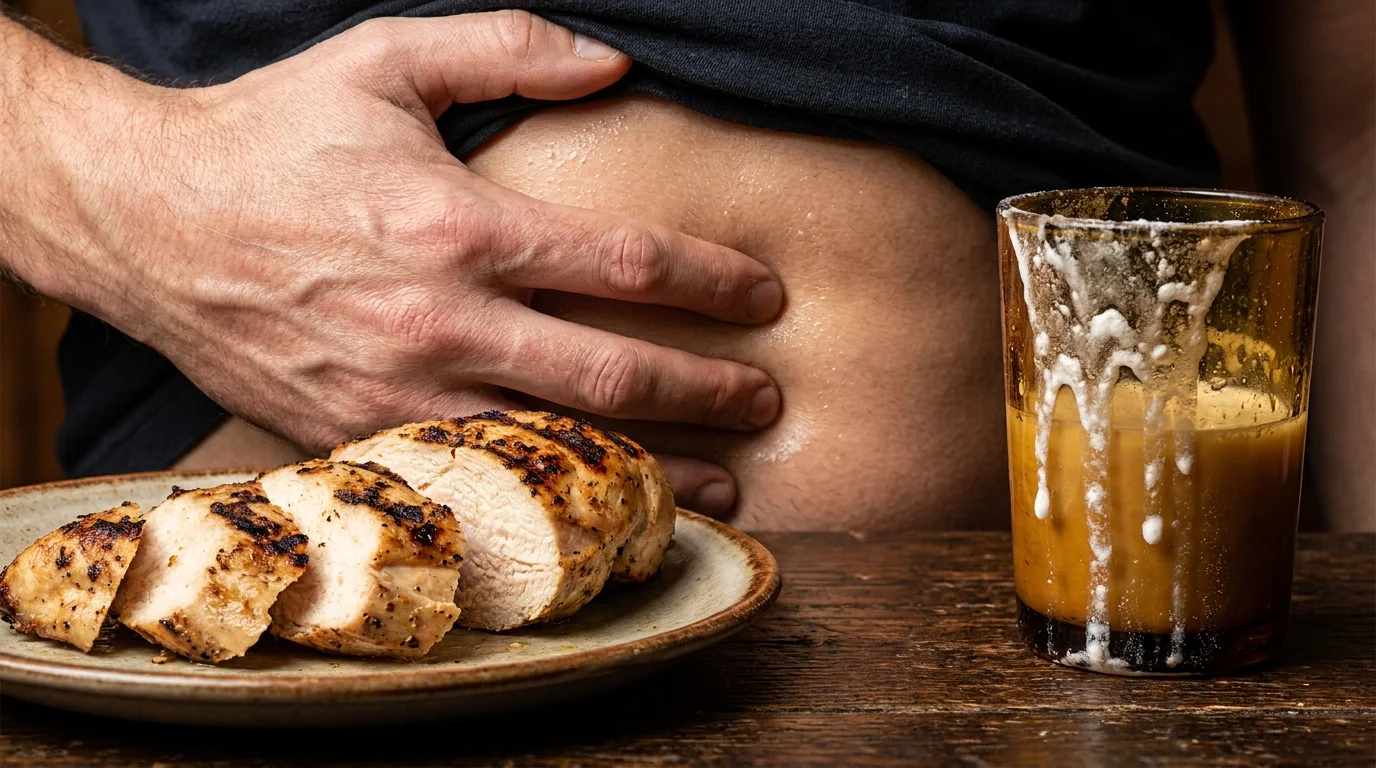
The char marks on the grill grate leave dark, bitter stripes across a clean, pale slab of poultry. It is the gold standard of disciplined American dining: lean, efficient, unadorned grilled chicken breasts seasoned with a pinch of coarse sea salt and cracked pepper. You eat with intent, chewing methodically between sips of cold water, confident that this meal is the purest fuel you can offer your body.
Then comes that familiar warmth in the middle of your chest—a sharp, acidic prickle rising just behind the sternum. Instinct takes over. You twist open a bottle of chalky liquid antacid or chew two mint-flavored calcium tablets, seeking immediate calm. You swallow the milky suspension, waiting for the cooling wash to extinguish the fire.
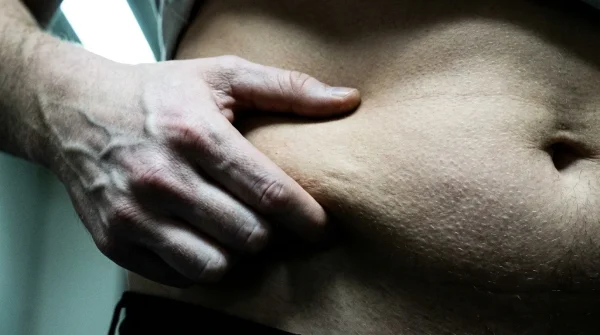
Instead of relief, something goes quiet and leaden inside your gut. Within thirty minutes, an unbearable tightness gathers directly under your ribcage, stretching the skin of your upper belly like an overfilled basketball. It feels as though dense meat sits completely trapped, suspended in a cold, motionless chamber that refuses to empty.
The Chemical Furnace That Cannot Fire
We have been trained to treat stomach acid as an errant villain, an aggressive fluid that exists solely to cause irritation and heartburn. In reality, your stomach is an engine designed to burn hot and acidic. The dense, fibrous strands of grilled chicken breasts require an environment comparable to battery acid—specifically a pH between 1.5 and 2.2—to activate pepsin, the premier enzyme tasked with cleaving tough animal proteins into absorbable amino acids.
When you wash down dense meat with antacids, you dump buckets of cold chemical buffer onto a roaring hearth. The acid vanishes instantly, but so does the digestive capacity. Without that stinging, low-pH spark, pepsinogen never converts into active pepsin. The poultry muscle fibers cannot soften or unwind; they simply drift in an alkaline swamp.
Stuck in limbo, the stomach’s pyloric valve—the muscular doorway that allows food to pass into the small intestine—locks shut. It waits for chemical cues signaling that the protein slurry has been fully dissolved into liquid chyme. When those acid-driven signals never arrive, your upper belly bears the entire structural weight of the delay.
The stagnant mass soon becomes fertile ground for hypochlorhydric microbial fermentation. Normal bacteria that briefly hitchhike on your food find themselves surrounded by trapped, warm nutrients without acid to sterilize them. They feast and produce gas, generating intense upper stomach backpressure that stretches gastric walls and sends dull, throbbing ache radiating through your torso.
- Chewing spearmint gum drives afternoon jaw clenching sparking sharp metallic temple thumps
- Passionflower sleep teas spark sudden 3 AM awakenings with pounding chest flutter
- Angled desk monitors force awkward neck tilt triggering throbbing skull base tension
- Magnesium stearate capsules trap chalky undigested sediment provoking persistent lower stomach bloating
- Snug shapewear tanks squeeze your lower ribcage triggering sudden shallow breath tightness
The Clinical Warning on Cold Neutralization
Dr. Elena Rostova, a 46-year-old integrative gastroenterologist practicing in Chicago, frequently encounters disciplined eaters who unknowingly create their own chronic indigestion through well-meaning intervention. She recalls a marathoner who arrived at her clinic complaining of disabling upper abdominal distension that struck exclusively after his clean post-run dinners.
“He was grilling five chicken cutlets every Sunday and knocking back liquid magnesium-aluminum antacids at the very first twinge of reflux,” Dr. Rostova explains. “He thought he was being proactive by extinguishing the fire before it spread. What he actually did was freeze his stomach’s chemical furnace midway through the melt. Dense chicken does not break down through willpower; it breaks down through fierce, uncompromised hydrochloric acid.”
The Three Patterns of Protein Stagnation
Not every meal behaves the same way in your gut, and the timing of your remedy dictates the severity of the fallout.
The Desk-Bound Meal Prepper
Eating pre-cooked, chilled-and-reheated chicken breasts at an office desk creates an immediate digestive deficit. Reheated chicken loses moisture, compacting its protein chains into dense, rope-like bundles. If you swallow these dry bites while answering urgent emails, your body remains stuck in a sympathetic stress state, already producing sub-par gastric secretions. Adding an antacid tablet to soothe the dry throat lump immediately cements the bolus into an unyielding plug.
The Late-Night Clean Eater
Grilling dinner past eight in the evening leaves little margin for error. As your circadian rhythm prepares for sleep, your stomach’s natural motility naturally downshifts. Downing calcium carbonate antacids right after a late, lean protein dinner guarantees that the poultry will linger in the upper tract for four to five hours, pressing firmly against your diaphragm as you lie flat.
The Low-Fat Purist
Those who strip every gram of fat from their poultry face a unique chemical dilemma. Fat naturally stimulates biliary flow and steadies gastric emptying, while pure lean tissue demands rapid, aggressive acid spikes to begin unraveling. Neutralizing that concentrated acid response leaves the muscle fibers entirely unmarinated, producing sharp gas spasms as trapped air bubbles struggle to bypass the dense blockage.
Reclaiming the Digestive Cascade
Fixing upper belly bloating does not require complex medications. It demands that you respect the sequential steps your gut uses to dismantle food.
Begin by slowing down your fork. Dense poultry must be mechanically shredded by your molars before it ever contacts gastric juices. If a bite still has intact edges when you swallow, your stomach must work three times as hard to dissolve it.
If mild heartburn strikes during or right after a protein meal, avoid blanket neutralizers. The burning sensation is rarely a sign of too much acid; it is almost always acid splashing upward through a loose esophageal sphincter due to poor muscular tone or delayed emptying.
- Ditch immediate liquid antacids: Reserve chalky chemical neutralizers for acute, doctor-directed episodes rather than routine post-meal twinges.
- Chew each bite until liquefied: Aim for twenty to thirty deliberate jaw cycles per mouthful of dry meat to saturate the food in salivary amylase and bicarbonate.
- Space your hydration: Avoid chugging ice water alongside grilled chicken, which dilutes gastric concentration and chills tissue enzymes.
- Adopt post-meal upright stillness: Remain seated upright or take a gentle, ten-minute stroll to let gravity encourage gastric emptying.
The Tactical Breakdown Toolkit
When preparing dense poultry, mechanical and thermal adjustments make a profound difference. These subtle adjustments protect your digestive fire without requiring pharmaceutical interference.
Brine your chicken breasts in a mixture of room-temperature water and sea salt for thirty minutes before grilling. This loosens tightly bound muscle fibers before they ever hit the heat. When cooking, keep internal temperatures right at 165 degrees Fahrenheit; overcooking poultry beyond this threshold turns tender protein into leather that resists gastric penetration.
If you experience slight post-meal heaviness, opt for two ounces of warm water steeped with fresh sliced ginger at 115 degrees Fahrenheit. The natural gingerols stimulate antral contractions and encourage the pyloric valve to open, ushering the meal downward without disturbing the delicate acid balance.
Trusting the Body’s Natural Heat
Modern wellness culture often encourages us to smooth over every sharp physical sensation with an immediate counter-measure. We numb headaches, suppress sneezes, and neutralize the very digestive fires that keep our tissues nourished. Yet that stinging heat within the belly is not an error of biology; it is the vital friction of energy transforming into life.
When you stop reaching for the quick fix and allow your body’s chemistry to complete its work, the chronic heaviness begins to lift. You begin to experience food not as a source of silent dread or lingering pressure, but as clean, easily integrated vitality that moves through you cleanly, quietly, and completely.
“Digestion is not a passive holding tank; it is an active chemical forge that falters the moment you strip away its heat.” — Dr. Elena Rostova
| Key Point | Detail | Added Value for the Reader |
|---|---|---|
| Hydrochloric Demand | Dense chicken breast requires a pH between 1.5 and 2.2 to activate pepsin enzymes. | Explains why stripping acid stops digestion in its tracks. |
| Pyloric Lockout | The exit valve of the stomach stays closed until protein is fully liquefied by acid. | Reveals the physical mechanism behind stubborn upper-gut bloating. |
| Chewing Mechanics | Salivary enzymes and physical shredding reduce the workload on gastric acids. | Offers a free, immediate habit to prevent post-meal heartburn naturally. |
| Thermal Influence | Overcooking past 165°F cross-links meat fibers into difficult-to-dissolve knots. | Connects cooking technique directly to intestinal comfort. |
Frequently Asked Questions
Why does my stomach burn if I actually have low acid?
When stomach acid is insufficient, food sits stagnant for too long. This creates backpressure and fermentation gas that pushes whatever small amount of acid you do have upward against the sensitive esophageal lining.Are chewable antacids safer to use with meat than liquid ones?
Both varieties deliver alkaline compounds that instantly raise stomach pH. Whether chewable or liquid, both neutralize the acidic bath necessary to break down tough chicken breast fibers.How long should I wait after eating chicken before taking an antacid?
Allow your stomach at least two to three hours to complete the initial acid-dependent phase of protein breakdown before using any acid-suppressing remedy, unless advised otherwise by your physician.Can drinking water during my meal cause the same bloating?
Gulping large quantities of ice-cold water can temporarily cool gastric tissue and mildly dilute digestive enzymes, though it rarely causes the absolute chemical shutdown seen with antacids.What can I do immediately if I already took an antacid and feel bloated?
Remain seated upright, avoid lying down, and sip a small cup of warm ginger or chamomile tea. Gentle movement like a slow walk can help stimulate mechanical gastric contractions.